Bernard M. Baruch | Legacy of Leadership Profile

Kaltura

1870–1965

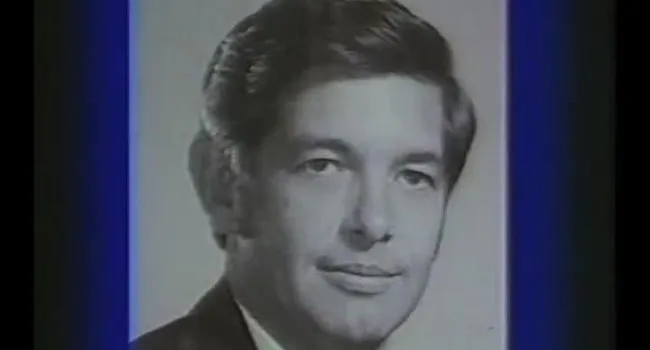
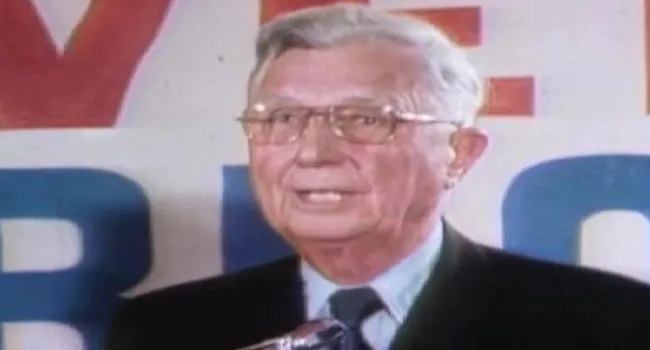
Bernard M. Baruch, the "Park Bench Statesman," made his fortune on Wall Street, but his greatest challenge and his greatest satisfaction were his service to his country as an economic adviser during both World Wars I and II and as a confidante to six presidents.    

Bernard Mannes Baruch was born August 19, 1870, in Camden, the son of Simon and Isabelle Wolfe Baruch. His father was a German immigrant who came to America in 1855 to avoid Prussian conscription. He was 15 years old and knew only one person in America, Mannes Baum, the owner of a general store in Camden, who was married to an aunt of Baruch's mother.

Young Simon Baruch worked for Baum as a bookkeeper and, with Baum's help, taught himself English. Mrs. Baum persuaded her husband to send Simon to South Carolina Medical College and the Medical College of Virginia in Richmond.

He became a renowned surgeon chief on Robert E. Lee's staff during the Civil War. It was Mannes Baum who gave Simon the uniform and sword he wore when he joined the Third Battalion, South Carolina Infantry, in 1862.

Bernard's mother, Isabelle, was the daughter of Sailing Wolfe, a young merchant and planter of Winnsboro, and Sara Cohen, daughter of Rabbi Hartwig Cohen of Charleston. Baruch's family moved to New York when he was about 10 years old. While his remarkable accomplishments came in New York, Washington, and abroad, his roots were always in South Carolina. Seventy years after he went to New York, he still had not relinquished a trace of his Southern accent.    

Baruch graduated from City College of New York in 1889, and his first job was as an office boy earning $3 a week. He ran errands in the banking and financial district and became enamored of the potential Wall Street held.    

He became a runner for a brokerage house and invested all his effort and time in learning the business, eventually becoming a broker and then a partner in the firm of A. A. Housman and Company. His earnings and commissions afforded him the opportunity to buy a seat on the New York Stock Exchange, and by the time he was 30 years old, he had become a millionaire.

Baruch left Housman to open Baruch Brothers, in partnership with one of his brothers, Hartwig "Harty" Baruch. In succeeding years he lost his fortune and made it back several times.

In 1907, he and Harty bought H. Hentz and Company, an international commodity firm with offices on Wall Street and in Paris, London, Berlin, and other cities. By 1910, Bernard Baruch had become one of Wall Street's financial leaders.

When Woodrow Wilson was re-elected president and war was looming, he called on Baruch for advice because of the latter's understanding of the nation's economy and industrial resources.

Baruch was chairman of the War Industries Board, which controlled the industrial establishment of the country for three years. With the end of the war imminent, he helped President Wilson negotiate the peace agreements in Paris.

When Baruch joined Woodrow Wilson's War Industries Board, he had left H. Hentz and Company to speculate on his own. His two other brothers, Sailing and Herman, joined H. Hentz and Company as managing partners. Herman Baruch, a doctor and banker, later became ambassador to Portugal and Holland.

After World War I, Baruch continued as an adviser to Presidents Harding, Coolidge, Hoover, Roosevelt, and Truman.

He often conferred with officials on a bench in Washington's Lafayette Park because of the privacy and relaxed atmosphere. Thus, he became known as the "Park Bench Statesman."

In 1905, he had bought Hobcaw Barony, a 17,000-acre plantation about three miles by water from Georgetown in South Carolina. It originally was part of the barony granted Lord Carteret by King George II. Baruch would permit no telephone lines to be strung to Hobcaw. The plantation was his retreat for the hunting season and the month of May each year.

Baruch took great pride in his Southern heritage, as he once demonstrated during World War II when President Roosevelt, who delighted in the historic details about the area, was visiting Hobcaw.

William Ball, editor of The News & Courier in Charleston and a bitter foe of the New Deal, wrote editorials each day of Roosevelt's visit, lambasting the president. Baruch traveled the 60 miles to Charleston and told Ball he thought the editorials should stop while the president was visiting. He explained that it had nothing to do with Ball's right to express his opinion, but it was not a gracious way of treating a guest in South Carolina.

Roosevelt had come to Hobcaw tired and with a cough, but he left tanned and in better health than he had enjoyed in many years, according to his physician, Admiral Ross McIntire. The president was a guest at Hobcaw for an extended period only a few months before his death.

Baruch was married to Annie Griffin in 1897. They were the parents of three children: Belle, who was named for his mother; Bernard Mannes, Jr.; and Renee.

Bernard Baruch died June 10, 1965, in New York. He had spent the month of May 1965 at Hobcaw Barony.

During a 30-year period, Belle Baruch purchased Hobcaw Barony from her father. The property remains privately owned by the Belle W. Baruch Foundation, but the University of South Carolina and Clemson University use it as an environmental research center.

Baruch was inducted into the South Carolina Business Hall of Fame in 1985.

© 1999 South Carolina Business Hall of Fame

More in this Series

Legacy of Leadership / Finance

Bernard M. Baruch | Legacy of Leadership Profile A. Lee M. Wiggins | Legacy of Leadership Profile

Video

Grades

  • 6
  • 7
  • 8
  • 9
  • 10
  • 11
  • 12
A. Lee M. Wiggins | Legacy of Leadership Profile
A. Lee M. Wiggins (1891–1980) When Lee Wiggins graduated from the University of North Carolina in 1913, he moved to Hartsville to become secretary to David R. Coker, managing partner of J. L. Coker...
Hugh L. McColl, Jr. | Legacy of Leadership Interview Edwin F. Averyt | Legacy of Leadership Profile

Video

Grades

  • 6
  • 7
  • 8
  • 9
  • 10
  • 11
  • 12
Edwin F. Averyt | Legacy of Leadership Profile
Edwin F. Averyt (1903–1978) In 1937, Edwin F. Averyt and a partner, J. C. Judy, with no experience in the insurance business, opened an accident insurance company in Columbia with only $5,000 capital...
Hugh L. McColl, Jr. | Legacy of Leadership Interview Edwin G. Seibels | Legacy of Leadership Profile

Video

Grades

  • 6
  • 7
  • 8
  • 9
  • 10
  • 11
  • 12
Edwin G. Seibels | Legacy of Leadership Profile
Edwin G. Seibels (1866–1954) "That I was not born on my father's plantation, Mount Willing in Edgefield County, S.C., in the midst of the fields of ripening cotton, was only due to the fact that there...
Hayne Hipp: Son of Francis M. Hipp | Legacy of Leadership Interview Edwin Wales Robertson | Legacy of Leadership Profile

Video

Grades

  • 6
  • 7
  • 8
  • 9
  • 10
  • 11
  • 12
Edwin Wales Robertson | Legacy of Leadership Profile
Edwin Wales Robertson (1863–1928) When he died of a heart attack, at age 65, on a business trip to New York City on November 20, 1928, The New York Times published a column-long story with the...
 Francis M. Hipp | Legacy of Leadership Profile

Video

Grades

  • 6
  • 7
  • 8
  • 9
  • 10
  • 11
  • 12
Francis M. Hipp | Legacy of Leadership Profile
Francis M. Hipp (1911–1995) Known as "the master of the soft sell" for his artful leadership and participatory management style, Francis M. Hipp built Greenville-based The Liberty Corporation into one...
Hugh L. McColl, Jr. | Legacy of Leadership Interview Gayle O. Averyt | Legacy of Leadership Interview

Video

Grades

  • 6
  • 7
  • 8
  • 9
  • 10
  • 11
  • 12
Gayle O. Averyt | Legacy of Leadership Interview
Gayle O. Averyt (Born October 13, 1933) In 1995, Gayle Averyt retired as chairman of Colonial Life & Accident Insurance Company, a company his father co-founded, ending an active career that began...
 Gayle O. Averyt | Legacy of Leadership Profile

Video

Grades

  • 6
  • 7
  • 8
  • 9
  • 10
  • 11
  • 12
Gayle O. Averyt | Legacy of Leadership Profile
Gayle O. Averyt (Born October 13, 1933) In 1995, Gayle Averyt retired as chairman of Colonial Life & Accident Insurance Company, a company his father co-founded, ending an active career that began...
Hugh L. McColl, Jr. | Legacy of Leadership Interview Hugh C. Lane | Legacy of Leadership Profile

Video

Grades

  • 6
  • 7
  • 8
  • 9
  • 10
  • 11
  • 12
Hugh C. Lane | Legacy of Leadership Profile
Hugh C. Lane (1914-2005) For 38 years, Hugh C. Lane was the driving force behind the growth of the Citizens and Southern National Bank of South Carolina, years that spanned the upheaval of the New...
Irwin Kahn | Legacy of Leadership Profile Hugh L. McColl, Jr. | Legacy of Leadership Interview

Video

Grades

  • 6
  • 7
  • 8
  • 9
  • 10
  • 11
  • 12
Hugh L. McColl, Jr. | Legacy of Leadership Interview
Hugh L. McColl, Jr. (Born June 18, 1935) In 1886, Hugh McColl's great-grandfather organized the Bank of Marlboro, the county's first bank. His grandfather was president of the bank, and McColl's...
Hugh L. McColl, Jr. | Legacy of Leadership Interview Hugh L. McColl, Jr. | Legacy of Leadership Profile

Video

Grades

  • 6
  • 7
  • 8
  • 9
  • 10
  • 11
  • 12
Hugh L. McColl, Jr. | Legacy of Leadership Profile
Hugh L. McColl, Jr. (Born June 18, 1935) In 1886, Hugh McColl's great-grandfather organized the Bank of Marlboro, the county's first bank. His grandfather was president of the bank, and McColl's...
 Hugh M. Chapman | Legacy of Leadership Interview

Video

Grades

  • 6
  • 7
  • 8
  • 9
  • 10
  • 11
  • 12
Hugh M. Chapman | Legacy of Leadership Interview
Hugh M. Chapman (1932–2007) Hugh Chapman's decision not to enter the family textile business, Inman Mills, was of little importance to his parents and four older brothers. Whatever career path he...
Hugh L. McColl, Jr. | Legacy of Leadership Interview Hugh M. Chapman | Legacy of Leadership Profile

Video

Grades

  • 6
  • 7
  • 8
  • 9
  • 10
  • 11
  • 12
Hugh M. Chapman | Legacy of Leadership Profile
Hugh M. Chapman (1932–2007) Hugh Chapman's decision not to enter the family textile business, Inman Mills, was of little importance to his parents and four older brothers. Whatever career path he...
Bernard M. Baruch | Legacy of Leadership Profile Irwin Kahn | Legacy of Leadership Profile

Video

Grades

  • 6
  • 7
  • 8
  • 9
  • 10
  • 11
  • 12
Irwin Kahn | Legacy of Leadership Profile
A profile of Irwin Kahn. Irwin Kahn (1912–1990) Irwin Kahn was a builder of buildings and community. Columbia's skyline, the University of South Carolina campus, the Midlands, and the state of South...
Hugh L. McColl, Jr. | Legacy of Leadership Interview J. Willis Cantey | Legacy of Leadership Profile

Video

Grades

  • 6
  • 7
  • 8
  • 9
  • 10
  • 11
  • 12
J. Willis Cantey | Legacy of Leadership Profile
J. Willis Cantey (1917–1986) J. Willis Cantey distinguished himself as a soldier, businessman, and banker. But what his family, friends, and acquaintances remember most about him was his spontaneous...
Irwin Kahn | Legacy of Leadership Profile J. Wilson Newman | Legacy of Leadership Profile

Video

Grades

  • 6
  • 7
  • 8
  • 9
  • 10
  • 11
  • 12
J. Wilson Newman | Legacy of Leadership Profile
J. Wilson Newman (1909-2003) Growing up in Clemson (pop. 400), J. Wilson Newman earned his first money in agricultural pursuits, such as counting squares at the Experiment Station's test plots for...
Hugh L. McColl, Jr. | Legacy of Leadership Interview John H. Lumpkin, Sr. | Legacy of Leadership Profile

Video

Grades

  • 6
  • 7
  • 8
  • 9
  • 10
  • 11
  • 12
John H. Lumpkin, Sr. | Legacy of Leadership Profile
John H. Lumpkin, Sr. (1916-1999) John Lumpkin knows about challenge and hard work and what it takes to be successful, but to hear him tell it, no one has enjoyed life more than he has. "I have been...
Bernard M. Baruch | Legacy of Leadership Profile John M. Rivers | Legacy of Leadership Profile

Video

Grades

  • 6
  • 7
  • 8
  • 9
  • 10
  • 11
  • 12
John M. Rivers | Legacy of Leadership Profile
John M. Rivers (1903–1988) After 12 years in banking and two successful years as vice president of a securities firm, John M. Rivers surprised the Charleston business community. He accepted a job as...
Hugh L. McColl, Jr. | Legacy of Leadership Interview Robert V. Royall, Jr. | Legacy of Leadership Profile

Video

Grades

  • 6
  • 7
  • 8
  • 9
  • 10
  • 11
  • 12
Robert V. Royall, Jr. | Legacy of Leadership Profile
Robert V. Royall (1934 - ) After David Beasley was elected governor of South Carolina in 1994, his first priority was choosing a secretary to head the Department of Commerce, a new Cabinet post that...
 W. W. "Hootie" Johnson | Legacy of Leadership Interview

Video

Grades

  • 6
  • 7
  • 8
  • 9
  • 10
  • 11
  • 12
W. W. "Hootie" Johnson | Legacy of Leadership Interview
W. W. "Hootie" Johnson (Born February 16, 1931) On the desk of Hootie Johnson, there is a small plaque, given to him years ago. It is an eloquent statement of Theodore Roosevelt, which says, in part...
Hugh L. McColl, Jr. | Legacy of Leadership Interview W. W. "Hootie" Johnson | Legacy of Leadership Profile

Video

Grades

  • 6
  • 7
  • 8
  • 9
  • 10
  • 11
  • 12
W. W. "Hootie" Johnson | Legacy of Leadership Profile
A profile of W. W. "Hootie" Johnson. W. W. "Hootie" Johnson (Born February 16, 1931) On the desk of Hootie Johnson, there is a small plaque, given to him years ago. It is an eloquent statement of...

Legacy of Leadership / Government & Public Administration

John K. Cauthen | Legacy of Leadership Profile Charles S. Way | Legacy of Leadership Profile

Video

Grades

  • 6
  • 7
  • 8
  • 9
  • 10
  • 11
  • 12
Charles S. Way | Legacy of Leadership Profile
Charles S. Way (Born December 18, 1937) It usually takes a hurricane or some other force of nature to change the face of a city, but if a single individual can accomplish such a feat, then surely...
A. Foster McKissick | Legacy of Leadership Profile Frederick B. Dent  | Legacy of Leadership Profile

Video

Grades

  • 6
  • 7
  • 8
  • 9
  • 10
  • 11
  • 12
Frederick B. Dent | Legacy of Leadership Profile
A profile of Frederick Baily Dent. Frederick B. Dent (Born August 17, 1922) In the fall of 1973, a reporter for Nation's Business wrote of Secretary of Commerce Frederick B. Dent: "Despite a soft...
Bernard M. Baruch | Legacy of Leadership Profile Frederick B. Dent | Legacy of Leadership Interview

Video

Grades

  • 6
  • 7
  • 8
  • 9
  • 10
  • 11
  • 12
Frederick B. Dent | Legacy of Leadership Interview
Frederick B. Dent (1922 - ) In the fall of 1973, a reporter for Nation's Business wrote of Secretary of Commerce Frederick B. Dent: "Despite a soft Southern accent and an affable demeanor which fits...
Ben R. Morris | Legacy of Leadership Interview John K. Cauthen | Legacy of Leadership Profile

Video

Grades

  • 6
  • 7
  • 8
  • 9
  • 10
  • 11
  • 12
John K. Cauthen | Legacy of Leadership Profile
John K. Cauthen (1906–1973) John Kelley Cauthen is regarded as one of the most powerful leaders in South Carolina during the 20th century, a man who used his talents to develop consensus and create...
Bernard M. Baruch | Legacy of Leadership Profile William Barnet | Legacy of Leadership

Video

Grades

  • 6
  • 7
  • 8
  • 9
  • 10
  • 11
  • 12
William Barnet | Legacy of Leadership
William Barnet III (Born August 2, 1942) From loading trucks to leading a now 106-year-old family business to serving the South Carolina public, both as a volunteer and an elected official, William...