John K. Cauthen | Legacy of Leadership Profile

Kaltura

John K. Cauthen (1906–1973)

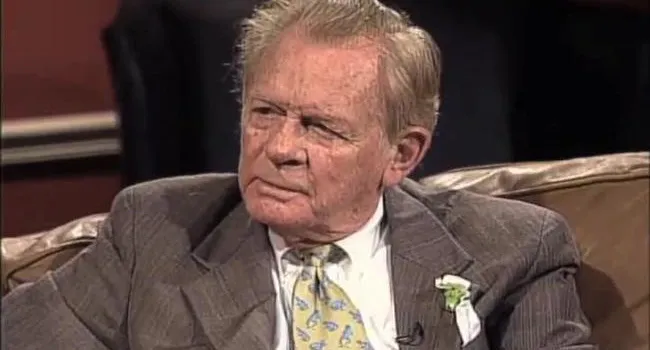
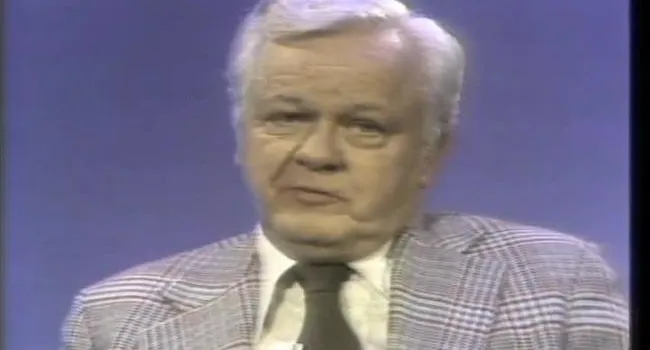
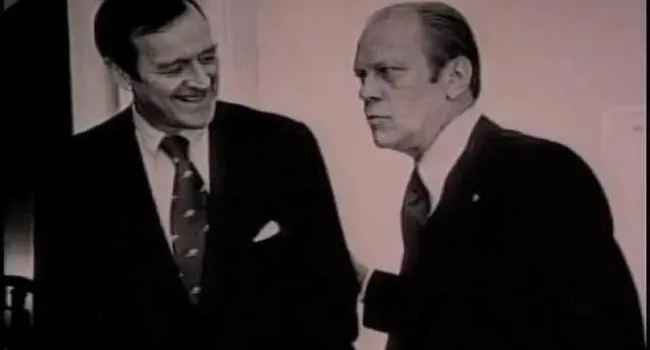
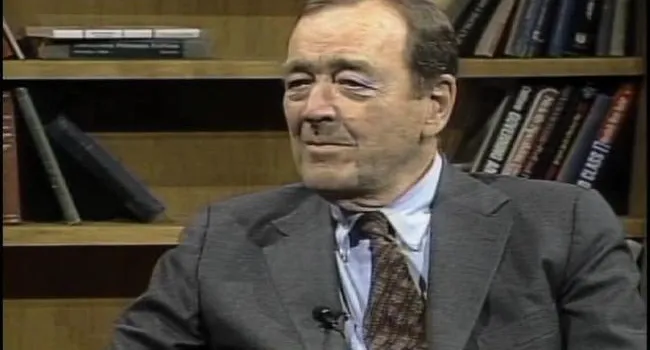
John Kelley Cauthen is regarded as one of the most powerful leaders in South Carolina during the 20th century, a man who used his talents to develop consensus and create the foundations for modern economic development in the state.

Although Cauthen never headed a company, he was one of the state's most energetic and visionary business leaders. He was an authoritative spokesman for the textile industry, which powered the state's economy, and his actions and voice triggered major changes in the state's economy and society.

Cauthen's versatile career included service as a journalist, a confidante and advisor to governors and other public figures, and briefly as a member of the Columbia City Council during a period of critical change for the city.

John Kelley Cauthen was born June 9, 1906, in North Augusta, South Carolina, the son of the Rev. Henry J. and Mary Finlayson Cauthen. His father was a Methodist minister, and the family moved often. Cauthen spent his boyhood in York, Walterboro, Georgetown, Darlington, and Charleston. Because of his father's death, he attended school for only eight years.

For 15 years, he was a newspaperman, working for The News and Courier in Charleston and then for The Columbia Record, and also became the state's first radio commentator with WIS in Columbia in the late 1930s until 1941. During that period, he became intimately acquainted with many public officials.    

Cauthen served for two years as director of the South Carolina Good Roads Association, and from that position, he helped bring about much-needed development in the state's highway system. He became one of the state's most valuable assets in public affairs.

Cauthen served as executive secretary during World War II to Governors J. Emil Harley and R. M. Jeffries. When Governor Harley, who was suffering from terminal cancer, became too ill to give his State of the State message to the General Assembly in 1942, Cauthen delivered it.

During Harley's term of office, Cauthen's influence in public affairs continued to grow. After learning of a major prison scandal, he investigated and quickly and decisively corrected the abuses. He had to make so many tough decisions that House Speaker Sol Blatt once called Cauthen "one of the best governors this state has ever had." He was called on to write major speeches for several other governors as well.    

From 1945 to 1971, Cauthen served as executive vice president of the South Carolina Textile Manufacturers Association, and it was during those years that he made his greatest contributions to business and government in South Carolina.

John Cauthen worked quietly, one-on-one, to influence people almost always behind the scenes. Because he avoided center stage, he probably never won proper recognition for his role. Yet he played a part in virtually every important chapter in the state's political history during those years.

Long before the environment became a popular issue, Cauthen drafted the state's first water pollution control law, set up the first pollution control agency governing board in 1950, and served on it for its first four years.

He worked with the late Charles E. Daniel and textile leaders to fashion an economic development policy that made the state an attractive place for industry, including getting the right-to-work law enacted.

Cauthen served on a committee that triggered vital improvements in the state's ports. Their work led to the initial $21 million ports bond issue that helped revive commerce at the Port of Charleston.    

During the racial upheaval that wracked the state during the 1950s and 1960s, Cauthen looked ahead, not back. He was a catalyst in marshaling sentiment for peaceful integration of Clemson University.    

While Cauthen helped shape the textile industry, he saw the need to enrich the minds of South Carolinians. He had a multi-pronged vision to elevate the economy of South Carolina and improve the lives of its citizens. As part of that vision, he and his son, Henry J. Cauthen, a director at WIS-TV at the time, developed the plan for a television system that could transmit many different educational programs at one time to schools throughout the state. This plan became South Carolina's world-renowned ETV system. Henry Cauthen became South Carolina Educational Television's second president, a position he held until 1998.    

John Cauthen also helped reshape the state's higher education system. He served on the first Commission on Higher Education, once as chairman, and later received honorary degrees from Clemson University and Lander College. He maintained a strong commitment to the improvement of education in South Carolina throughout his life.    

Cauthen got things done largely through his relationship with such political giants as state Senator Edgar A. Brown and House Speaker Blatt, both of Barnwell County. Long a close friend of Brown's, Cauthen narrated an educational television presentation on Brown's life when the Edgar Brown Foundation for Scholarships at Clemson was announced.

Cauthen was also close to Sol Blatt and wrote a book on his life: Speaker Blatt—His Challenges Were Greater. The book was published in 1965.

Cauthen, a private man, preferred to spend his few spare moments with his children, grandchildren, and his devoted wife, the former Deloris Vaughan, a Wilmington, North Carolina, native and accomplished artist who died in April 1992.    

John Cauthen died December 18, 1973, at the age of 67.

He was inducted into the South Carolina Business Hall of Fame in 1992.

© 1999 South Carolina Business Hall of Fame

More in this Series

Legacy of Leadership / Arts, A/V Technology & Communications

Robert S. Davis | Legacy of Leadership Profile Ambrose E. Gonzales | Legacy of Leadership Profile

Video

Grades

  • 6
  • 7
  • 8
Ambrose E. Gonzales | Legacy of Leadership Profile
1857–1926 Ambrose E. Gonzales was not only an illustrious journalist but a businessman who, against tremendous odds, kept afloat and saw flourish The State newspaper, which he and his brother, N. G...
 Ben R. Morris | Legacy of Leadership Interview

Video

Grades

  • 6
  • 7
  • 8
  • 9
  • 10
  • 11
  • 12
Ben R. Morris | Legacy of Leadership Interview
Interview with Ben Rankin Morris whose career was in textiles and newspaper publishing. Ben R. Morris (1922–2005) Ben Morris had spent 22 years working in textiles and textile machinery when he left...
 Ben R. Morris | Legacy of Leadership Profile

Video

Grades

  • 6
  • 7
  • 8
  • 9
  • 10
  • 11
  • 12
Ben R. Morris | Legacy of Leadership Profile
A profile of Ben Rankin Morris. Ben R. Morris (1922–2005) Ben Morris had spent 22 years working in textiles and textile machinery when he left Atlanta for Columbia in 1970 to enter the newspaper...
Ben R. Morris | Legacy of Leadership Profile Elizabeth Timothy | Legacy of Leadership Profile

Video

Grades

  • 6
  • 7
  • 8
  • 9
  • 10
  • 11
  • 12
Elizabeth Timothy | Legacy of Leadership Profile
Elizabeth Timothy ( - 1757) Elizabeth Timothy is recognized as America's first female newspaper editor and publisher and one of the world's first female journalists. She performed these roles with...
 Francis M. Hipp | Legacy of Leadership Profile

Video

Grades

  • 6
  • 7
  • 8
  • 9
  • 10
  • 11
  • 12
Francis M. Hipp | Legacy of Leadership Profile
Francis M. Hipp (1911–1995) Known as "the master of the soft sell" for his artful leadership and participatory management style, Francis M. Hipp built Greenville-based The Liberty Corporation into one...
Ben R. Morris | Legacy of Leadership Profile G. Richard Shafto | Legacy of Leadership Interview

Video

Grades

  • 6
  • 7
  • 8
  • 9
  • 10
  • 11
  • 12
G. Richard Shafto | Legacy of Leadership Interview
G. Richard Shafto (1904-2002) For generations, the Shaftos have shared a love for the sea, perhaps as far back as the seagoing Bobby Shafto written of in the Mother Goose rhyme. Like his father, Dick...
Ben R. Morris | Legacy of Leadership Profile G. Richard Shafto | Legacy of Leadership Profile

Video

Grades

  • 6
  • 7
  • 8
  • 9
  • 10
  • 11
  • 12
G. Richard Shafto | Legacy of Leadership Profile
G. Richard Shafto (1904-2002) For generations, the Shaftos have shared a love for the sea, perhaps as far back as the seagoing Bobby Shafto written of in the Mother Goose rhyme. Like his father, Dick...
 John M. Rivers | Legacy of Leadership Profile

Video

Grades

  • 6
  • 7
  • 8
  • 9
  • 10
  • 11
  • 12
John M. Rivers | Legacy of Leadership Profile
John M. Rivers (1903–1988) After 12 years in banking and two successful years as vice president of a securities firm, John M. Rivers surprised the Charleston business community. He accepted a job as...
 Robert S. Davis | Legacy of Leadership Profile

Video

Grades

  • 6
  • 7
  • 8
  • 9
  • 10
  • 11
  • 12
Robert S. Davis | Legacy of Leadership Profile
A profile of Robert Spence Davis. Robert S. Davis (1915–1993) Robert S. Davis, who retired as chairman of The R. L. Bryan Company, one of South Carolina's oldest businesses, made a side career out of...
Ben R. Morris | Legacy of Leadership Profile Roger C. Peace | Legacy of Leadership Profile

Video

Grades

  • 6
  • 7
  • 8
  • 9
  • 10
  • 11
  • 12
Roger C. Peace | Legacy of Leadership Profile
A profile of Roger Craft Peace. Roger C. Peace (1899 – 1968) Roger C. Peace has the distinction of having been named to the Hall of Fame of the South Carolina Press Association and the South Carolina...

Legacy of Leadership / Government & Public Administration

W. W. "Hootie" Johnson | Legacy of Leadership Profile Bernard M. Baruch | Legacy of Leadership Profile

Video

Grades

  • 6
  • 7
  • 8
  • 9
  • 10
  • 11
  • 12
Bernard M. Baruch | Legacy of Leadership Profile
1870–1965 Bernard M. Baruch, the "Park Bench Statesman," made his fortune on Wall Street, but his greatest challenge and his greatest satisfaction were his service to his country as an economic...
James C. "Jim" Self | Legacy of Leadership Charles S. Way | Legacy of Leadership Profile

Video

Grades

  • 6
  • 7
  • 8
  • 9
  • 10
  • 11
  • 12
Charles S. Way | Legacy of Leadership Profile
Charles S. Way (Born December 18, 1937) It usually takes a hurricane or some other force of nature to change the face of a city, but if a single individual can accomplish such a feat, then surely...
 Frederick B. Dent  | Legacy of Leadership Profile

Video

Grades

  • 6
  • 7
  • 8
  • 9
  • 10
  • 11
  • 12
Frederick B. Dent | Legacy of Leadership Profile
A profile of Frederick Baily Dent. Frederick B. Dent (Born August 17, 1922) In the fall of 1973, a reporter for Nation's Business wrote of Secretary of Commerce Frederick B. Dent: "Despite a soft...
 Frederick B. Dent | Legacy of Leadership Interview

Video

Grades

  • 6
  • 7
  • 8
  • 9
  • 10
  • 11
  • 12
Frederick B. Dent | Legacy of Leadership Interview
Frederick B. Dent (1922 - ) In the fall of 1973, a reporter for Nation's Business wrote of Secretary of Commerce Frederick B. Dent: "Despite a soft Southern accent and an affable demeanor which fits...
 William Barnet | Legacy of Leadership

Video

Grades

  • 6
  • 7
  • 8
  • 9
  • 10
  • 11
  • 12
William Barnet | Legacy of Leadership
William Barnet III (Born August 2, 1942) From loading trucks to leading a now 106-year-old family business to serving the South Carolina public, both as a volunteer and an elected official, William...