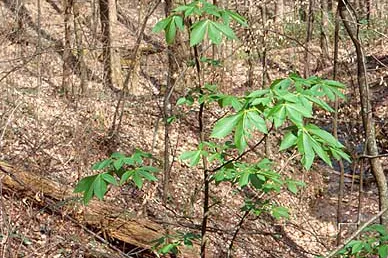
Trees

Trees can be identified based on their physical characteristics: leaves, fruit, and bark. For example: Hardwood trees are deciduous, meaning they lose their leaves every year.
Toggle Filters

Filter By:

Clear Filters

Grade Levels

close

Grade

Resource Type

close

Resource Type

Downloadable Content

close

Downloadable Content
Silkworm Moth | Appalachian Cove (S.C.) | NatureScene Appalachian Cove (S.C.) Stop 2 6

Video

Grades

  • 3
  • 4
  • 5
  • 6
  • 7
  • 8
  • 9
  • 10
  • 11
  • 12
Appalachian Cove (S.C.) Stop 2
Episode 6
The increased amount of rain makes for a much more diversified forest when it comes to the tall trees in the area. Here we see the Tulip Tree, and the Understory Tree. Along the way Rudy and Jim come...
 Sandy Island (S.C.) Stop 1 1

Video

Grades

  • 3
  • 4
  • 5
  • 6
  • 7
  • 8
  • 9
  • 10
  • 11
  • 12
Sandy Island (S.C.) Stop 1
Episode 1
Rudy and Jim visit Sandy Island, off the South Carolina coast, near Georgetown. Sandy Island is the largest undeveloped fresh water island on the East coast, consisting mainly of sand dunes, and...
 Sandy Island (S.C.) Stop 3 4

Video

Grades

  • 3
  • 4
  • 5
  • 6
  • 7
  • 8
  • 9
  • 10
  • 11
  • 12
Sandy Island (S.C.) Stop 3
Episode 4
Sandy Island features around thirteen plant communities. At their next stop, Rudy and Jim discuss the plant life which resides here. They talk about reindeer moss, a species of lichen, and what...
 Sandy Island (S.C.) Stop 4 5

Video

Grades

  • 3
  • 4
  • 5
  • 6
  • 7
  • 8
  • 9
  • 10
  • 11
  • 12
Sandy Island (S.C.) Stop 4
Episode 5
Rudy and Jim visit an ecotone, which is a line between two different habitats: one more dry, and one moister. Here we see a fetterbush, the inkberry or gallberry, which is another species of holly...
 Sandy Island (S.C.) Stop 5 6

Video

Grades

  • 3
  • 4
  • 5
  • 6
  • 7
  • 8
  • 9
  • 10
  • 11
  • 12
Sandy Island (S.C.) Stop 5
Episode 6
Rudy and Jim walk through a longleaf pine habitat, and come across a loblolly pine with a red-cockaded woodpecker nest. We also see Turkey oak trees, and yellow jessamine flowers. The yellow jessamine...
 Sandy Island (S.C.) Stop 6 7

Video

Grades

  • 3
  • 4
  • 5
  • 6
  • 7
  • 8
  • 9
  • 10
  • 11
  • 12
Sandy Island (S.C.) Stop 6
Episode 7
Here at The Refuge, Rudy and Jim come across a rare plant in South Carolina: rosemary. Not to be confused with the rosemary spice one would find in a kitchen. Turkey oaks are found here as well, along...
 Sandy Island (S.C.) Stop 8 9

Video

Grades

  • 3
  • 4
  • 5
  • 6
  • 7
  • 8
  • 9
  • 10
  • 11
  • 12
Sandy Island (S.C.) Stop 8
Episode 9
Cypress Tupelo Swamp: The ground here close to Indian Lake is perfect for tree species such as old cypress, red maples, and tupelos. Water pennywort resides in the water itself, and mistletoe is both...
Little Pee Dee River (S.C.) Stop 1 - Ferns, Bull Nettles, And Pocosins
   - Episode 2 Little Pee Dee River (S.C.) Stop 2 3

Video

Grades

  • 3
  • 4
  • 5
  • 6
  • 7
  • 8
  • 9
  • 10
  • 11
  • 12
Little Pee Dee River (S.C.) Stop 2
Episode 3
In the marsh areas close to the South Carolina coast, a tree which lives very well is the Southern Red Cedar tree.
Little Pee Dee River (S.C.) Stop 1 - Ferns, Bull Nettles, And Pocosins
   - Episode 2 Little Pee Dee River (S.C.) Stop 3 6

Video

Grades

  • 3
  • 4
  • 5
  • 6
  • 7
  • 8
  • 9
  • 10
  • 11
  • 12
Little Pee Dee River (S.C.) Stop 3
Episode 6
Still in an area close to the coast, we see different plant life due to the significantly lower levels of salinity. Willow trees grow here, and a Yellow Crowned Night Heron bird has built a nest in a...