Sandy Island (S.C.) Stop 3 - Moss, Oaks, And American Holly - Episode 4

Kaltura

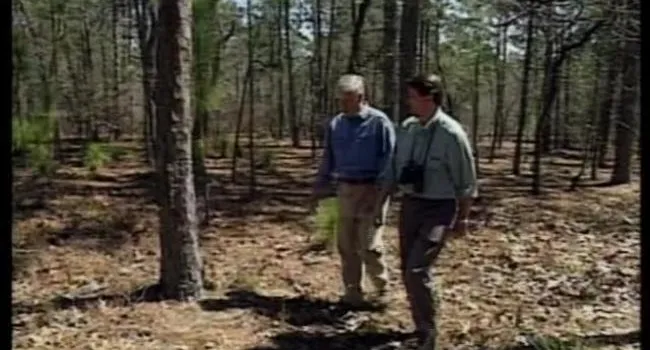
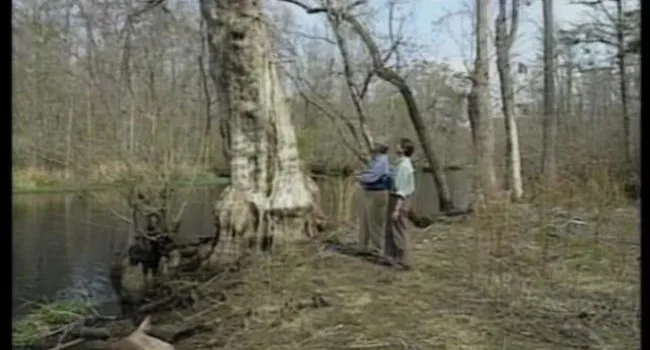
Sandy Island features around thirteen plant communities.  At their next stop, Rudy and Jim discuss the plant life which resides here. They talk about reindeer moss, a species of lichen, and what differentiates it from a “true moss.” Oak trees, such as the Darlington oak and live oak dominate the area. Spanish moss is found to be covering these trees, but Spanish moss is not a true moss; it is an epiphyte, since it grows on other plants.  American holly is a widespread species of plant throughout the Eastern U.S.

More in this Series

NatureScene / Sandy Island (S.C.)

 Sandy Island (S.C.) Stop 1 1

Video

Grades

  • 3
  • 4
  • 5
  • 6
  • 7
  • 8
  • 9
  • 10
  • 11
  • 12
Sandy Island (S.C.) Stop 1
Episode 1
Rudy and Jim visit Sandy Island, off the South Carolina coast, near Georgetown. Sandy Island is the largest undeveloped fresh water island on the East coast, consisting mainly of sand dunes, and...
 Sandy Island (S.C.) Stop 2 2

Video

Grades

  • 3
  • 4
  • 5
  • 6
  • 7
  • 8
  • 9
  • 10
  • 11
  • 12
Sandy Island (S.C.) Stop 2
Episode 2
Jim and Rudy discuss the composition of the sand dunes on Sandy Island, and how wind and water have shifted the dunes over time. The waters between these slopes make perfect hunting ground for local...
 Sandy Island (S.C.) Stop 2 3

Video

Grades

  • 3
  • 4
  • 5
  • 6
  • 7
  • 8
  • 9
  • 10
  • 11
  • 12
Sandy Island (S.C.) Stop 2
Episode 3
The Earthstar is a star shaped species of fungus which commonly grows on these dunes.
 Sandy Island (S.C.) Stop 4 5

Video

Grades

  • 3
  • 4
  • 5
  • 6
  • 7
  • 8
  • 9
  • 10
  • 11
  • 12
Sandy Island (S.C.) Stop 4
Episode 5
Rudy and Jim visit an ecotone, which is a line between two different habitats: one more dry, and one moister. Here we see a fetterbush, the inkberry or gallberry, which is another species of holly...
 Sandy Island (S.C.) Stop 5 6

Video

Grades

  • 3
  • 4
  • 5
  • 6
  • 7
  • 8
  • 9
  • 10
  • 11
  • 12
Sandy Island (S.C.) Stop 5
Episode 6
Rudy and Jim walk through a longleaf pine habitat, and come across a loblolly pine with a red-cockaded woodpecker nest. We also see Turkey oak trees, and yellow jessamine flowers. The yellow jessamine...
 Sandy Island (S.C.) Stop 6 7

Video

Grades

  • 3
  • 4
  • 5
  • 6
  • 7
  • 8
  • 9
  • 10
  • 11
  • 12
Sandy Island (S.C.) Stop 6
Episode 7
Here at The Refuge, Rudy and Jim come across a rare plant in South Carolina: rosemary. Not to be confused with the rosemary spice one would find in a kitchen. Turkey oaks are found here as well, along...
 Sandy Island (S.C.) Stop 7 8

Video

Grades

  • 3
  • 4
  • 5
  • 6
  • 7
  • 8
  • 9
  • 10
  • 11
  • 12
Sandy Island (S.C.) Stop 7
Episode 8
In this next area, Rudy and Jim come across a raccoon skull, which was most likely killed by a predator. A canebrake rattlesnake rests coiled up on a bed of leaves, showing how it perfectly blends in...
 Sandy Island (S.C.) Stop 8 9

Video

Grades

  • 3
  • 4
  • 5
  • 6
  • 7
  • 8
  • 9
  • 10
  • 11
  • 12
Sandy Island (S.C.) Stop 8
Episode 9
Cypress Tupelo Swamp: The ground here close to Indian Lake is perfect for tree species such as old cypress, red maples, and tupelos. Water pennywort resides in the water itself, and mistletoe is both...
 Sandy Island (S.C.) Stop 8 10

Video

Grades

  • 3
  • 4
  • 5
  • 6
  • 7
  • 8
  • 9
  • 10
  • 11
  • 12
Sandy Island (S.C.) Stop 8
Episode 10
In the same area, we see two white ibis birds. The ibis population in S.C. has increased dramatically since the 1920’s. The eastern cottonmouth is a common species of snake found in the Lowcountry
 Sandy Island (S.C.) Stop 9 11

Video

Grades

  • 3
  • 4
  • 5
  • 6
  • 7
  • 8
  • 9
  • 10
  • 11
  • 12
Sandy Island (S.C.) Stop 9
Episode 11
While strolling through the longleaf pine forest, Rudy and Jim come across a prominent moth. Its color pattern on the wings mimics tree bark near perfectly, making it tougher for predators to spot...