Nonflowering plants

Toggle Filters

Filter By:

Clear Filters

Grade Levels

close

Grade

Resource Type

close

Resource Type

Downloadable Content

close

Downloadable Content
Old Santee Canal Park (S.C.) Stop 8 - Visitors Center And Butterfly Garden
   - Episode 9 Old Santee Canal Park (S.C.) Stop 1 1

Video

Grades

  • 3
  • 4
  • 5
  • 6
  • 7
  • 8
  • 9
  • 10
  • 11
  • 12
Old Santee Canal Park (S.C.) Stop 1
Episode 1
Rudy and Jim visit Old Santee Canal Park, a historic lowcountry area near Monck’s Corner, South Carolina. The area features a wide array of habitats, containing both native and non-native plants. Some...
Old Santee Canal Park (S.C.) Stop 8 - Visitors Center And Butterfly Garden
   - Episode 9 Old Santee Canal Park (S.C.) Stop 3 4

Video

Grades

  • 3
  • 4
  • 5
  • 6
  • 7
  • 8
  • 9
  • 10
  • 11
  • 12
Old Santee Canal Park (S.C.) Stop 3
Episode 4
Limestone Mall Bluff – These large rock outcroppings are estimated to be around 30 million years old. Here, we see an abundance of large ferns, Papaws, Redbuds, and Ash trees.
Old Santee Canal Park (S.C.) Stop 8 - Visitors Center And Butterfly Garden
   - Episode 9 Old Santee Canal Park (S.C.) Stop 4 5

Video

Grades

  • 3
  • 4
  • 5
  • 6
  • 7
  • 8
  • 9
  • 10
  • 11
  • 12
Old Santee Canal Park (S.C.) Stop 4
Episode 5
Here at a higher elevation above the limestone, and where the soil is more loamy, we see more diverse plant life: White Oak trees, American Beech, Witch Hazel, Sparkleberry, and Switch Cane.
Old Santee Canal Park (S.C.) Stop 8 - Visitors Center And Butterfly Garden
   - Episode 9 Old Santee Canal Park (S.C.) Stop 7 8

Video

Grades

  • 3
  • 4
  • 5
  • 6
  • 7
  • 8
  • 9
  • 10
  • 11
  • 12
Old Santee Canal Park (S.C.) Stop 7
Episode 8
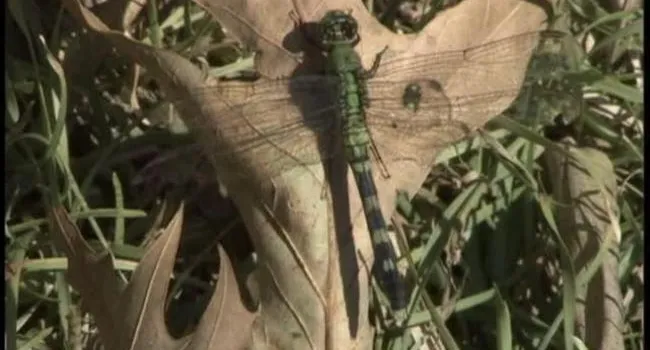
Here, outside Old Santee Canal Park’s visitor center, we see a Green Jacket dragonfly, live oaks, Poison Ivy, Trumpet Creeper, Southern Sugar Maple, and a Yellow Bellied Sap-Sucker in a nearby...
 Jocassee Gorges (S.C.) Stop 2 4

Video

Grades

  • 3
  • 4
  • 5
  • 6
  • 7
  • 8
  • 9
  • 10
  • 11
  • 12
Jocassee Gorges (S.C.) Stop 2
Episode 4
Right beside Rudy and Jim, we see several vines: Virginia Creeper, Poison Ivy, and Blackberry. Some of the trees in the area are Black Birch and Tuliptree. Some Wild Strawberry can be seen as well...
 Jocassee Gorges (S.C.) Stop 3 7

Video

Grades

  • 3
  • 4
  • 5
  • 6
  • 7
  • 8
  • 9
  • 10
  • 11
  • 12
Jocassee Gorges (S.C.) Stop 3
Episode 7
Here, Rudy and Jim find several of nature’s recyclers: a Morel mushroom, and a millipede. In a nearby tree, we find an Eastern Phoebe bird, which is an insect eater.
 Jocassee Gorges (S.C.) Stop 4 8

Video

Grades

  • 3
  • 4
  • 5
  • 6
  • 7
  • 8
  • 9
  • 10
  • 11
  • 12
Jocassee Gorges (S.C.) Stop 4
Episode 8
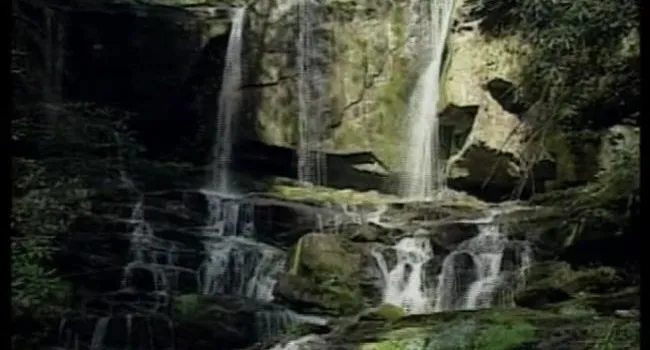
Close to the waterfall, Bluet flowers, Saxifrage, Butterweed, Spicebush, Mountain Buckeye trees, Dutchman’s Pipe vines, Wild Yam, Partridgeberry, and Long Spurred violets dominate cool, moist...
 Jocassee Gorges (S.C.) Stop 8 12

Video

Grades

  • 3
  • 4
  • 5
  • 6
  • 7
  • 8
  • 9
  • 10
  • 11
  • 12
Jocassee Gorges (S.C.) Stop 8
Episode 12
Rudy and Jim analyze the geographic features of the creek, around with some of the plant life growing in the area: White Pines, Wild Geranium flowers, Mountain Laurel, Liverwort, Maidenhair Fern,...
Congaree Swamp (S.C.) Stop 4 - Bald Cypress And Papaw
   - Episode 6 Congaree Swamp (S.C.) Stop 3 3

Video

Grades

  • 3
  • 4
  • 5
  • 6
  • 7
  • 8
  • 9
  • 10
  • 11
  • 12
Congaree Swamp (S.C.) Stop 3
Episode 3
As Rudy and Jim make their way closer to the Flood Plain, we see more tall canopy trees: Red Maple trees, and Sweet Gum trees. Several flowering plants grow in the area as well: Elderberry, Winged...
Congaree Swamp (S.C.) Stop 4 - Bald Cypress And Papaw
   - Episode 6 Congaree Swamp (S.C.) Stop 4 5

Video

Grades

  • 3
  • 4
  • 5
  • 6
  • 7
  • 8
  • 9
  • 10
  • 11
  • 12
Congaree Swamp (S.C.) Stop 4
Episode 5
At the next stop, Rudy and Jim analyze more of the plants found in the area: Hackberry trees, and Switch Cane dominate the area. A healthy Poison Ivy can be seen completely encasing a dead oak tree.