Old State House Monument | The SC State House

The first State House built in Columbia was large for its day, but it lacked adequate facilities for the transaction of state business and affairs. Construction began in 1787, but it was still unfinished when the General Assembly convened there for the first time in July 1790. Surrounded by woods, as were most structures in Columbia at the time, the first State House was hastily and cheaply constructed of wood. It was also described as uncomfortable and constantly in need of repairs. The only other building on the grounds was a small wooden house provided for the caretaker. The first State House was burned by Sherman’s troops in 1865.

When one looks at the spacious grounds and urban setting of the present State House, it is difficult to imagine how the first State House must have appeared to visitors to Columbia in the 1790s. It was situated in the middle of the wilderness, in an area that was still considered the frontier region of South Carolina. When George Washington toured South Carolina in 1791, he described Columbia by saying that it “. . . had better been placed on the river below the falls. It is now an uncleared wood, with very few houses in it, and those all wooden ones. The State House (which is also of wood) is a large and commodious building, but unfinished.”

While popular opinion has always stated that the first Columbia State House was designed by architect James Hoban, who also designed the White House and other federal buildings in Washington, D.C., evidence has never been found to document that theory. More modern researchers doubt that Hoban was the architect. One author stated, “While there is a mysterious and unfounded legend that the statehouse was the work of James Hoban — the Irish architect of the White House — voluminous documents indicate that it was the product of a collaboration between a committee and a master builder.” In Creating the South Carolina State House, the most recent publication on the history and construction of the South Carolina seat of government, author John M. Bryan writes, “The association of Hoban with the State House has persisted because it was both possible and appealing . . . George Washington wrote a letter introducing Hoban to the commissioners of the Federal District and did not mention the South Carolina State House. If Hoban had designed it, Washington would have mentioned it: only eleven months earlier he had visited Columbia, attended a ball in the unfinished building, and mingled with those responsible for its construction. Washington’s silence should stifle any lingering echoes of the mysterious, unfounded legend.”

More in this Series

Let's Go! / South Carolina State House / IV: Grounds: Monuments & Markers

African American History Monument | The SC State House

Photo

Grades

  • 3
  • 4
  • 5
  • 6
  • 7
  • 8
  • 9
  • 10
  • 11
  • 12
African American History Monument | The SC State House
The unveiling of this African American History Monument on March 26, 2001, made South Carolina the first of the fifty states to have a monument dedicated to black history on the grounds of its state...
Benjamin Ryan Tillman Monument | The SC State House

Photo

Grades

  • 3
  • 4
  • 5
  • 6
  • 7
  • 8
  • 9
  • 10
  • 11
  • 12
Benjamin Ryan Tillman Monument | The SC State House
This monument honoring Benjamin Ryan Tillman was dedicated May 1, 1940. Ben Tillman served as governor of South Carolina from 1890 to 1894, and as United States senator from 1895 to 1918. Tillman...
Bronze Stars | The SC State House

Photo

Grades

  • 3
  • 4
  • 5
  • 6
  • 7
  • 8
  • 9
  • 10
  • 11
  • 12
Bronze Stars | The SC State House
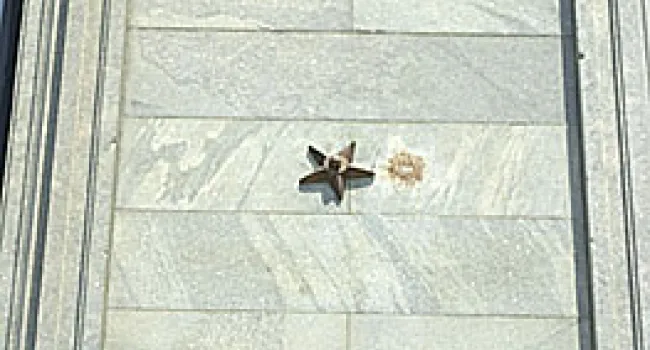
The bronze stars on the outer walls of the State House mark the spots where cannonballs struck the granite walls. The shots were fired by northern artillerymen on February 17, 1865, during General...
Confederate Soldier Monument | The SC State House

Photo

Grades

  • 3
  • 4
  • 5
  • 6
  • 7
  • 8
  • 9
  • 10
  • 11
  • 12
Confederate Soldier Monument | The SC State House
The North side inscription reads: “This monument perpetuates the memory of those who, true to the instincts of their birth, faithful to the teachings of their fathers, constant in their love for the...
Dr. J. Marion Sims Monument | The SC State House

Photo

Grades

  • 3
  • 4
  • 5
  • 6
  • 7
  • 8
  • 9
  • 10
  • 11
  • 12
Dr. J. Marion Sims Monument | The SC State House
This monument honors the founder of the science of gynecology, Dr. J. Marion Sims, a native of Lancaster, South Carolina. After graduating from South Carolina Medical College, Sims began practicing...
James F. Byrnes Monument | The SC State House

Photo

Grades

  • 3
  • 4
  • 5
  • 6
  • 7
  • 8
  • 9
  • 10
  • 11
  • 12
James F. Byrnes Monument | The SC State House
This monument honors James F. Byrnes 1879–1972, who served as South Carolina congressman, senator, governor, and secretary of state of the United States.
Jefferson Davis Highway | The SC State House

Photo

Grades

  • 3
  • 4
  • 5
  • 6
  • 7
  • 8
  • 9
  • 10
  • 11
  • 12
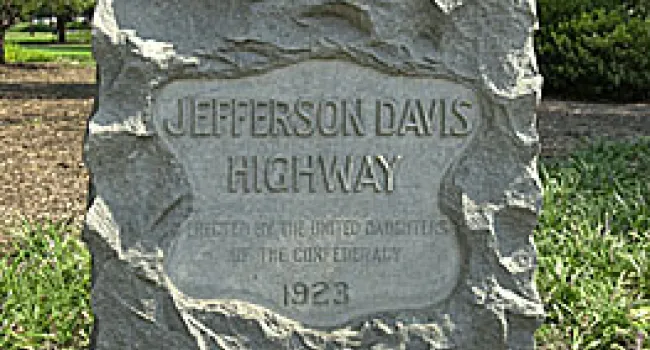
Jefferson Davis Highway | The SC State House
This marker commemorates the Jefferson Davis Highway, which was named after the president of the Confederate States of America. It was erected in 1923 by the United Daughters of the Confederacy.
Liberty Bell Replica | The SC State House

Photo

Grades

  • 3
  • 4
  • 5
  • 6
  • 7
  • 8
  • 9
  • 10
  • 11
  • 12
Liberty Bell Replica | The SC State House
This replica of the Liberty Bell is one of 53. Cast in France in 1950, the replicas were given to the United States government by six American businesses.
Lunsford Grave | The SC State House

Photo

Grades

  • 3
  • 4
  • 5
  • 6
  • 7
  • 8
  • 9
  • 10
  • 11
  • 12
Lunsford Grave | The SC State House
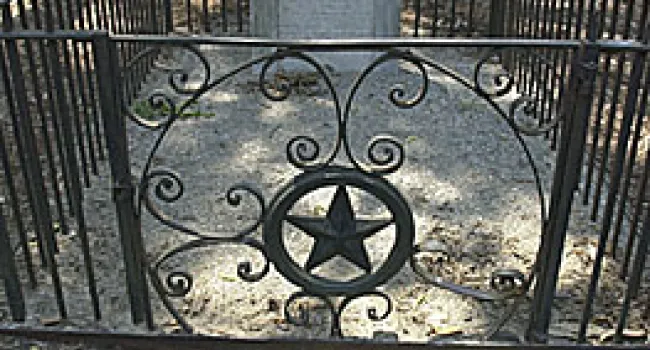
The inscription reads: “Captain Swanson Lunsford, a native of Va., and for many years a resident of Columbia. Died August 7, 1799 . . . Aged about 40 years. He was a member of Lee’s Legion in the...
Monument to Confederate Women | The SC State House

Photo

Grades

  • 3
  • 4
  • 5
  • 6
  • 7
  • 8
  • 9
  • 10
  • 11
  • 12
Monument to Confederate Women | The SC State House
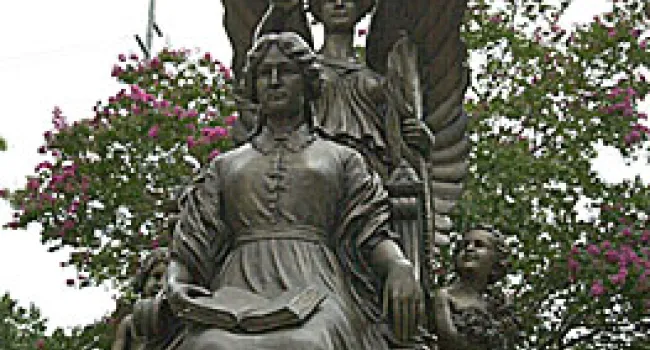
The Monument to Confederate Women, called Angels of the Confederacy, was erected in 1912. The sculptor was Frederick W. Ruckstull. The inscription on the northwest side reads: “In this monument...
Palmetto Regiment Monument | The SC State House

Photo

Grades

  • 3
  • 4
  • 5
  • 6
  • 7
  • 8
  • 9
  • 10
  • 11
  • 12
Palmetto Regiment Monument | The SC State House
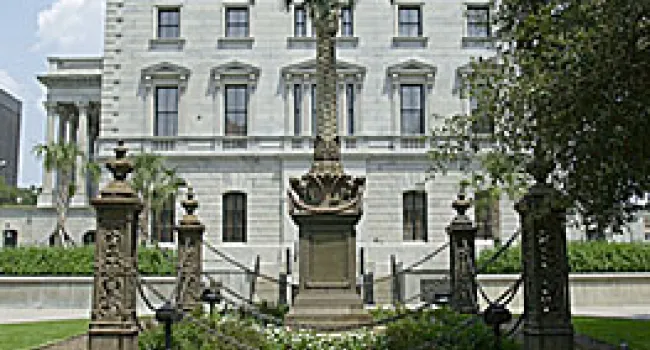
The Palmetto Regiment Monument, or the Iron Palmetto, was erected in 1858. It is the oldest monument on the State House grounds. Designed to honor the soldiers of the Palmetto Regiment for their...
Revolutionary Generals Monument | The SC State House

Photo

Grades

  • 3
  • 4
  • 5
  • 6
  • 7
  • 8
  • 9
  • 10
  • 11
  • 12
Revolutionary Generals Monument | The SC State House
The Revolutionary Generals Monument honors those South Carolina generals who served with distinction in the American Revolution. It includes dedications to General Francis Marion, known as the “Swamp...
Richardson Monument | The SC State House

Photo

Grades

  • 3
  • 4
  • 5
  • 6
  • 7
  • 8
  • 9
  • 10
  • 11
  • 12
Richardson Monument | The SC State House
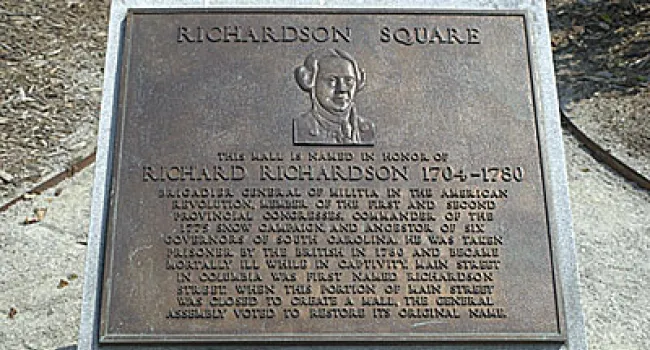
Main Street in Columbia was originally named Richardson Street, in honor of Richard Richardson (1704–1780), brigadier general of the militia during the American Revolution. Richardson also served as a...
Wade Hampton Statue | The SC State House

Photo

Grades

  • 3
  • 4
  • 5
  • 6
  • 7
  • 8
  • 9
  • 10
  • 11
  • 12
Wade Hampton Statue | The SC State House
Sculpted by Frederick W. Ruckstull, the bronze Wade Hampton statue is 15 feet tall and 17 feet long. It was. Hampton served with honor in the Civil War as commander of the Hampton Legion. Later, as...