The King’s Highway - Places as Cultural Artifacts
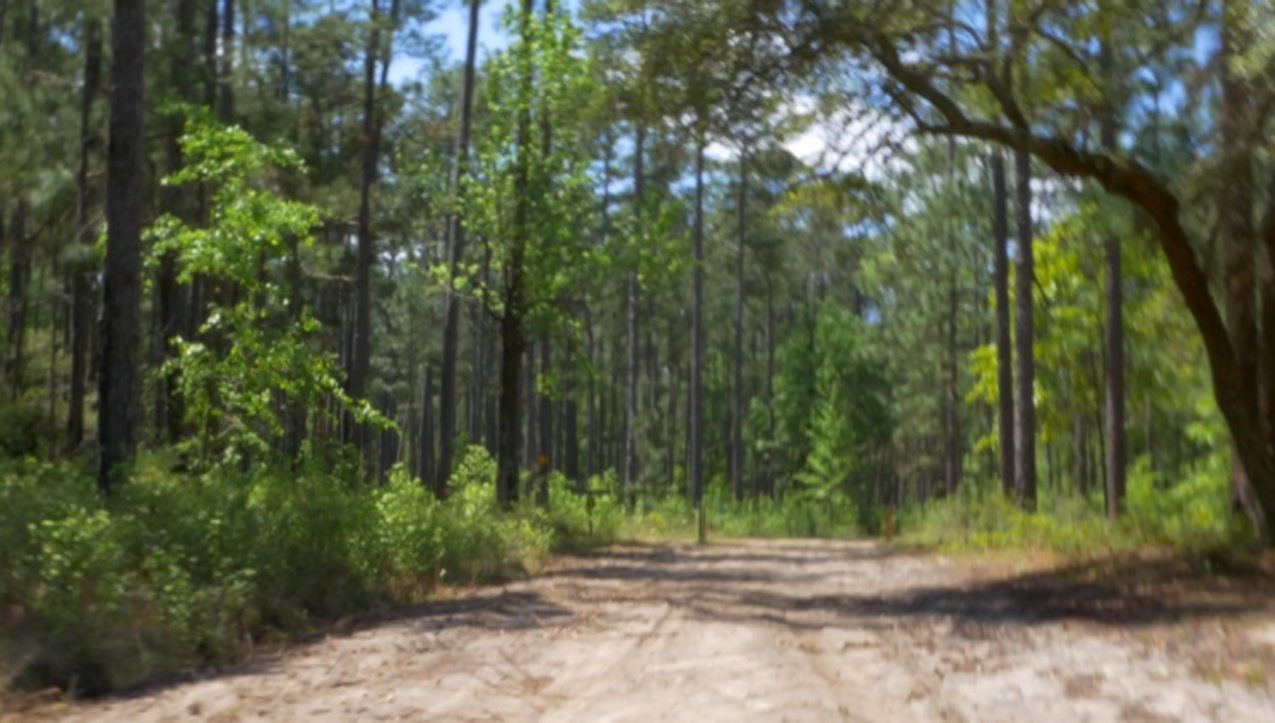
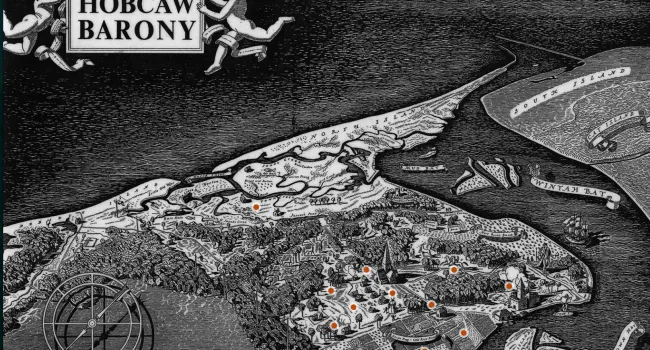
Places are cultural artifacts that reflect a particular times or culture. They are central to our understanding of individual cultures and their histories. In this lesson students will examine how different cultures and time periods have shaped the natural habitat of the King’s Highway in Hobcaw Barony. Students will answer specific questions to determine who interacted with the natural environment on King’s Highway as well as how that interaction may have affected both people and the environment. They will also examine how cultural beliefs and practices contributed to changes in the natural environment, as well as patterns of migration, and economic development. Finally, students will answer an essential question that is applicable to the historical periods examined as well as to our present time.
Lesson Created By: Kelly Hogan Kinard - Edited by Lisa Ray and Lewis Huffman
Lesson Partners: The Belle W. Baruch Foundation, ETV Education
Essential Question
How do cultural beliefs, past experiences, personal backgrounds and aspirations change the ways people interact with their environment?
Grade(s):
- 3
- 8
Subject(s):
Recommended Technology:
Computer/tablet technology with internet access.
Other Instructional Materials or Notes:
Lesson Progression
- Where is the King’s Highway?
- What are the natural features of this area that make it unique?
- Who were the first people to live in the area?
- How did their beliefs and practices change the environment?
- Chronologically, what other groups lived and interacted in this region?
- How did their beliefs and practices change the environment?
- What natural occurrences have changed the landscape and the people who interact with that landscape?
Step 1: Using the Between the Waters site and other sources listed, have students work, either as a group or within individual groups, to answer the first two questions listed above.
Step 2: Divide students into groups and assign each group a specific historical period:
- Native American Period (prehistory)
- Colonial Period
- New Nation/Antebellum Period
- 20th/21st Centuries
Step 3: Each group should research their assigned time period, answering the last 4 questions. One group will answer 5 questions.
Step 4: Each group will answer the essential question, emphasizing their assigned time period. Be specific in your response, giving supporting evidence that links change to a past cultural event or group of people. This should be the final emphasis of your presentation.
Teacher Notes
*Note to teacher – The lesson touches only partially on the standards listed below. They connect geography to history and past learning to 8th grade standards, giving them value as a tool to connect the past to the present.
Suggestions for how to creatively answer the background questions and essential question.
- Create a map for the time period – display the maps side-by-side to show change over time
- Slide presentation
- Wall Chart – (include group, the change that occurred during their era, effect of change)
- Prezi
About Between the Waters
Between the Waters is a production of South Carolina ETV and is funded by the National Endowment for the Humanities and Humanities South Carolina. The first project about Hobcaw Barony produced by...
View AssetBetween The Waters, Part 1
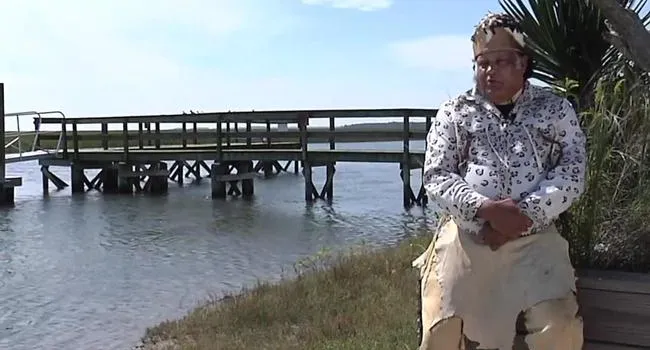
1000 BC – 900 AD is known as the “Woodland Period” of Hobcaw Barony’s history. The area of Hobcaw was inhabited by the Waccamaw Native American tribe. The name Hobcaw means “Between the Waters” in the...
View AssetBetween The Waters, Part 2
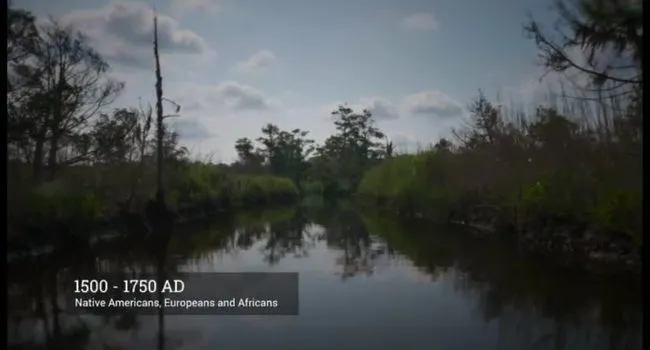
In the 16th century, Spanish and English settlers came to colonize Hobcaw Barony. This was a dark time for the Waccamaw people, for Spaniards colonized Waccamaw land without regard for the natives...
View AssetBetween The Waters, Part 3
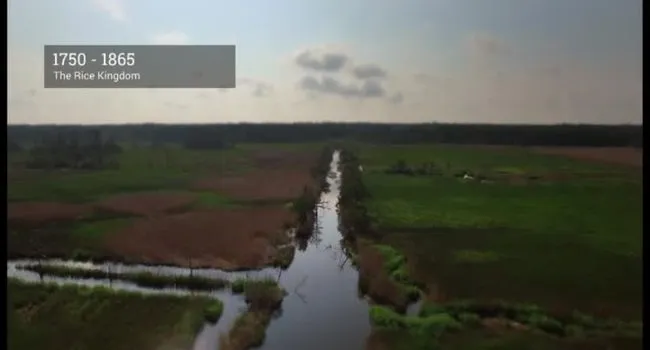
In the 18th and 19th centuries, rice was the most produced crop in the United States, and provided the most wealth. Historian Daniel Littlefield, and botanist Richard Porcher, discuss rice’s African...
View AssetBetween The Waters, Part 4
The area of Georgetown went from one of the wealthiest districts prior to the Civil War, to one of the poorest. Lee Brockington, senior interpreter at Hobcaw Barony, discusses the impact of the ending...
View AssetBetween The Waters, Part 5
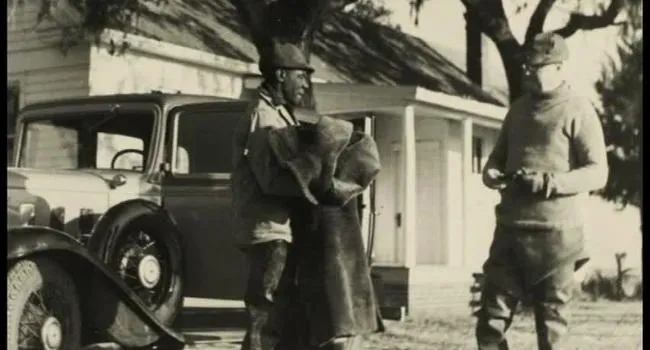
Many families of former slaves still lived in old slave housing, but the prospects of jobs, better housing, and food, were very appealing for Hobcaw’s African American communities. During the 1930s...
View AssetBetween The Waters, Part 6
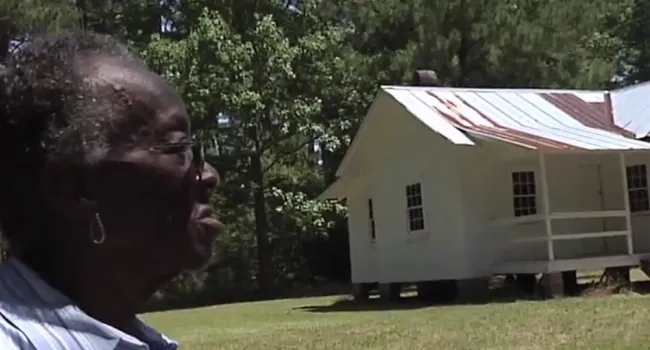
Robert McClary, who used to work for Bernard Baruch, moved to Hobcaw Barony in 1937. The McClary family visits Hobcaw Barony in March 2015, and explore some of the locations significant to Robert...
View AssetEarly 20th Century Northern Landowners in the South | Between the Waters
In the early years of the twentieth century, a number of prominent, wealthy Northerners purchased land on the Waccamaw Neck. Bernard Baruch, who bought Hobcaw Barony in 1905 as a winter vacation home...
View AssetFriendfield Village at Hobcaw Barony | Between the Waters
Joshua Shubrick was a former resident of Friendfield Village. He split his time between Georgetown, where he cared for his mother, and Hobcaw, where he went to Strawberry School. Shubrick stayed with...
View AssetOrigins of Lowcountry Cuisine | Between the Waters
Culinary adaptations transformed traditional African dishes into a unique, new creolized cuisine, influenced by European and Native American traditions, and characteristic of Gullah culture. Foodways...
View AssetRice Fields at Hobcaw Barony | Between the Waters
In 1956 Bernard Baruch signed over all of Hobcaw Barony to his daughter, Belle. Belle died in 1964, leaving Hobcaw "for the purpose of teaching and/or research in forestry, marine biology, and the...
View AssetThe Early History of Hobcaw | Between the Waters
Hobcaw Barony, known to Native Americans as “Between the Waters,” has a rich past. Although Hobcaw is best known for the Baruch family and their many wealthy and well-known visitors, the 20th century...
View AssetThe Strawberry Schoolhouse at Hobcaw | Between the Waters
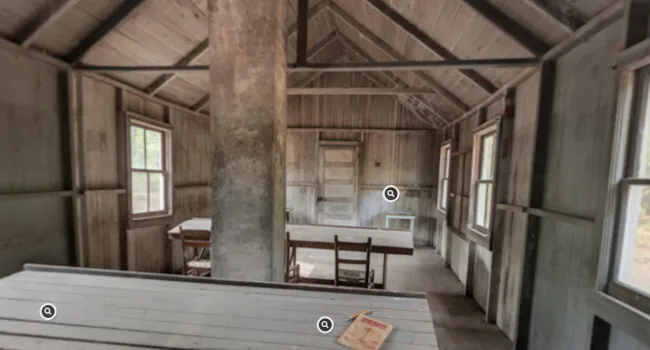
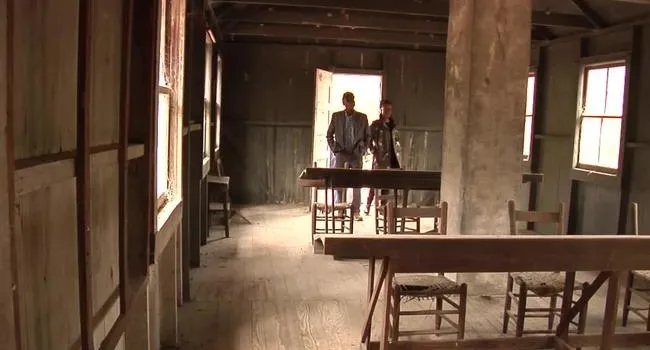
Strawberry Schoolhouse was a private school for African–American children who lived at Hobcaw Barony, built for them by Bernard Baruch in 1915. This was a one room schoolhouse with one teacher for...
View AssetThe Waccamaw Indian People | Between the Waters
The Native American presence at Hobcaw Barony is apparent in the property’s very name, said to be a Native American word meaning “between the waters.” Physical evidence is readily seen in the shell...
View AssetBetween the Waters - Lesson Plans
Between the Waters offers students and teachers an immersive, interactive approach to studying history. These standards-based lesson plans, written in conjunction with South Carolina ETV’s Education...
View AssetBetween the Waters Learning Activity
Between the Waters is SCETV’s immersive transmedia website showcasing the culture and history of Hobcaw Barony, a 16,000 acre historic site on the coast of South Carolina.
View AssetBetween the Waters – Analyzing Historical Photographs Activity
Students will examine and analyze the historical photographs found on the sites, Between the Waters, Georgetown County Digital Library, and the Belle W. Baruch Collection .
View LessonMinnie Kennedy and the Civil Rights Movement
This lesson can be a component of a year-long project based lesson on civil rights or one part of a single, shorter PBL focusing only the civil rights era after World War II. This particular extension...
View LessonThe Strawberry School and African-American Education in the Early and Mid-twentieth Century
The purpose of this lesson is to teach students about African-American education during the early and mid-twentieth century as reflected in the Strawberry School on Hobcaw Barony. Students will also...
View LessonHobcaw Barony
Hobcaw Barony is an internationally known center for research, education and conservation. One can tour the property and see Hobcaw House, where Winston Churchill, Franklin Roosevelt, and other leaders of the 20th century stayed. Also, visit the only, fully-intact, slave village on the Grand Strand, which is located on the grounds of Hobcaw Barony. Bellefield Plantation, the home and stables of Bernard Baruch’s daughter, Belle can be toured as well through guided tours. Enjoy unique ecology programs through hikes at the beach, marsh, and forests.
View ResourceGeorgetown County Digital Library
The Georgetown County Digital Library provides the opportunity to explore the unique and diverse history of the people and places that shaped Georgetown County. Explore the past through rare photographs, newspapers, real estate indentures, journals and letters.
View ResourceKnowitall.org - Bernard Baruch | SC Hall of Fame
Bernard Mannes Baruch was by all accounts one of the most famous and influential Americans of his era -- and certainly one of the wealthiest. Born in South Carolina in 1870, Baruch was a governor of the New York Stock Exchange by the age of thirty-three, amassing millions as a self-described "speculator." But by the time he was in his mid-forties he began to feel discontented with a life devoted to making money, and he sought ways that he could use his expertise in finance to benefit social and economic policy.
View ResourceStandards
- 3.2.2.ER Identify and analyze the ways people interact with the physical environment in different regions of the state, the country, and the world.
- 4.1.CO Compare the interactions among cultural groups as a result of European colonization.
- 4.1.CX Contextualize the experience of Africans, Europeans, and Native Americans in South Carolina.
- 8.1.CO Compare the three British North American colonial regions economically, politically, socially, and in regard to labor development.
- This indicator was developed to encourage inquiry into how the three British colonial regions developed in terms of their culture, economies, geography, and labor. The indicator was also developed to encourage inquiry into the unique story of the development of South Carolina.
- 8.1.P Summarize major events in the development of South Carolina which impacted the economic, political, and social structure of the colony.
- This indicator was designed to encourage inquiry into the development of South Carolina as a result of mercantilist policies, which ranged from the Navigation Acts to trade with Native Americans to the use of enslaved people as labor. This indicator was designed to promote inquiry into agricultural development, using the rice-growing knowledge of the enslaved West Africans.
- 8.1.CC Analyze the changes and continuities of the Native Americans' experiences prior to and as a result of settlement and colonization.
- This indicator was developed to encourage inquiry into Native American civilizations and cultures prior to European contact and their interactions with Europeans during the period of settlement and colonization, including their efforts to preserve their cultures.
- 8.1.E Utilize a variety of primary and secondary sources to examine multiple perspectives and influences of the economic, political, and social effects of South Carolina’s settlement and colonization on the development of various forms of government across the colonies.
Assessments
Evaluation
Scale: (1)not at all, (2)somewhat, (3)usually, (4)to a considerable extent, (5)consistently
____ The presentation has a clear and interesting beginning and end.
____ The presentation is well organized with attention to detail.
____ The presentation utilized primary documents and internet resources well, using the documents to prove the stance taken by the group.
____ The group presented facts about their time period, accurately showing connections between the events.
____ The presentation stayed on topic and clearly answered the essential question.
I understood and learned several things from the presentation. In my opinion, these facts stood out during the presentation:
_____________________________________________________________________________
_____________________________________________________________________________
_____________________________________________________________________________
______________________________________________________________________________
______________________________________________________________________________