Don’t “Cell” Yourself Short
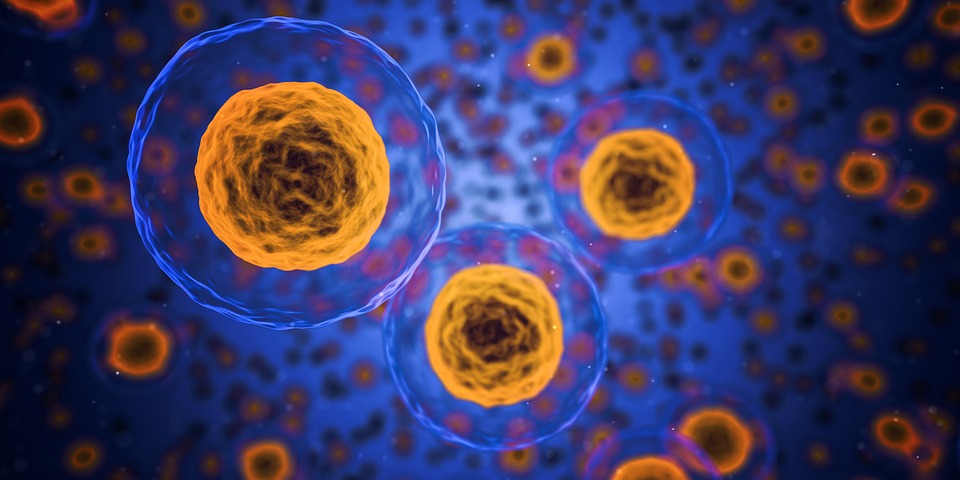
In this introductory lesson, students will use microscopes to examine plant, animal, and bacteria cells to lay the foundation for further study. Additional instruction is needed for students to master the standards.
Lesson Partners: S2TEM Centers SC, ETV Education, Knowitall.org
Essential Question
How can I use a microscope to learn more about plant, animal, and bacteria cells?
Grade(s):
- 7
Subject(s):
Recommended Technology:
- Internet access
- Devices to access internet
- Interactive whiteboard
Other Instructional Materials or Notes:
- Microscopes
- Website for the engage section: Using the Microscope. (n.d.). Retrieved February 7, 2017, from https://www.cas.miamioh.edu/mbiws/ microscopes/Usage.html
- Video- parts of a microscope
- Using a microscope The parts and how to focus. (2016, September 12).-Retrieved from https://www.youtube.com/watch?v=vrZxPVmhZzM
- Prepared slides with plant and animal cells
- Using the Microscope directions handout
- Using the Microscope Lab Sheet handout
- Blank slides (optional for students if teacher prepares cheek or onion slides in advance)
- Cover slips
- Forceps
- Cells Alive website: Cells Alive. (n.d.). Eukaryotic Organelle Cell Model. Retrieved February 07, 2017, from http://www.cellsalive.com/cells/ cell_model_js.htm
- Kahn Academy “Scale of Cells” Scale of cells. (n.d.). Retrieved February 02, 2017, from https://www.khanacademy.org/science/biology/ structure-of- a-cell/introduction-to- cells/v/scale-of- cells
- Kahn Academy Khan Academy. (n.d.). Retrieved February 02, 2017, from https://www.khanacademy.org/science/biology/ structure-of- a-cell (for 1:1 orwhole class review or extension)
- Eye droppers
- Bottles of water (if preparing wet mount slides)
- Photos of animal and plant cells
- Variety of informational texts (both digital and print)
- Paper
- Scissors
- Colored pencils, pens, markers
- Learning Why: Medical Lab technician: Medical Lab Technician | Kids Work! (n.d.). Retrieved February 02, 2017, from https://www.knowitall.org/ interactive/medical-lab- technician-kids- work
Lesson Progression
Engage: (5 minutes)
- This section can be used as whole class but is designed for 1:1 either on laptops/Chromebooks/tablets/iPads
- Divide students into groups. Groups of 4 or smaller are recommended and groups of 2 are ideal.
- Give each group a prepared slide of a cell (type does not matter). Ask them to illustrate what they see, just using their eyes.
- Next, instruct students to go to the following website and follow the instructions. It will serve as both an interactive review/introduction to parts of the microscope and how they work, while also giving students an opportunity to explore on their own. - https://www.cas.miamioh.edu/mbiws/microscopes/Usage.html
- As a whole class activity use the video “Using a Microscope: The Parts and How to Focus” - https://www.youtube.com/watch?v=vrZxPVmhZzM
- Play the video from the beginning. Pause it when it reaches the title screen “Using a microscope” at 1:13. Ask students what they think the narrator meant when he said using a microscope could “open up a whole new world.” Students will respond by engaging in a Quick Write Strategy.
Direct Instruction/ Explain: (10 minutes)
- The purpose of a microscope is to help scientists, lab technicians, doctors, and others to see items too small to see with just our eyes. As you saw with the first activity, there really are numerous details available with the help of a microscope. Cells come in different sizes but they are all small. An average human red blood cell is about 0.008 millimeters. The head of a pin of is about one millimeter in diameter, Can you believe that 125 red blood cells could be lined up in a row across the head of a pin? To see cells, understand them and identify them, we use a microscope. Why might we need to see cells and identify them? (answers might include but are not limited to: identifying illnesses such as different bacterial infections doctors can know what antibiotic will work best, identifying microorganisms, identifying molds, and so on) So what is really small. As a whole class watch the first section of the following Kahn Academy video called: “Scale of Cells”. This video clip puts how small “small” is into perspective. - https://www.khanacademy.org/science/biology/structure-of-a-cell/introduc...
Activity preparation- (3 minutes)
- We are going to look at two different types of cells-- animal cells and plant cells.
- (Teacher can provide prepared slides. It is also encouraged that teachers teach students how to prepare slides using onion (plant cells) and cheek cells (Swab inside cheek with Q-tip and put sample on slide).
- You will illustrate what you see on the slide before you use the microscope and then after.
- With your partner(s) describe what you see. What are the similarities and differences?
Guided Activity: (30 minutes)
- Teacher will serve as facilitator and use guided questioning based on student progress and needs.
Part 1
- Have materials (above) available for each student to view under the microscope and after the instructions above land explaining the foldable below, encourage students to explore.
- Students will also use this website to help identify what they see: - http://www.cellsalive.com/cells/cell_model_js.htm
- Students will choose animal cell or plant cell depending on which they are observing at the time under their microscope.
- Instruct students on how to make the following foldable (NOTE: A foldable is a term given to 3-D paper constructions that allow learners to record and process new words and/or concepts in a hands-on way.)
- Fold a sheet of loose leaf paper in half lengthwise.
- Holding the folded paper horizontally, cut along every third line of only the top layer to form tabs.
- Turn the folded paper vertically. Write the term on the flap. Write the definition or description on the space exposed when the flap is opened.
- Students will record the name of a cell structure on one outside tab.
- Using all available resources, students will record the function of the cell structure, whether it is found in a plant or animal cell, and draw a representative picture of that structure under the tab.
- The cell structures that should be included in the foldable are: cytoplasm, cell membrane, cell wall, nucleus, mitochondria, chloroplasts, lysosomes, and vacuoles.
- As pairs of students finish their foldables, have them form groups of four to compare their work.
- Circulate as students work to check progress.
- Collect the foldables to check for understanding. Return them to students and have them place their foldables in their Science notebooks.
As an extension or review, the instructor can use the following Kahn Academy site as 1:1 or whole class in part or whole. This has an 8 question formative assessment as well as videos about cells. The first section of the video was used earlier in the lesson.
Teacher Notes
- This is an introductory lesson. Further instruction will be needed for students to master the standard.
- Test all available microscopes and know how to use them so that when students are using various ones they do not get confused by instructions and form misconceptions.
- Students should know the procedures for glass and electrical safety if glass slides and microscopes utilizing electric power are used. Students should use care when handling the microscope. A microscope should be held and carried with one hand under the base and one hand on the arm. Some microscopes may have a mirror as the light source. Care should be taken not to aim the mirror directly at the Sun.
- So why do we need to know this? There are many jobs in a variety of fields that rely on the use of a microscope: Let’s check out how a medical lab technician relies on expert skills using microscope: https://www.knowitall.org/interactive/medical-lab- technician-kids-work After viewing and engaging with that website, have students complete the 3-2-1 strategy.
- 3-2- 1 is a strategy that aids reflection by providing a structure for students to summarize, organize and integrate what they are learning. When asked what they learned, students are often at a loss as to where to begin explaining their thinking. 3-2- 1 helps by giving them prompts to jump start the process of reflecting. The strategy may be used as an admit or exit ticket. It may also be used to promote reflective dialogue by small groups of students. Students will find, by using their electronic device or by using prior knowledge, 3 jobs that use microscopes, two reasons microscopes are important and 1 question they still have about cells or microscopes.
3-2-1
3-2-1 is a strategy that aids reflection by providing a structure for students to summarize, organize and integrate what they are learning.
View ResourceTwo Minute Paper - Assessment
The Two Minute Paper is a quick and simple way to collect feedback from students about their learning.
View ResourceMedical Lab Technician | Kids Work!
he Medical Lab Technician uses a microscope to find germs that cause disease. (interactive)
View ResourceMicroscopes | Hobby Shop
Learn how to use a compound microscope and a dissecting microscope.
This interactive was recently re-purposed to work on mobile devices. Please contact us with any feedback.
Standards
- Life Science: Organization in Living Systems
- 7.L.3 The student will demonstrate an understanding of how the levels of organization within organisms support the essential functions of life.
Assessments
Have students write a Two-Minute Paper to answer the following questions:
- How did using the microscope help you better understand plant, animal, and bacteria cells?
- What else would you like to know about cells?
The Two Minute Paper is a quick and simple way to collect feedback from students about their learning. It requires students to use more than recall responding to questions about a learning experience. They must consider what they have been learning about AND determine how well they feel they learned the concept or skill.
Refer to resources.