Celebrate Cinco de Mayo with Art, Music, History, Foods and Traditions of Latin-Hispanic Cultures!
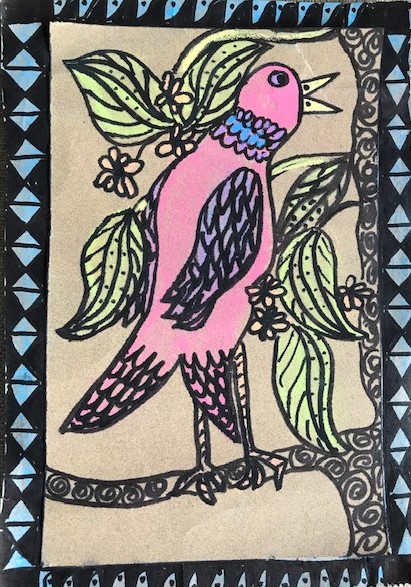
Learn how the holiday of Cinco de Mayo began, and celebrate by creating Mexican folk art paintings or drawings, discussing your favorite Hispanic foods, learning about a famous Mexican artist, listen to Hispanic folk music, and learning the names of the many Latino countries! There are so many ways to enjoy multi-cultural traditions... immerse yourself and ENJOY!
Essential Question
There are many ways that citizens of the United States are ENRICHED by learning about the heritage of other countries, especially the "countries of origin" that make up the different relatives and ancestries of our current population. The keys to acceptance of others and "getting along", is often as simple as learning about their lives, and teaching them about ours.
Grade(s):
- 1
- 2
- 3
- 4
- 5
- 6
- 7
- 8
- 9
Subject(s):
Recommended Technology:
Teacher's Computer & Smartboard
student chromebook
Other Instructional Materials or Notes:
brown construction paper....or..... paper bags
colored markers.....crayons.... or colored chalk/ hairspray
black sharpies...fat line
Lesson Progression
THIS LESSON IS FOR ALL GRADE LEVELS.
TEACHERS, REVIEW ALL WORD SEARCHES, IMAGES, & VIDEOS ;
CHOOSE THE ONES THAT WILL WORK WELL FOR YOUR CLASS/ GRADE LEVEL.
1. Show these videos as introduction: (ALL GRADE LEVELS)
* CINCO DE MAYO (PBS) Spanish for "The 5th of May"
* NUESTRO FUTURO, Our Future [ this one especially for older students, grade 4-12]
* LATINO FESTIVAL (knowitall.org) Scenes of a local Latino street festival in Columbia, SC...showing students in Hispanic/Latin American/Mexican native dress, Hispanic foods, music.
[AT THIS POINT, YOUNGER STUDENTS WATCH ART , MUSIC, DANCE VIDEOS, and complete WORD SEARCHES and CROSSWORDS.]
[OLDER STUDENTS, go to #2]
2. Discuss: the label Latino / Hispanic, and the native COUNTRIES this refers to, in reference to people having immigrated from to live in the U.S.
Watch videos: Learning Latino countries & capitals
[HISPANIC refers to anyone whose ancestry is from Spain, or any country where they speak Spanish LATINO refers to geography.] Latin America refers to people from the Caibbean (Puerto Rico, Cuba, Dominican Republic)...South America ( Ecuador, Bolivia, Colombia, etc)and Central America (Honduras Costa rica, etc.) This is a bit confusing, as different sites describe it in different terms...ask your Spanish teacher and get his/her opinion.
3.. CLASS DISCUSSION (After looking at a map and identifying these countries)
* Does anyone's family have ancestors or even LIVING relatives who still reside in one of the Hispanic/ Latino countries. How about Hispanic relatives living in your town, SC, or U.S.?
*What are everyone's favorite Mexican foods? Share particul dishes you think are tasty, and restaurants, too
* If any Mexican/Hispanic students are in the class and feel comfortable sharing a description of a favorite meal, and perhaps how it's prepared, please share!
6. Discuss: the interviews heard in NUESTRO FUTURO video,
*some of the challenges people spoke of in the film (lead students to be SENSITIVE in "making value judgements", stress polite listening skills when discussing LIFE-CHANGING ISSUES.
7. Watch ART/MUSIC/DANCE/FOOD/ GEOGRAPHY videos : (when the timing is "right" for your class)
*LEAD CLASS DISCUSSIONS : after each video.
*have all art materials READY : when it's time to create a project
*Teachers can "model" a sense of ADVENTURE & INVOLVEMENT: by creating a project themselves!
*Remind students: the PROCESS is one of the REWARDS of working with art materials ( taking your time, enjoying the surprises you may see emerge on your own paper/clay, etc)...The finished product is NOT the most important concern!!
* Allow enough time!! "Filling in spaces with a variety of patterns" ( characteristic of many hispanic artworks ) is actually a very calming, meditative activity when it is not rushed.
Teacher Notes
GRADE LEVELS 1-12 ARE ADDRESSED in this Cinco de Mayo lesson...therefore, choose the activities that will be appropriate and enjoyable for your own class.
Remember that a very simple word search / crossword puzzle may be appropriate for OLDER STUDENTS as well, as it can be a "SPRINGBOARD" ...maybe designing their own word search/ crossword that is more challenging.? Designing another one focued on hispanic foods or countries? The potential for creativity is there!
Watch all videos beforehand to choose which resources/ art projects fit your grade level, time allotted, and how you will adapt any resources for the age/ skill levels of your students.
ARTWORK SAMPLE - Hispanic food
Another sample Hispanic-style artwork, with the "pattern border" around the edges, and using brown paper to mimic the AMATE paper look.
View ResourceCinco de Mayo-video......PBS Learning
This is a short video origin of the holiday Cinco de Mayo. Historical information about the battle for Mexicans to maintain their independence against French troops is included, and other main facts about the holiday.
View ResourceWord Search - Cinco de Mayo - 3rd GRADE...PBS Learning
word search for vocabulary development, multi-cultural learning, and fun!
View ResourceWord Search - CINCO DE MAYO - 2 nd grade
Word Search for vocabulary expansion, multi-cultural learning, and FUN!
View ResourceWord Search - 1st grade - CINCO DE MAYO......PBS Learning
A word search for vocabulary expansion, multi-cultural learning, and FUN!
View ResourceWord Search - Kindergarten - CINCO DE MAYO.......PBS Learning
A simple word search for vocabulary development, multicultural learning, and FUN!
View ResourceCrossword Puzzle - Grade 3 - CINCO DE MAYO - PBS Learning
For vocabulary development, multi-cultural learning, and FUN!
View ResourceCrossword Puzzle - Grade 2 - CINCO DE MAYO ......PBS Learning
For vocabulary development, multicultural learning, and FUN!
View ResourceMain Street Latin Festival/Columbia, SC - knowitall.org -4:41
This is a short video of an annual LATIN FESTIVAL that is held in Columbia, SC. It has become very popular in the last few years...note the colorful, traditional costumes that are worn by people of Latin-Hispanic heritage, the dancing, unique foods,upbeat music, and happy atmosphere enjoyed by the crowds! There are probably MANY FESTIVALS that are similar throughout the U.S. , celebrating this holiday and culture.
View ResourceNuestro Futuro, Our Future - Why We Come - VIDEO - knowitall.org/12:00
This is an excellent video illuminating the reasons why many Hispanic /Latino people move to the U.S. to work and raise their families. It also discusses the hardships of learning a new language, and moving to a new country where some citizens do not welcome you, When we join in the festivities of Cinco de Mayo, it is also a celebration of these courageous, hard-working families that have carved out a new life in this country.
View ResourceGradews 6-8 - FRIDA KAHLO, Mexican Artist - knowitall.org
Students have access to view the artwork of Mexico's most famous 20th century artist, Frida Kahlo. Injured in a school bus accident as a youngster, she spent many years in bed, with only her drawing pad and paints as a companion for long hours. Her pain followed her throughout her life, but she outwardly showed a life of personal flamboyance, a thirst for creativity and art, and never-ending courage.
View ResourcePainting Frida Kahlo
A step-by-step demonstration of painting a portrait of the famous female Mexican artist Frida Kahlo
View ResourceIntroduction to Mexican Folk Art/ The Wandering Art Teacher/YOUTUBE/4:22
This is a wonderful explanation about "folk art" in general, but then the focus narrows to explain the characteristics of Mexican Folk Art. " Amate" paper making techniques are explained, but students will use a brown paper bag to simulate this homemade mexican paper.
View ResourceMexican Folk Paintings/ Akrithi School of the Arts /YOUTUBE/1:09
Lots of images of different styles of Mexican folk painting. Notice the variety of subject matter...close-ups of animals, wide landscapes of street festivals, etc. [ Notice the use of SKULLS...they are an important image in Mexican celebrations, especially The Day of the Dead, celebrated to honor deceased relatives and friends, near the time of Halloween.] COPYING a traditional image is acceptable, if you're trying to learn the style...but maybe you can change JUST ONE THING about it to make it "yours!"
View ResourceTRADITIONAL MEXICAN MUSIC/ Youtube 1:43
A very simple but wonderful video of local musicians in an outdoor setting playing TRADITIONAL instruments.
View ResourceJarabe Tapitio - TRADITIONAL MEXICAN DANCE / YouTube/2:20
See a Mexican Dance in traditional costumes, with live musicians playing in the background.
View ResourceElementary School Project: AMATE PAPER/ YouTube - 5:51
An art teacher demonstrates how to draw in a Mexican style on brown paper [ a substitution for traditional "amate" paper.] Very nice, but the video is in "fast motion" so he can present it quicker.
View ResourceMexicans turn ancestors' craft into artwork for sale/YouTube - 2:59
ALEBREJES is the name for a sculpture made of wood, depicting fantastical creatures. Oaxaca, Mexico is a small town that has become famous for these carvings. The carvers state that if there is a curve or knot in a branch of carving wood, they try to UTILIZE that unique part of the wood to enhance the sculpture.
View ResourceAMATE PAPER: The Ancient Mexican Tradition/Youtube -
This video demonstrates how hispanic women actually process AMATE paper out of tree bark. This video is narrated in Spanish, but students can still watch the process and understand, as they experience the different artworks being created!
Vocabulary to notice:
mud, coal, plants....used to make natural colors
lime , ash....used to bleach the brown paper white, if artist desires white paper instead of brown
Let's Draw Frida Kahlo/YouTube - 7:35
A very easy-to-follow technique to draw a likeness of Frida. A good, short "starter" art activity, due to its simplicity.
View ResourceSelf-Portraits in the Style of Frida Kahlo/ YouTube - 14:40
A nice idea, to take the principles of Frida's portrait paintings, but make the portrait have YOUR hair color and style, YOUR favorite clothing and jewelry, etc. Also include things in your life that have meaning, and include them in the background and foreground of the painting ( just as Frida often included monkeys, parrots, Mexican buildings, paint brushes, plants, flowers, etc.)
View ResourceFRIDA - YouTube - 4:51
FRIDA, a picture book FOR ALL AGES ( the artwork is exquisite!), gives a biography of Frida Kahlo's life....from the pain of polio, and also a near-death bus accident, through her determined triumph over pain through her painting and the love of art.
View ResourceTOP 10 MEXICAN FOODS - YouTube - 11:17
This is a great description of the most popular Mexican foods we might be eating in the U.S. It helps us understand the differences between burrito, taco, quesadilla, etc. Very interesting...and will make you HUNGRY!
View ResourceKids Eat Mexican Food/ YouTube 7:58
For ALL GRADES! These children "test" different Mexican foods and give their reactions. They have such funny comments, it's an enjoyable watch!
View ResourceSpanish speaking countries Map Song/ YouTube - 2:45
This song uses a rhythmic chant to list the COUNTRIES/ capitals of countries of Central America & South America.
View ResourceStandards
- 1-4 The student will demonstrate an understanding of how individuals, families, and communities live and work together in America and around the world.
- RI Reading–Informational Text
- VA.C Connecting - I can relate artistic ideas and work with personal meaning and external context.
- De.CR Creating - I can conceive and develop new design ideas and work.
- 1 Literacy Skills for Social Studies
- De.CR Creating - I can conceive and develop new design ideas and work.
- 1 Literacy Skills for Social Studies
Assessments
1.ALL GRADES: Produce one art project to show demonstrate an understanding of the holiday CINCO DE MAYO.
*Name, date, teacher's name should be on the back of the artwork.
*Students grades 1-3 should also write their favorite hispanic foods on the back, and anything else they saw & enjoyed in the videos.
* Also, students grades 4-12 should write a sentence [ on a small piece of paper]stating that Cinco de Mayo is a celebration because Mexico won an important battle that help protect the freedom of their country, long ago, back in the 1800's. TAPE THIS SMALL DEFINITION to the back of that student's drawing.
2. FOR STUDENTS, 4-12 GRADE ONLY: FIND A WORLD MAP ON YOUR COMPUTER [for reference]
* Gather 3 sheets of notebook paper, and a pencil.
*On 1 sheet, sketch a "quickie" map of the U.S. [ no states labeled].
*On 1 sheet, sketch quickie map of Central America,
* On 1sheet, sketch quickie map of South America
* Write the names of 3 Central American countries, and also 5 South American countries on the appropriate map/sheet. Label South Carolina on the U.S. map /sheet.