Between the Waters offers students and teachers an immersive, interactive approach to studying history. These standards-based lesson plans, written in conjunction with South Carolina ETV’s Education Department, are intended to extend the use of Between the Waters into classroom activities.
The Strawberry School and African-American Education in the Early and Mid-twentieth Century (pdf download)
Grades 3, 5 and 8
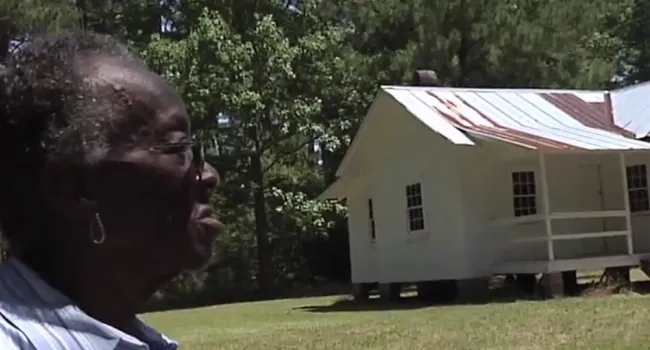
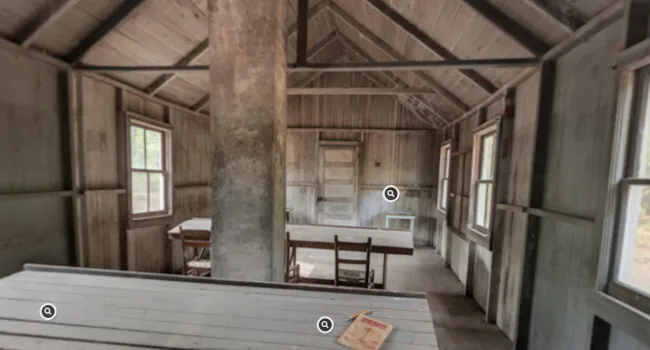
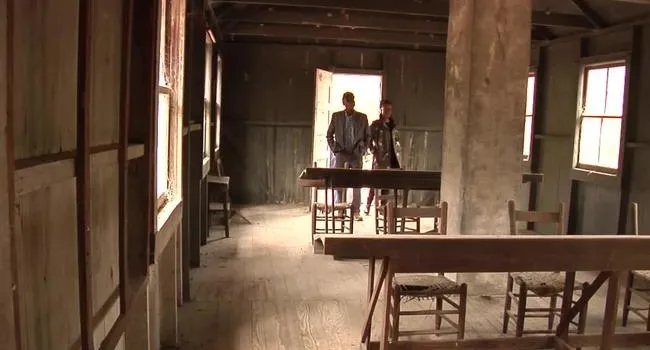
In 1905, when Bernard Baruch bought Hobcaw Barony, there were many African Americans living there. Although there was a black school in nearby Georgetown, Baruch wanted to keep African Americans on his property, where they provided essential labor and services, and in 1915 he built the Strawberry School for Hobcaw’s black children. He expanded Strawberry School in 1935. Schools were segregated and, though Bernard Baruch provided educational opportunities for white and African-American children on Hobcaw, he maintained separate schools for them, in keeping with the customs and laws of the time.
The purpose of this lesson is to teach students about African-American education during the early and mid-twentieth century as reflected in the Strawberry School on Hobcaw Barony. Students will also compare and contrast their own school experiences with those of African-American children going to segregated schools during the early to mid-twentieth century.
Belle Baruch and the Women’s Suffrage Movement
8th grade and high school
Belle Baruch was born in 1899 and grew up with the twentieth century. She graduated from high school in 1917 in the midst of WWI and joined the Women’s Radio Corp, where she trained male aircrews and pilots in the use of Morse Code. After the war she and her friend Evangeline Johnson started fighting for a woman’s right to vote, and marched with the suffragists. The young women were passionate about women's suffrage, even though Belle's grandmother belonged to an anti-suffrage movement.
In this lesson students can learn about the struggle for voting rights for women in the early twentieth century. They can use what they learn to reflect upon the ways in which women have gained equality, as well as how bias and inequality still exist today.
Between the Waters: Analyzing Historical Photographs
8th grade and high school
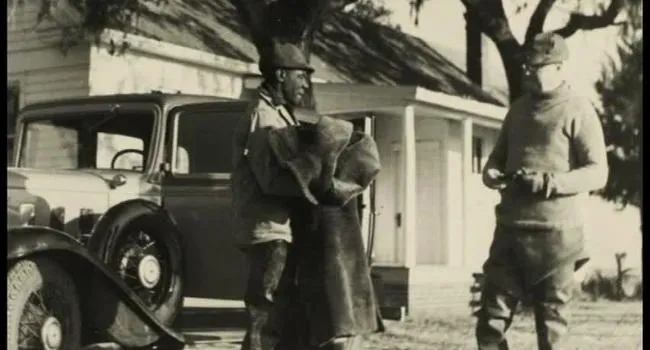
There are hundreds of historical photographs pertaining to Hobcaw Barony and the Baruch family, most of which are archived at the Georgetown County Digital Library (http://www.gcdigital.org/). Many of these photographs can also be found throughout the Between the Waters website. They provide a rich visual record of life at Hobcaw during the first half of the 20th century, and an opportunity for students to increase their literacy skills. Photographs contain a great deal of information but they can also contain misinformation. In this lesson students learn how to analyze or “read” a photograph, an important aspect of visual literacy.
Critically Analyze and Understand Primary/ Secondary Resources using FDR’s 1933 Inauguration
8th grade and high school
Franklin D. Roosevelt was inaugurated as President of the United States for the first time in 1933, at the height of the Great Depression. He was elected by a landslide on the promise of a “New Deal” for the American people that would address the ruinous effects of the Great Depression. Bernard Baruch was an adviser to FDR, but he did not fully embrace the New Deal.
The "pages" section entitled The President Slept Here, in the Son's Room of Hobcaw House, contains several excepts of archival films dealing with FDR's inauguration and the New Deal, as well as quotes from various print sources. Using these films, texts, and other primary and secondary documents, students can study and critically analyze the ways in which history is recorded and interpreted.
Kings Highway: Places as Cultural Artifacts
Grades 3 and 8
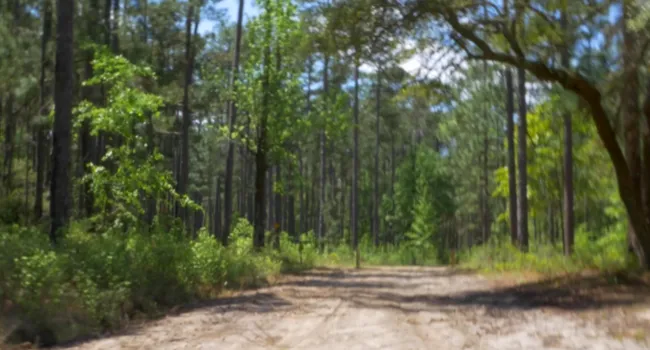
Places are cultural artifacts that reflect a particular time or culture, and are central to our understanding of history. In this lesson students will examine how different cultures and time periods have shaped the natural habitat of the King’s Highway, a historic road running through Hobcaw Barony. Students will answer specific questions to determine who interacted with the natural environment on King’s Highway as well as how that interaction may have affected both people and the environment. They will also examine how cultural beliefs and practices contributed to changes in the natural environment, as well as patterns of migration, and economic development. Finally, students will answer an essential question that is applicable to the historical periods examined as well as to our present time.
Minnie Kennedy and the Civil Rights Movement
8th grade and high school
Minnie Kennedy was born at Hobcaw Barony in 1916, the granddaughter of enslaved people. She was passionate about education, and became the first person in her family to graduate from college. After teaching in Georgetown, South Carolina for a short time, Minnie moved to New York City, where she earned graduate degrees in education and served as principal of a Head Start school. In the 1960s she became active in the civil rights movement, and in 1963 she joined CORE (Congress of Racial Equality). She spent that summer working in Louisiana, helping people pass the voter registration test.
By studying Minnie Kennedy's civil rights work, students can learn about civil rights from a personal point-of-view. This lesson can be a component of a year-long project based lesson on civil rights or one part of a single, shorter PBL focusing only the civil rights era after World War II.