The Strawberry School and African-American Education in the Early and Mid-twentieth Century

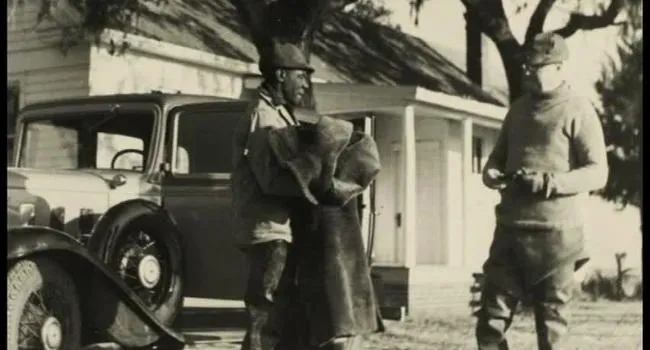
The purpose of this lesson is to teach students about African-American education during the early and mid-twentieth century as reflected in the Strawberry School on Hobcaw Barony. Students will also compare and contrast their own school experiences with those of African-American children going to segregated schools during the early to mid-twentieth century.
Lesson Created By: Kelly Hogan Kinard - Edited by Lisa Ray and Lewis Huffman Image
Lesson Partners: The Belle W. Baruch Foundation, ETV Education
Grade(s):
- 3
- 5
Subject(s):
Recommended Technology:
Tablets/Computers with internet access
Other Instructional Materials or Notes:
Lesson Progression
Instructions for students:
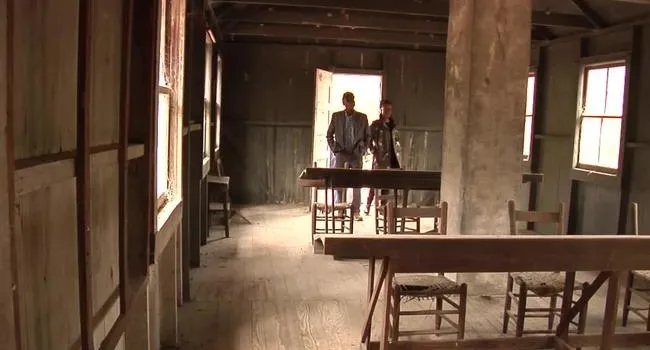
- Look at the virtual tour of Strawberry School on Between the Waters
- Compare your classroom to what you viewed in the virtual tour. How is your classroom different? Make a comparative chart, comparing specific artifacts from the Strawberry School to artifacts you have in your own classroom. Does comfort play a part in your classroom? What do you see lacking in the Strawberry School classroom that you take for granted or expect in your own classroom?
- Look at the school notebook from the Strawberry School. What subjects do they appear to be learning? What subjects are not seen in their notebook? Do you think students in this school were given a good education for the time period this school was open?
- We know this was a segregated school. Use the resources provided to find pictures of white segregated schools in South Carolina during the early twentieth century? What do you notice? How are the schools different? Do you think the education at the Strawberry School was comparable to the education that white students were getting? From what you’ve observed in the pictures, how was their schooling different?
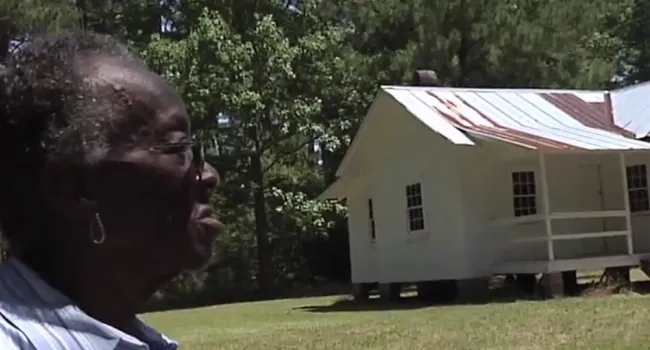
- Robert McClary attended Strawberry School as a young boy. Watch the video of Mr. McClary’s daughters reflecting on his education in a one-room schoolhouse. (Click on the hotspot next to the school bell). Describe how the daughters feel. Would you feel the same way?
Reflecting On What You’ve Learned
- Think more deeply. What is education? What do you think education can do for you? How can schools today provide you with a good education?
- Now apply this to what you’ve learned about segregated schools. Why do you think education was so important to African Americans during the early twentieth century? What did they hope education would do for them?
Projects
- Create a timeline of African-American education in South Carolina or the U.S. The Brown v. Board of Education of Topeka Kansas case which finally overturned segregation began in South Carolina with the case known as Briggs v. Elliott.
- Write a letter to the future, using the site “Future Me”, explaining the segregation policies of the past, how race-related issues are still prominent in the twenty first century, and how you/your group envisions how life and race relations will be different in the future.
- Research a prominent African American in South Carolina history and describe how education (or being denied one) shaped his or her life and career. This should be done in a slide presentation. Examples include Matthew J. Perry, Harvey Gantt, Ernest A. Finney, Jr., Modjeska Simkins, Henri Monteith, Harry S. Briggs, Sr. and Eliza Briggs, but there are many more possibilities.
- Record an oral history. Students or the teacher may know someone who attended a segregated school. Interview the person to find out what it was like to attend one. Prepare a list of questions and schedule an appointment for the interview to be done in class or on your own. Use a video/audio device to capture the interview.
Between the Waters - Strawberry Schoolhouse Virtual Tour
Interactive tour of the schoolhouse with descriptive links
View ResourceSeptima Clark | SC Hall of Fame
A pioneer in grassroots citizenship education, Septima Clark was called the ‘‘Mother of the Civil Rights Movement’’ by Martin Luther King. Clark was born in Charleston, South Carolina in 1898, daughter of a laundrywoman and a former slave. She became a teacher on Johns Island, leader of workshops at Highlander Folk School in Tennessee, and founder of “citizenship schools” throughout the South. Septima Clark, civil rights activist, developed the concept of “citizenship schools.”
View ResourceSeptima Clark | Road Trip
Septima Poinsette Clark is considered to be one of the mothers of the civil rights movement. As an active member of the NAACP, she helped the organization fight to obtain equal pay for Black teachers who were paid substantially less than White teachers.
View ResourceHarvey Gantt | Road Trip
Harvey Gantt was born on January 14, 1943. On January 1963, Harvey Gantt of Charleston, South Carolina, became the first black student to enroll at Clemson College (now Clemson University). Gantt, at twenty-one, had waged a two-year court battle through his legal counselors Constance Baker Motley and Matthew J. Perry, Jr. to attend Clemson before his admission was ordered by District Judge C. C. Wyche in Spartanburg. Gantt became the first black architect to graduate from Clemson.
View ResourceDr. Gloria Blackwell | Road Trip
Dr. Gloria (Rackley) Blackwell was active in the NAACP Youth Council at Claflin College. As an activist throughout her life, Dr. Blackwell was most noted for her lawsuit against the Orangeburg Hospital where she was arrested for refusing to leave a white waiting room. The lawsuit was argued by NAACP attorney Matthew Perry, Jr. As a result of the suit, the hospital was desegregated.
View ResourceMatthew Perry | Road Trip
Beginning in the 1950s, Judge Matthew Perry, Jr became the leading civil rights lawyer in South Carolina. Judge Perry was the first African American federal judge in South Carolina. The Matthew J. Perry, Jr. United States Courthouse was dedicated on April 23, 2004.
View ResourceMatthew Perry | SC Hall of Fame
Matthew James Perry, Jr. was born in Columbia, South Carolina, August 3, 1921. He attended law school at South Carolina State College and would play a central role in nearly every noteworthy civil rights case in South Carolina. Perry served on the U.S. Court of Military Appeals and was later named U.S. District Judge for the District of South Carolina. He died July 29, 2011.
View ResourceS.C. Chief Justice Ernest Finney | S.C. Hall of Fame
In 1960, Ernest Finney began his law practice in Sumter, South Carolina, specializing in civil rights advocacy and defense. He represented the Friendship 9, a group of black college students arrested and charged when trying to desegregate a lunch counter in Rock Hill, S.C. In 1972, Finney was elected to the State House of Representatives. Four years later he became the first black Circuit Court judge. In 1985, he was appointed to the South Carolina Supreme Court and was named Chief Justice on May 11, 1994.
View ResourceModjeska Simkins | Road Trip
Mrs. Modjeska Simkins gives a first-hand account of how the bus lawsuit case began in Clarendon county and her role in the groundbreaking case.
View ResourceHaikudeck.com
Haiku Deck is the easiest way to create an amazing presentation on the web, iPad, or iPhone.
View ResourceStandards
- 5-3 The student will demonstrate an understanding of major domestic and foreign developments that contributed to the United States becoming a world power.