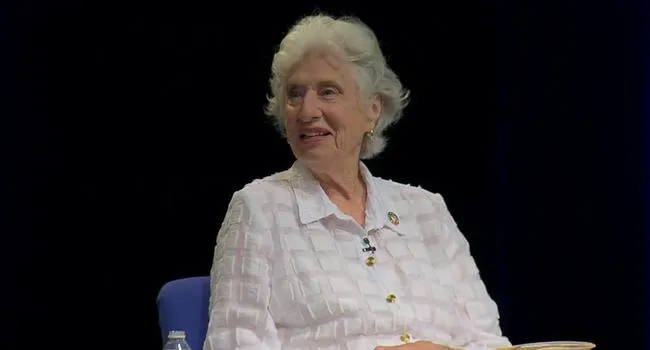
The roles South Carolinians played in the Women’s Suffrage Movement have often gone unheralded. This program highlights the efforts of famous South Carolina suffragists, such as the Grimke sisters, the Rollin sisters, and the Pollitzers.
The contemporary discussion, hosted by Beryl Dakers, analyzes the legacy of the passing of the 19th Amendment. Joining the discussion are:
Lauren Harper – Affairs Strategist and CEO of Citybright
Keller Barron – Veteran Activist, and former President and Board Member of the League of Women Voters
Ann Warner – CEO of WREN (Women’s Rights and Empowerment Network)
Tamika Isaac Devine – Attorney, and Columbia City Council-Woman
and
Dr. Lilly Filler: OB/GYN, Chair of the S.C. Holocaust Commission, and President of the Jewish Historical Society of South Carolina.
The roles South Carolinians played in the Women’s Suffrage Movement have often gone unheralded. This program highlights the efforts of famous South Carolina suffragists, such as the Grimke sisters, the Rollin sisters, and the Pollitzers.
The contemporary discussion, hosted by Beryl Dakers, analyzes the legacy of the passing of the 19th Amendment. Joining the discussion are:
Lauren Harper – Affairs Strategist and CEO of Citybright
Keller Barron – Veteran Activist, and former President and Board Member of the League of Women Voters
Ann Warner – CEO of WREN (Women’s Rights and Empowerment Network)
Tamika Isaac Devine – Attorney, and Columbia City Council-Woman
and
Dr. Lilly Filler: OB/GYN, Chair of the S.C. Holocaust Commission, and President of the Jewish Historical Society of South Carolina.
Standards
- 5.2.CX Contextualize the post-war economic climate on the cultural landscape throughout the United States and South Carolina.
- 5.2.E Evaluate multiple perspectives from the period, including the economic, political, and social impacts of World War I, the 1920s, the Great Depression, and the New Deal using primary and secondary sources.
- 8.4.CO Compare perspectives toward reform that engaged during the Progressive Era.
- This indicator was designed to encourage inquiry into how new state and federal Progressive legislation affected individuals and businesses in South Carolina and the U.S. The indicator was also designed to promote inquiry into the new perspectives that emerged regarding social and political change.
- USHC.3.CE Assess the causes and effects of significant turning points in the Populist and Progressive era from 1877–1924.
- USHC.4.CX Contextualize changes in American culture within new migration patterns, participation in global conflict, and capitalist business cycles.
- USHC.4.CC Examine the continuity and changes on the U.S. homefront surrounding World War I and World War II.
Resources
The U.S. "Melting Pot": Black, White, Asian, Hispanic, & Latino Citizens Make Us Great! Pt.1: Arts & Communications
Sometimes the United States is described as a "melting pot", because all of our citizens have immigrated here from other countries (everyone except Native Americans, who already lived in North America...
View LessonSisterhood: SC Suffragists-Moving Forward, Part 2
The panel discusses various issues women face today, such as why it is important for women to be on the ballot, and women’s representation in our government.
View AssetSisterhood: SC Suffragists-Moving Forward, Part 3
Host Beryl Dakers asks the panel why it took so long for women to gain equal rights in both the U.S., and in the state of South Carolina.
View AssetSisterhood: SC Suffragists-Moving Forward, Part 4
The panel discusses the issues women face when it comes to voter suppression.
View AssetSisterhood: SC Suffragists-Moving Forward, Part 5
Host Beryl Dakers asks the panel to address the “Elephant in the Room”, which is the issue of race and voting.
View AssetSisterhood: SC Suffragists-Moving Forward, Part 6
Each member of the panel discusses what she feels are the most important issues America faces now, regarding voting rights.
View Asset