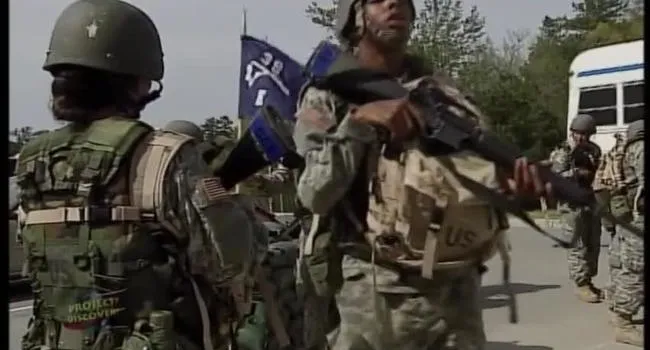
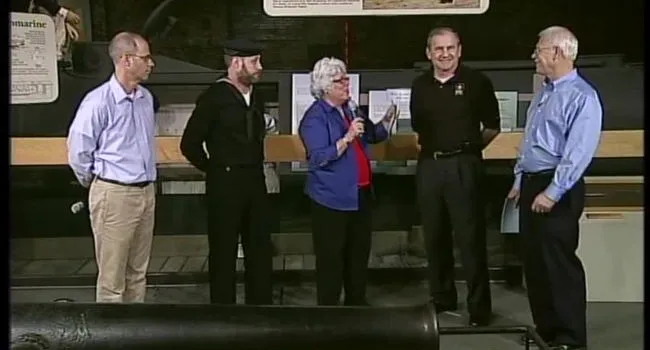
In this segment, a student asks why Francis Marion is called the Swamp Fox, and the answer is given that he was one of the first to use what we now know as guerilla tactics. He would hide in the swamp and then attack troops unexpectedly.
Another question comes in about what life was like for a soldier during the Revolutionary War. The answer is given that it was a very difficult time, for example, trudging through snow without shoes.
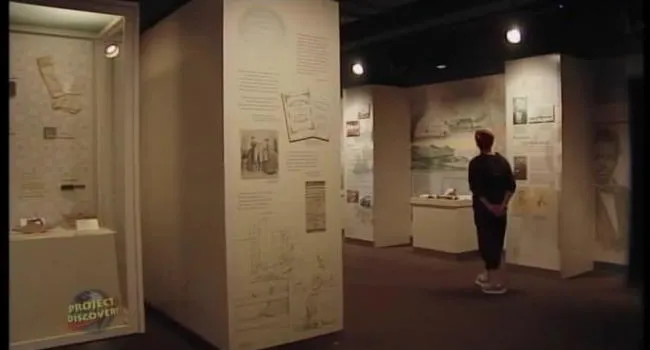
A visit is made to the History Place at the State Museum.
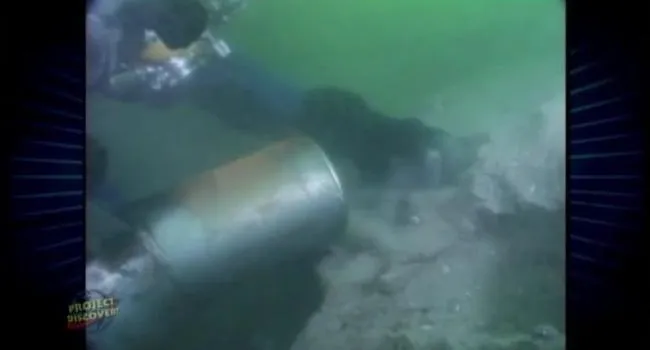
The Civil War is discussed and a reenactment from Palmetto Special: The Hunley is provided. The model of the Hunley at the State Museum is discussed, and comparisons are made between the Hunley itself, the model and the painting. Differences between the model, the painting and the Hunley itself are discussed.
In this segment, a student asks why Francis Marion is called the Swamp Fox, and the answer is given that he was one of the first to use what we now know as guerilla tactics. He would hide in the swamp and then attack troops unexpectedly.
Another question comes in about what life was like for a soldier during the Revolutionary War. The answer is given that it was a very difficult time, for example, trudging through snow without shoes.
A visit is made to the History Place at the State Museum.
The Civil War is discussed and a reenactment from Palmetto Special: The Hunley is provided. The model of the Hunley at the State Museum is discussed, and comparisons are made between the Hunley itself, the model and the painting. Differences between the model, the painting and the Hunley itself are discussed.
Standards
- 4.4.CE Explain the effects of military strategies utilized by the Union and the Confederacy.
- This indicator was developed to encourage inquiry into the effects of military strategies to include but not limited to : wartime technologies, the Anaconda Plan, conscription, and Sherman's March to Sea.
- 8.3.CE Examine consequences of the major Civil War military strategies.
- This indicator was designed to encourage inquiry into the Civil War focusing on the impacts of military strategies and major turning points on South Carolina and the U.S.
Resources
SC Veterans in History, Part 1
Veterans Day was originally celebrated on Armistice Day on November 11, 1918 to commemorate the ending of hostilities in World War I. The Armistice was signed by President Woodrow Wilson on the 11th...
View AssetSC Veterans in History, Part 5
In this segment, footage from the excavation of the Hunley is provided, and information about the salt water keeping the metal from corroding is given. Footage of the Hunley being raised is included...
View AssetSC Veterans in History, Part 6
This segment provides information on the Confederate Relic Room and answers a question about women who served in the Civil War. The definition of the word "relic" is provided, and information about...
View AssetSC Veterans in History, Part 7
In 2009, student filmmaker Morgan Adams created a film about the Doolittle Raiders for the National History Day Competition. After the Japanese bombed Pearl Harbor, the United States government asked...
View AssetSC Veterans in History, Part 8
A group of Columbia businessmen met one afternoon, raised the money, bought the acreage, and made a gift to the federal government of the land on which the camp was to be built. On June 2, 1917, Camp...
View AssetSC Veterans in History, Part 9
In this segment, the Korean War and the Vietnam War are discussed. Korea was known as a police action, and 466 South Carolinians were killed in that conflict, and four received Medals of Honor. In...
View Asset