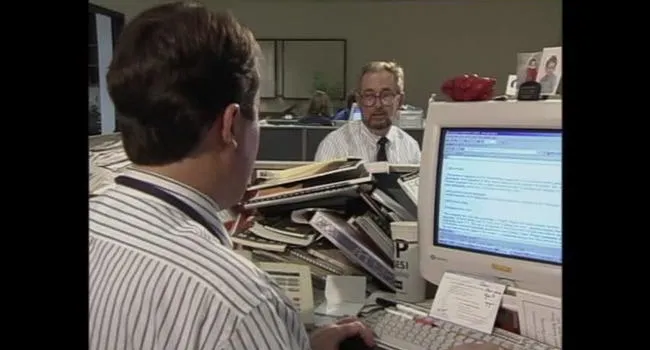
Pages of History: The Progressive Era | Carolina Stories - Episode 5

Kaltura

Major James Calvin Hemphill, from Abbeville, succeeded Francis Dawson.  At first, The News And Courier was impressed by Benjamin Ryan Tillman’s lambasting of “bourbon do-nothings” in power, but Tillman turned on his friends, and the relationship between him and The News And Courier grew stale. Another revolutionary technology adopted by The News And Courier was the use of linotype.

With the transition into the 20th century, and the election of Theodore Roosevelt in 1901, the national progressive era began. Hemphill saw progressivism as a powerful tool against Tillman. In 1910, Hemphill resigned as editor, and was succeeded by Robert Lathan, who at the age of 29, became the youngest editor of any nationally known newspaper. Robert Lathan modernized the look of the The News And Courier, and introduced sports, comics, society news, and photographs into the papers, but in 1926, the owners of The Evening Post purchased The News And Courier, and Robert Smith Manigault became the owner of both papers. 

Major James Calvin Hemphill, from Abbeville, succeeded Francis Dawson.  At first, The News And Courier was impressed by Benjamin Ryan Tillman’s lambasting of “bourbon do-nothings” in power, but Tillman turned on his friends, and the relationship between him and The News And Courier grew stale. Another revolutionary technology adopted by The News And Courier was the use of linotype.

With the transition into the 20th century, and the election of Theodore Roosevelt in 1901, the national progressive era began. Hemphill saw progressivism as a powerful tool against Tillman. In 1910, Hemphill resigned as editor, and was succeeded by Robert Lathan, who at the age of 29, became the youngest editor of any nationally known newspaper. Robert Lathan modernized the look of the The News And Courier, and introduced sports, comics, society news, and photographs into the papers, but in 1926, the owners of The Evening Post purchased The News And Courier, and Robert Smith Manigault became the owner of both papers. 
More in this Series

Carolina Stories / Pages of History: The First 200 Years of The Post And Courier

Pages of History: Reconstruction and Late 19th Century | Carolina Stories
   - Episode 4 Pages of History: Introduction | Carolina Stories 1

Video

Pages of History: Introduction | Carolina Stories
Episode 1
On January 10, 2003, the South’s oldest daily newspaper, The Charleston Post and Courier, celebrates an important milestone: their bicentennial. This newspaper has reported on war, struggles, natural...
 Pages of History: Founding | Carolina Stories 2

Video

Grades

  • 8
Pages of History: Founding | Carolina Stories
Episode 2
On January 10, 1803, The Charleston Courier was launched by two federalist proprietors from Massachusetts: Aaron Smith Willington, and Loring Andrews, and from Ireland was Stephen Cullen Carpenter...
Pages of History: Reconstruction and Late 19th Century | Carolina Stories
   - Episode 4 Pages of History: The Civil War | Carolina Stories 3

Video

Grades

  • 6
  • 7
  • 8
  • 9
  • 10
  • 11
  • 12
  • Higher Education
Pages of History: The Civil War | Carolina Stories
Episode 3
In 1844, William S. King took over as editor of the Courier, and revolutionized the newspaper by employing a new technology for instantly receiving information: the telegraph. He also established a...
 Pages of History: Mid 20th Century | Carolina Stories 6

Video

Grades

  • 8
Pages of History: Mid 20th Century | Carolina Stories
Episode 6
William Watts Ball, who had previously worked at The Evening Post and The State, became the new editor. He was an outspoken critic of “The New Deal”, along with too much government, and these views...
Pages of History: Reconstruction and Late 19th Century | Carolina Stories
   - Episode 4 Pages of History: Late 20th Century | Carolina Stories 7

Video

Grades

  • 8
Pages of History: Late 20th Century | Carolina Stories
Episode 7
In 1974, Manigault Wilcox became the editor of The News And Courier while Thomas Waring became editor of The Evening Post. Arthur Wilcox believed in effective on-the-job training, and several former...