Teaches the days of the week and the seasons, as well as some holidays and customs.
Vocabulary used in this episode:
Week / La semaine
- Monday / lundi
- Tuesday / mardi
- Wednesday / mercredi
- Thursday / jeudi
- Friday / vendredi
- Saturday / samedi
- Sunday / dimanche
- What day is today? / Quel jour est-ce aujourd'hui?
- Today is… / Aujourd'hui c'est…
Seasons / les saisons
- Spring / le printemps
- Fall / l’automne
- Summer / l’été
- Winter / l’hiver
- It’s sunny. / Il fait du soleil.
- It’s hot, warm. / Il fait chaud.
- It’s windy. / Il fait du vent.
- It’s cold. / Il fait froid.
- It’s cool. / Il fait frais.
Lesson 109 – Celebrating Holidays
Objectives
- To learn the days of the week
- To learn the different seasons and the weather during those seasons
- To learn about the differences in the calendar and the seasons in France
- To learn about celebrations and holidays
Culture
The French celebrate some of the same holidays we do here in the United States. Christmas is probably the most celebrated holiday of the year. Christmas is celebrated in France much like it is in the United States. The French decorate Christmas trees and exchange gifts. On Christmas eve the family gets together for a very special meal. Generally they begin to prepare for this meal in early December. A traditional dessert is the yule log (la bûche de noël). This feast lasts several hours and wraps up in time for the family to attend the midnight mass at church (le réveillon). When they return, the children lay out their shoes under the tree in hopes of finding them filled with goodies and gifts from Santa (Père Noël) when they wake up on Christmas day.
Information for the Teacher
Monday is the first day of the week in many other countries around the world. Their calendars begin with Monday as the first day. This is true in all Francophone countries.
Before Viewing the Video Lesson
- Ask your students what day is today? Ask them to name the days of the week. What day do they begin with when they are reciting the days of the week? Tell them that in today’s lesson they will learn the days of the week in French. Ask them to listen carefully for something different about the days of the week besides their names. (Note: Monday is the first day of the week on the French calendar.)
- Ask your students to name the seasons of the year. What season are you in now? Write the names of the seasons on the board and ask students to tell you one word that they think of when they think about each season. List these also.
- Talk about holidays that are celebrated in your community. Some are celebrated all over the world, some are just celebrated in the United States, and some may just be celebrated in your community. Tell which holidays would fall in each of the above categories and why?
Description of the Video Lesson
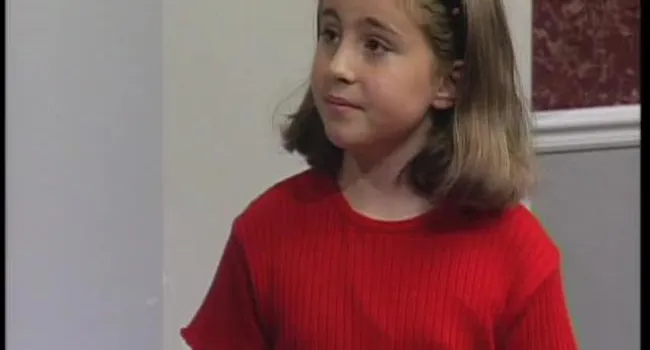
Monsieur Dubois greets the children at the door. Caroline is happy because she is going on vacation. When she is asked when they are going, Caroline says they are going on Friday (vendredi). Monsieur Dubois gets the calendar and shows them the days of the week (lundi, mardi, mercredi, jeudi, vendredi, samedi, dimanche). He explains that Monday is the first day of the week in French-speaking countries and is, therefore, the first day on the calendar.
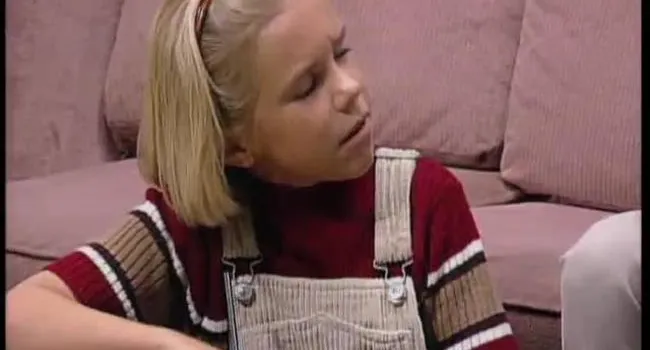
Ryan is excited because her baby sister is being brought home Saturday (samedi). Wednesday (mercredi) is her favorite day because she and her baby sister were born that day.
Song
Days of the week, What day were you born? What is your favorite day?
Review
lundi, mardi, mercredi, jeudi, vendredi, samedi, dimanche
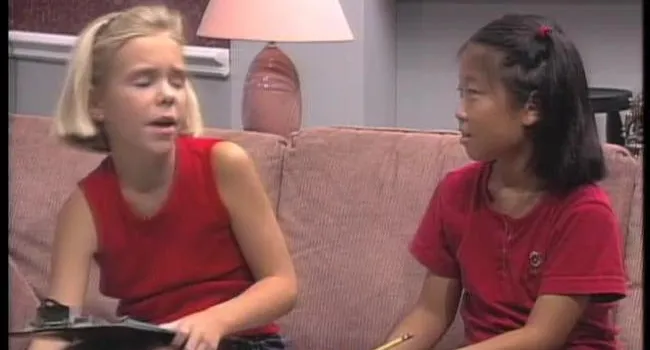
Caroline explains what seasons (les saisons) she goes swimming at the lake: spring (le printemps) and summer (l’été). The children drew pictures of their favorite seasons. Caroline naturally drew summer/spring because of her love of swimming. Ryan drew the many colors of leaves in the fall (l’automne), while Jay claimed that the snowman in his picture of winter (l’hiver) was ten (dix) feet tall in real life.
Review
le printemps, l’été, l’automne, l’hiver
In Caroline’s picture of spring/summer it is sunny (Il fait du soleil) and it is hot/warm (Il fait chaud). In Ryan’s picture it is windy (Il fait du vent) and it is cool (Il fait frais). In Jay’s picture of winter it is cold (Il fait froid).
Classroom
Teacher tells a story of a butterfly and seasons and class sings together.
The group discusses different holidays and what they love about them.
Holidays in North America
Christmas, Valentines Day, Easter, the Fourth of July, Halloween and Thanksgiving
Review
lundi, mardi, mercredi, jeudi, vendredi, samedi, dimanche
Follow-up Activities
- Use the First Step en Français Again video lesson to review the emphasized vocabulary.
- Review the vocabulary words for the days of the week. The students should learn the names of the days of the week in French and use them as much as possible in context.
- Talk about the French calendar and emphasize that Monday is the first day of the week. Make a calendar with Monday as the first day and use it in class all week. Let them write their homework assignments on a calendar with the French names for the days. They can then show off their new vocabulary at home.
- In the lesson Monsieur Dubois asked the children to name their favorite season. Ask your students the same question in French and let them write simple sentences in French about their favorite seasons and then illustrate them.
- Compare the celebration of Christmas in France to the celebration of this holiday in the United States. Your students may have different ways they celebrate the holiday, based on their family’s nationality, religion, and traditions.
- After these follow-up activities, let students view the video lesson again so they can respond and practice with the children on the lesson.
Supplemental Activities
- Do a weather chart and track the weather on one of the calendars made as a part of followup activity #4. Begin a science unit on weather or seasons.
- Discuss why the seasons would be different in other francophone countries and North America. Use a globe and shine a flashlight on the earth so that North America gets the most light. Tell the students to pretend that the flashlight is the sun therefore what season would it be in North America and why? If North America were hot from the sunlight, what would South/Middle America be like? Since there is less sun then South America would be colder and what would the season be there? Use the word hemispheres to discuss the differences in these areas. Reverse the angle of the sun and ask the questions again.
- How are holidays celebrated around the world? Let your students do research in the media center. Ask parents or natives of other countries to visit the class to tell about their special holidays. Have some of these celebrations if possible.
- In one of the lesson’s songs, a child’s favorite day was the day he/she was born. Ask the students on what day were they born?. They will probably have to ask or you can provide a multiyear calendar or calendars for the years that your students would have been born so they can look up the day of the week. Read the poem “Monday’s Child” to the students after they have found the day of the week on which they were born. Do any of the descriptions fit your students or is it just a nice poem?
- Students can learn French Christmas songs like “Silent Night” or “Petit Papa Noël.” These can be found at music stores, in foreign language catalogs and on French-Canadian websites.
Remember to use the vocabulary words as much as possible in class during the next week. This should be especially easy since the words relate to the days of the week. Every morning ask the students in French what day is today (Quel jour sommes-nous aujourd’hui?) and they should answer with “Aujourd’hui c’est __________.”