Insects

Insects are invertebrate. They have a hard outer shell called an exoskeleton. 
Toggle Filters

Filter By:

Clear Filters

Grade Levels

close

Grade

Resource Type

close

Resource Type

Downloadable Content

close

Downloadable Content
Bellwort | Appalachian Cove (S.C.) | NatureScene Appalachian Cove (S.C.) Stop 5 11

Video

Grades

  • 3
  • 4
  • 5
  • 6
  • 7
  • 8
  • 9
  • 10
  • 11
  • 12
Appalachian Cove (S.C.) Stop 5
Episode 11
In the same stop, Rudy and Jim talk about the plants growing on a nearby rock: moss, Walking Fern, and another Canada Violet. On a nearby tree, Rudy and Jim find a cocoon of a Large Silkworm Moth.
Bellwort | Appalachian Cove (S.C.) | NatureScene Appalachian Cove (S.C.) Stop 2 6

Video

Grades

  • 3
  • 4
  • 5
  • 6
  • 7
  • 8
  • 9
  • 10
  • 11
  • 12
Appalachian Cove (S.C.) Stop 2
Episode 6
The increased amount of rain makes for a much more diversified forest when it comes to the tall trees in the area. Here we see the Tulip Tree, and the Understory Tree. Along the way Rudy and Jim come...
Bellwort | Appalachian Cove (S.C.) | NatureScene Appalachian Cove (S.C.) Stop 5 10

Video

Grades

  • 3
  • 4
  • 5
  • 6
  • 7
  • 8
  • 9
  • 10
  • 11
  • 12
Appalachian Cove (S.C.) Stop 5
Episode 10
At this next stop, Rudy and Jim find Canada Violets, White Trillium, Blue Cohosh, and a Green Frog can be seen close-by near the stream. Other plants which dominate the area are Yellow Buckeye trees...
 Sandy Island (S.C.) Stop 1 1

Video

Grades

  • 3
  • 4
  • 5
  • 6
  • 7
  • 8
  • 9
  • 10
  • 11
  • 12
Sandy Island (S.C.) Stop 1
Episode 1
Rudy and Jim visit Sandy Island, off the South Carolina coast, near Georgetown. Sandy Island is the largest undeveloped fresh water island on the East coast, consisting mainly of sand dunes, and...
 Sandy Island (S.C.) Stop 4 5

Video

Grades

  • 3
  • 4
  • 5
  • 6
  • 7
  • 8
  • 9
  • 10
  • 11
  • 12
Sandy Island (S.C.) Stop 4
Episode 5
Rudy and Jim visit an ecotone, which is a line between two different habitats: one more dry, and one moister. Here we see a fetterbush, the inkberry or gallberry, which is another species of holly...
 Sandy Island (S.C.) Stop 9 11

Video

Grades

  • 3
  • 4
  • 5
  • 6
  • 7
  • 8
  • 9
  • 10
  • 11
  • 12
Sandy Island (S.C.) Stop 9
Episode 11
While strolling through the longleaf pine forest, Rudy and Jim come across a prominent moth. Its color pattern on the wings mimics tree bark near perfectly, making it tougher for predators to spot...
 Little Pee Dee River (S.C.) Stop 3 7

Video

Grades

  • 3
  • 4
  • 5
  • 6
  • 7
  • 8
  • 9
  • 10
  • 11
  • 12
Little Pee Dee River (S.C.) Stop 3
Episode 7
The Southern Toad is a species of amphibian typical to the coastal plain. It is easily distinguishable due to the pair of crests between the eyes. The Long Winged Skimmer, an amber colored dragonfly...
Fall Webworm | Forty Acre Rock (S.C.)

Photo

Grades

  • 3
  • 4
  • 5
  • 6
  • 7
  • 8
  • 9
  • 10
  • 11
  • 12
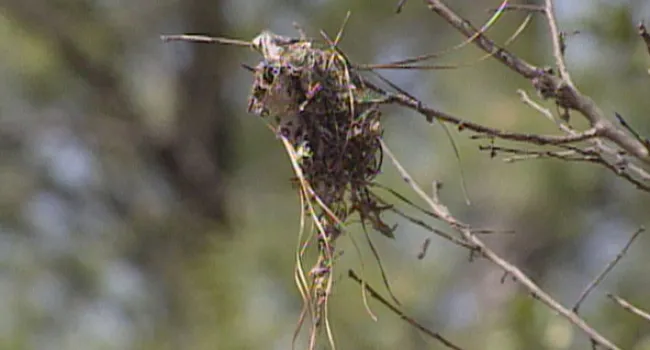
Fall Webworm | Forty Acre Rock (S.C.)
• Hyphantria cunea • Silk web made by caterpillar • Native to North America and Mexico • Larvae often seriously damage trees and shrubs • Larvae spin silk over foliage, skeletonizing leaves as they...
Bagworm Moth | Forty Acre Rock (S.C.)

Photo

Grades

  • 3
  • 4
  • 5
  • 6
  • 7
  • 8
  • 9
  • 10
  • 11
  • 12
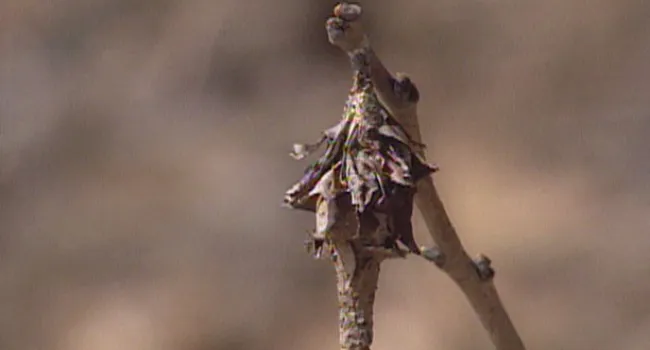
Bagworm Moth | Forty Acre Rock (S.C.)
• Lepidoptera psychidae • Small, mostly stout-bodied moth • Wingless female • Black male with almost clear wings • Larva feeds on cedars • Cocoon is used for protection • Male leaves cocoon, leaving...