Birds

Birds are vertebrates, who share similar characteristics like feathers, beaks, and also the ability to lay eggs.
Toggle Filters

Filter By:

Clear Filters

Grade Levels

close

Grade

Resource Type

close

Resource Type

Downloadable Content

close

Downloadable Content
 Sandy Island (S.C.) Stop 5 6

Video

Grades

  • 3
  • 4
  • 5
  • 6
  • 7
  • 8
  • 9
  • 10
  • 11
  • 12
Sandy Island (S.C.) Stop 5
Episode 6
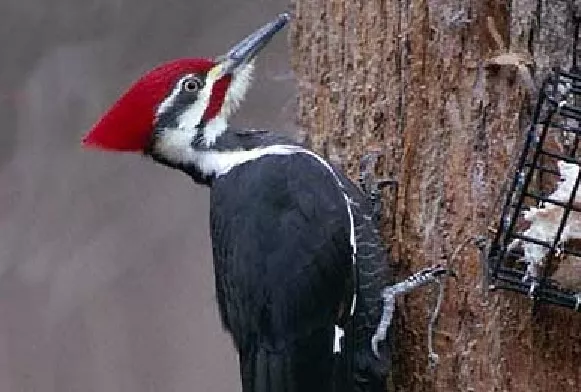
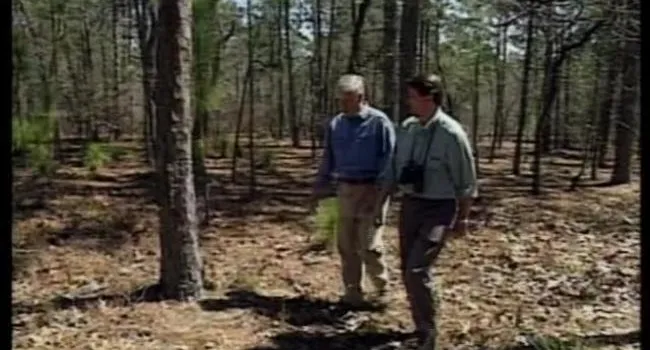
Rudy and Jim walk through a longleaf pine habitat, and come across a loblolly pine with a red-cockaded woodpecker nest. We also see Turkey oak trees, and yellow jessamine flowers. The yellow jessamine...
 Sandy Island (S.C.) Stop 8 10

Video

Grades

  • 3
  • 4
  • 5
  • 6
  • 7
  • 8
  • 9
  • 10
  • 11
  • 12
Sandy Island (S.C.) Stop 8
Episode 10
In the same area, we see two white ibis birds. The ibis population in S.C. has increased dramatically since the 1920’s. The eastern cottonmouth is a common species of snake found in the Lowcountry
 Sandy Island (S.C.) Stop 9 11

Video

Grades

  • 3
  • 4
  • 5
  • 6
  • 7
  • 8
  • 9
  • 10
  • 11
  • 12
Sandy Island (S.C.) Stop 9
Episode 11
While strolling through the longleaf pine forest, Rudy and Jim come across a prominent moth. Its color pattern on the wings mimics tree bark near perfectly, making it tougher for predators to spot...
Little Pee Dee River (S.C.) Stop 1 - Ferns, Bull Nettles, And Pocosins
   - Episode 2 Little Pee Dee River (S.C.) Stop 3 6

Video

Grades

  • 3
  • 4
  • 5
  • 6
  • 7
  • 8
  • 9
  • 10
  • 11
  • 12
Little Pee Dee River (S.C.) Stop 3
Episode 6
Still in an area close to the coast, we see different plant life due to the significantly lower levels of salinity. Willow trees grow here, and a Yellow Crowned Night Heron bird has built a nest in a...
 Little Pee Dee River (S.C.) Stop 2 4

Video

Grades

  • 3
  • 4
  • 5
  • 6
  • 7
  • 8
  • 9
  • 10
  • 11
  • 12
Little Pee Dee River (S.C.) Stop 2
Episode 4
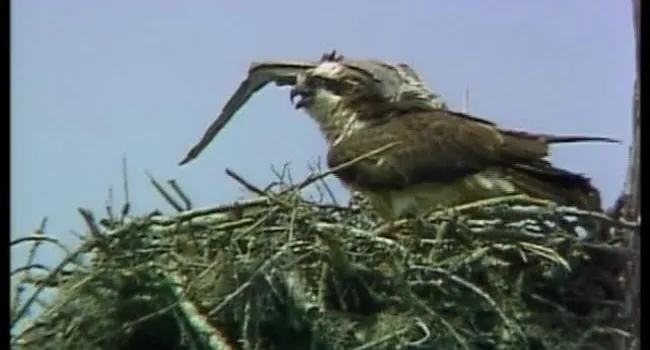
The Osprey, one of the species of birds found in this area, has repurposed a dead oak tree by building a nest on top of it. The Osprey reuses its same nest year after year.
Hooded Warbler | The Cove Forest

Photo

Grades

  • 6
  • 7
  • 8
  • 9
  • 10
  • 11
  • 12
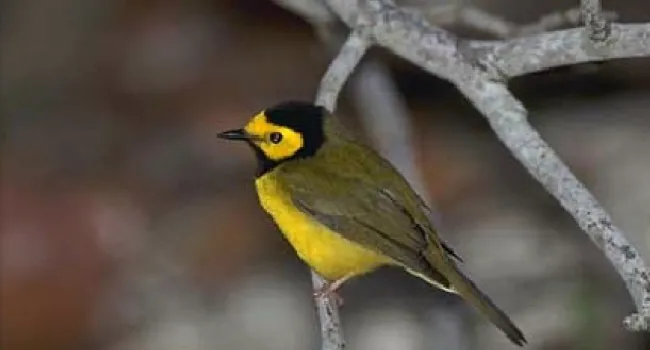
Hooded Warbler | The Cove Forest
(Wilsonia citrina) These warblers are common in the moist hardwood forests of the southeast. Their feeding activity is usually concentrated in the understory bushes. They consume insects on the ground...
Ovenbird | The Cove Forest

Photo

Grades

  • 6
  • 7
  • 8
  • 9
  • 10
  • 11
  • 12
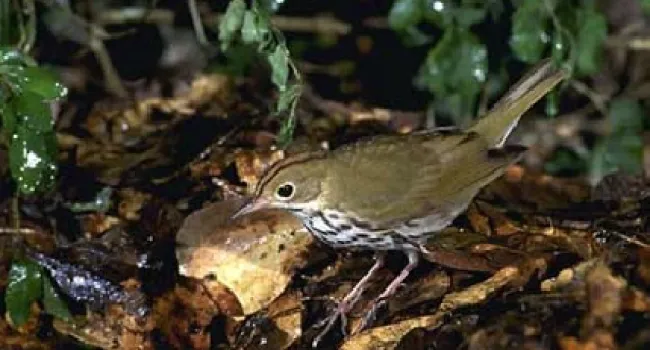
Ovenbird | The Cove Forest
(Seiurus aurocapillus) This bird requires mature hardwood forests for successful breeding. Often observed walking on the leaf litter of the forest floor searching for insects. Its call is heard as a...
Acadian Flycatcher | The Cove Forest

Photo

Grades

  • 6
  • 7
  • 8
  • 9
  • 10
  • 11
  • 12
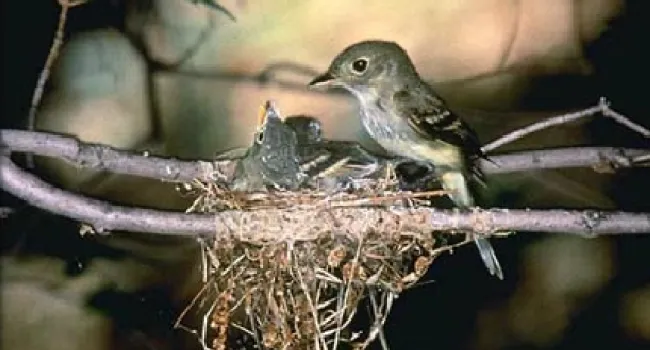
Acadian Flycatcher | The Cove Forest
(Empidonax virescens) This flycatcher prefers deciduous forests that are associated with relatively moist habitats such as those found along rivers. High affinity for sites with high shrub densities...
Worm-Eating Warbler | The Cove Forest

Photo

Grades

  • 6
  • 7
  • 8
  • 9
  • 10
  • 11
  • 12
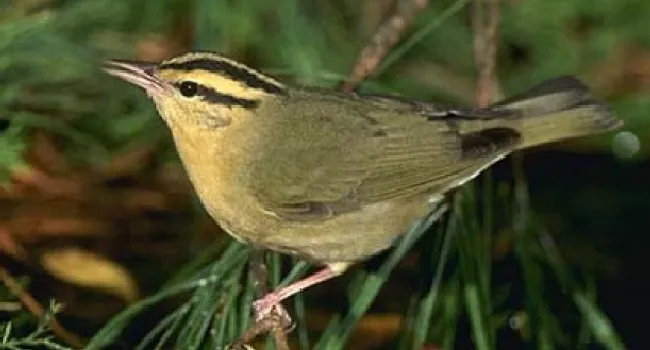
Worm-Eating Warbler | The Cove Forest
(Helmitheros vermivorus) An insect eater that does not feed heavily on earthworms. Most feeding is concentrated at the ground or shrub levels. Prefers dense wooded areas, especially cool, shaded...