Sun Sponge | The Salt Marsh

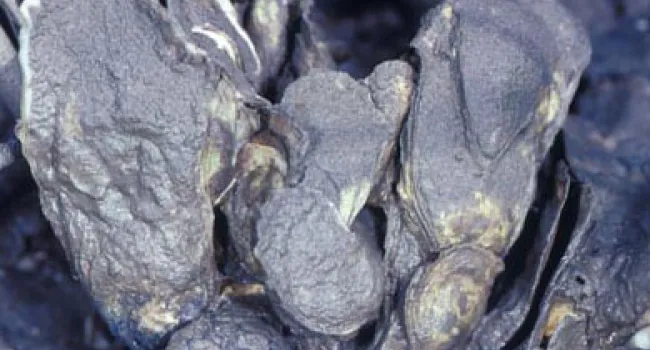
The sun sponge is named for its unusual lifestyle. It is one of the very few sponges that can tolerate exposure to the sun and air. Nearly every other sponge will die when air gets into its body. Most sponges are damaged by direct exposure to sunlight, and much of their bright coloration helps protect them from sunburn. Sun sponges grow attached to oysters or other hard substrates. The sponge is usually light yellow and shaped like a mat, with many stubby fingers sticking up from its surface. Sponges are filter-feeding animals. They are the simplest, and probably most ancient, form of animal life on Earth.

More in this Series

SC LIFE / The Salt Marsh / 10. Oyster Reef

Annelid | The Salt Marsh

Photo

Grades

  • 6
  • 7
  • 8
  • 9
  • 10
  • 11
  • 12
Annelid | The Salt Marsh
Several different annelids are associated with the oyster reef, but the spaghetti worm is one of the largest and most spectacular. The spaghetti worm lives in a burrow of mud that it builds among the...
Oystercatchers | The Salt Marsh

Photo

Grades

  • 6
  • 7
  • 8
  • 9
  • 10
  • 11
  • 12
Oystercatchers | The Salt Marsh
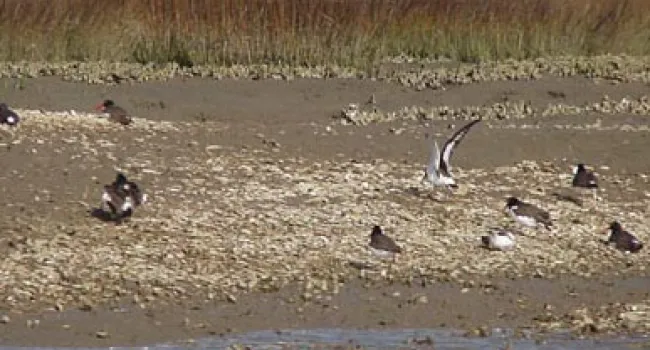
Boldly patterned in black and white, the stocky American oystercatcher is hard to mistake. It has long red legs and a large red bill. As the name suggests, they feed mainly on oysters, although they...
Oysters | The Salt Marsh

Photo

Grades

  • 6
  • 7
  • 8
  • 9
  • 10
  • 11
  • 12
Oysters | The Salt Marsh
The Eastern oyster occurs along the entire East Coast, from Canada to the West Indies. It varies somewhat in habitat along this area. Oysters build reefs because the young oysters, called spat, are...