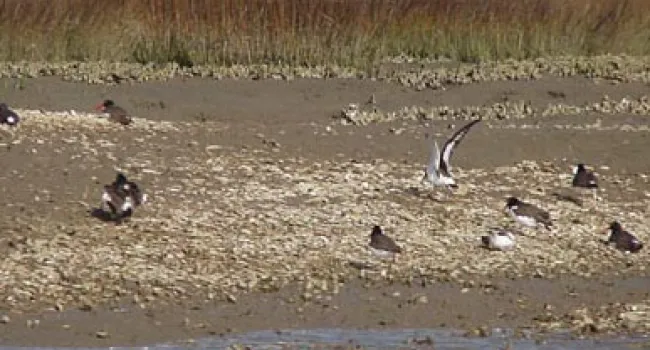
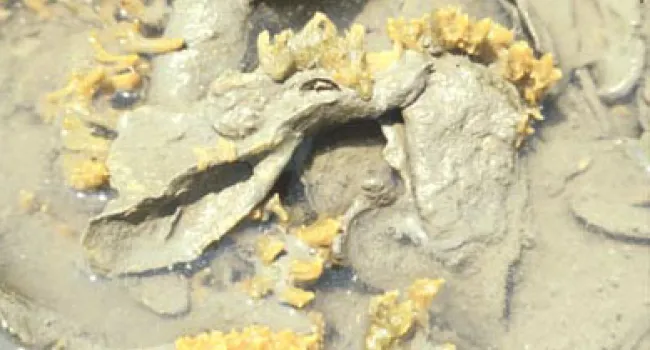
The Eastern oyster occurs along the entire East Coast, from Canada to the West Indies. It varies somewhat in habitat along this area. Oysters build reefs because the young oysters, called spat, are attracted to the shells of the adults. In the Northeast and into the Chesapeake Bay, which is famous for its oysters, the oyster reefs lie in subtidal habitats, which always remain submerged in water. In the Southeast, most oyster reefs are intertidal, exposed by low tide but covered by high tide. The spat settle equally on intertidal and subtidal sites in the Southeast, but something happens to reduce their numbers. Hypotheses include predation, siltation, and competition. In the Northeast, the oysters are subtidal because they would be exposed to very cold temperatures and ice formation if they were intertidal. Oysters spawn in spring and summer, which is why they are not eaten in months without an ìR.î During those months (May, June, July, August), the individuals are either full of eggs or spawned out, with most of their tissues flaccid and exhausted from egg production.