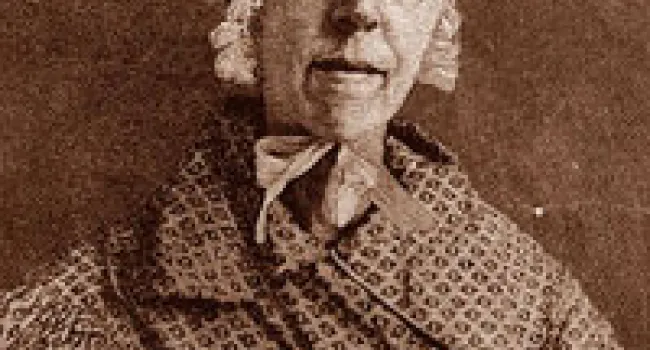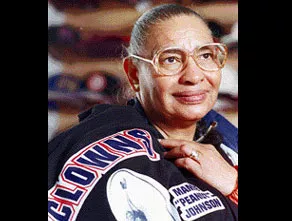
Mamie "Peanut" Johnson challenged the traditional role of female athletes by entering the men's Negro Major League in 1953. She was the only female pitcher and only one of three women to play in the league. Not only did she succeed in making the team in one tryout, the 100-pound baseball player won 33 games and lost only eight.
Mamie was born in Ridgeway, South Carolina, in 1935. As a child, she and "the boys" practiced baseball using a rock covered with masking tape and twine for a ball. When Mamie was a teenager she tried out for the WomenÂ’s Professional Baseball League but was rejected because the league did not accept African-American players. This did not discourage Mamie and she continued to practice her sport. In 1953, a former player in the Negro Major League observed Mamie practicing in a field in Washington, D.C.. He was impressed and introduced her to the manager of the Indianapolis Clowns. After one tryout, Mamie was signed to the team.
Mamie earned the nickname "Peanut" while pitching her first game. A batter told the 5-foot, 4-inch pitcher that she was no larger than a peanut. Mamie promptly struck him out. The Indianapolis Clowns were supportive of her efforts and, with teammates like Hank Aaron, she was in good company.
Mamie played for the Indianapolis Clowns for three seasons. She remembers, "it was a tremendous joy to strike some of the fellows out. Because they thought that by me being a girl, this was something of a joke, but it wasn't a joke and I had to let them know that. That was the joy." Currently, Mamie runs a baseball shop that sells Negro Major League items, and speaks to students about her amazing career as one of only three women to play in baseball's major leagues.