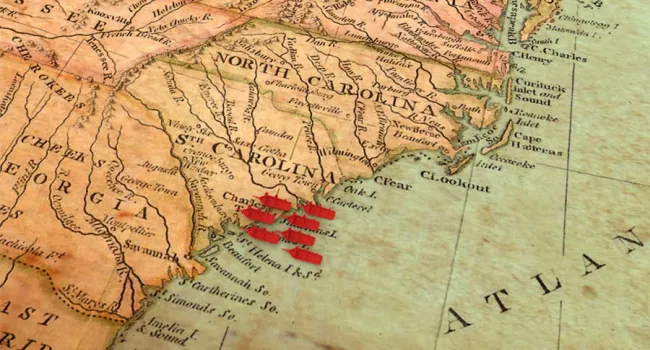
General Henry Clinton and the British high command decided what they needed was a “Southern strategy.” The British decided to bring the war to the South because (1) they hadn’t really won any major victories and (2) there were a lot of loyalists (Americans on the British side) in the South, particularly in the two Carolinas. If they captured the Southern colonies, the Briitish knew they would have control over the most valuable colonies. More than 6,000 British troops were shipped from New York to Charles Town. In 1780, the British successfully seized Charles Town.
Standards
- 4.2.CE Examine the economic and political motivations for colonists to declare independence from Great Britain.
- 4.2.CX Contextualize South Carolina’s role in the development of the new nation.
- 8.2.CO Compare the motives and demographics of loyalists and patriots within South Carolina and the colonies.
- This indicator was developed to encourage inquiry into the economic, political, and social motivations of the patriots and the loyalists in the era of the American Revolution.
- 8.2.CE Explain the economic, political, and social factors surrounding the American Revolution.
- This indicator was developed to encourage inquiry into how the colonies began to unify to create a distinctive American identity over the course of events of the American Revolution.
- 8.2.CX Contextualize the roles of various groups of South Carolinians as the colonies moved toward becoming an independent nation.
- This indicator was developed to encourage inquiry into the motivations of colonists during the American Revolution and the progression of conflict and failed compromise that ultimately led to revolution.
Resources
Waxhaws: Blood in the Backcountry | The Southern Campaign
The War for American independence began well for patriots in the South. In the city of Charles Town, South Carolina (known as “Charleston” after the war)—an unfinished palmetto fort remarkably...
View AssetMap | British Troops Arrive in Charles Town
More than 6,000 British troops were shipped from New York to Charles Town. After a short siege, the city fell. Charles Town would supply the British army with provisions and become the base of...
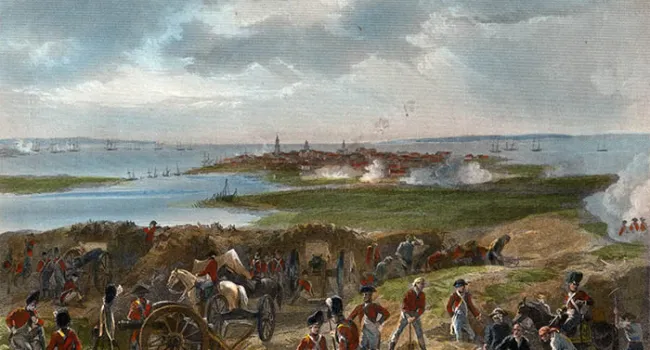
View AssetSiege of Charles Town - 1780
The War for American Independence began well for the Patriots in the South. In the city of Charles Town, South Carolina (known as “Charleston” after the war)—an unfinished palmetto fort withstood the...
View AssetGeneral Henry Clinton | La Batalla De Waxhaws
El general Henry Clinton y el alto mando británico decidieron que lo que necesitaban era una "estrategia sureña". Los británicos decidieron llevar la guerra al Sur porque (1) no habían ganado ninguna victoria importante y (2) habían muchos leales (estadounidenses del lado británico) en el Sur, particularmente en las dos Carolinas. Si capturaban a las colonias del sur, los británicos sabían que tendrían el control sobre las colonias más valiosas. Más de 6.000 soldados británicos fueron enviados desde Nueva York a Charles Town. En 1780, los británicos se apoderaron con éxito de Charles Town.