Rhetoric & Space Race
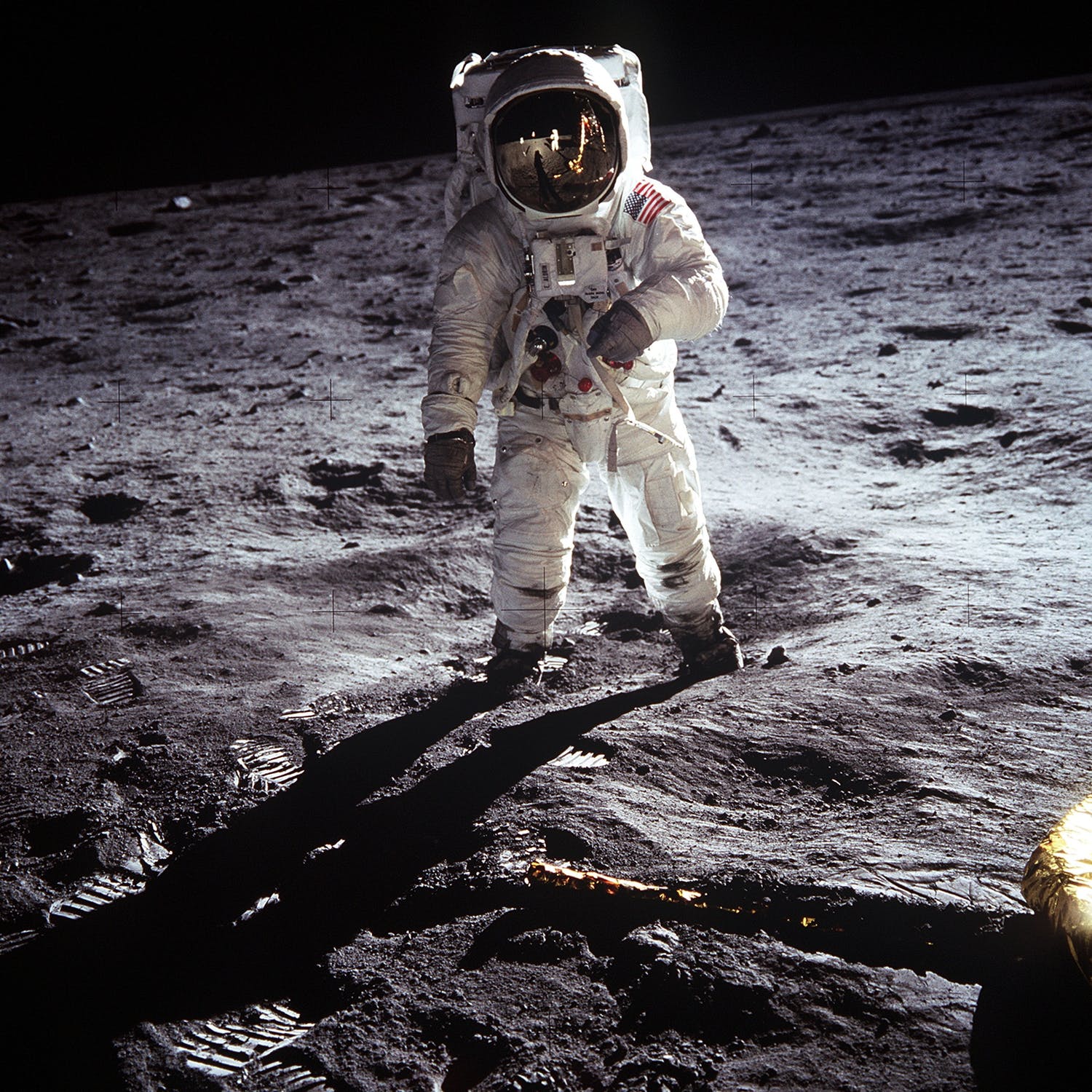
Students will engage in a debate over whether the United States should enter the Space Race using rhetoric and historical information.
Lesson Created By: Cameron Cook
Essential Question
Should the US enter the Space Race?
Grade(s):
- 5
- 9
- 10
- 11
Subject(s):
Recommended Technology:
Students could use flipgrid to complete virtual debates with one another.
Other Instructional Materials or Notes:
Lesson Progression
1. The teacher will provide an introduction to Kennedy’s “The Decision to Go to the Moon” (abridged).
2. The student will watch the video/take notes on Rhetorical Devices being used.
3. The teacher will ask students to write down any negative consequences of entering into the space race.
- Ask students to participate in a quick whole-class discussion.
- Coming up with contrary arguments to Kennedy’s speech. Students will volunteer opposing arguments.
4. The teacher will group students based on differentiation of ability/skill/will, and give each student one of the roles listed above in the assessment section.
- Students are grouped and told to research their own particular roles in this structured debate.
5. Students are told to research their respective roles. Teacher monitors and answers questions, gives feedback and directs students as they work independently.
- Students research their roles, write down any questions they may want to ask the opposition and try to find evidence for arguments based on Ethos, Logos, and Pathos. Secretary researches arguments from both sides to get a moderate perspective.
7. Students engage in debate activity.
- The teacher will monitor student discussions.
8. Students are given time to reflect on the activity. “Why did we do this? What did we learn? What skills did we reinforce? What was it like during this time in history?”
- Students write answers to these questions as they reflect upon the activity.
Teacher Notes
Each student will play a particular role in this lesson, and the role should be assigned based on student strengths. For example: the politician in favor of the space program should be a student capable of quick thinking and creative thought, while a concerned citizen should be a student who relies more on structure and prompting.
The Decision to Go to the Moon
President John F. Kennedy's May 25, 1961 Speech
before a Joint Session of Congress
Moondoggle: The Forgotten Opposition to the Apollo Program
For most of our lunar adventure, a majority of Americans did not support going to the moon. On the 50th anniversary of JFK's "We choose to go the moon" speech, we excavate this forgotten opposition. By Alexis C. Madrigal
View ResourceStandards
- 5-5 The student will demonstrate an understanding of the social, economic and political events that influenced the United States during the Cold War era.
- MWH-5 The student will demonstrate an understanding of the influence of ideas and technology on the development of nation-states and empires in the sixteenth through the nineteenth centuries.
- Grade 1: Orally produce single-syllable words by blending sounds including consonant blends in spoken words.
- RI.LCS.10 Analyze and provide evidence of how the author’s choice of purpose and perspective shapes content, meaning, and style.
- Grade 2: Read irregularly spelled two-syllable words and words with common prefixes and suffixes.
- RI.LCS.10 Analyze and provide evidence of how the author’s choice of purpose and perspective shapes content, meaning, and style.
Assessments
Students will have a structured discussion in which they play the roles of certain people or organizations in American society during this time, and the notes taken by the teacher and students during this presentation will be assessed based on logic and information presented.