Commemorating the "War to End All Wars"
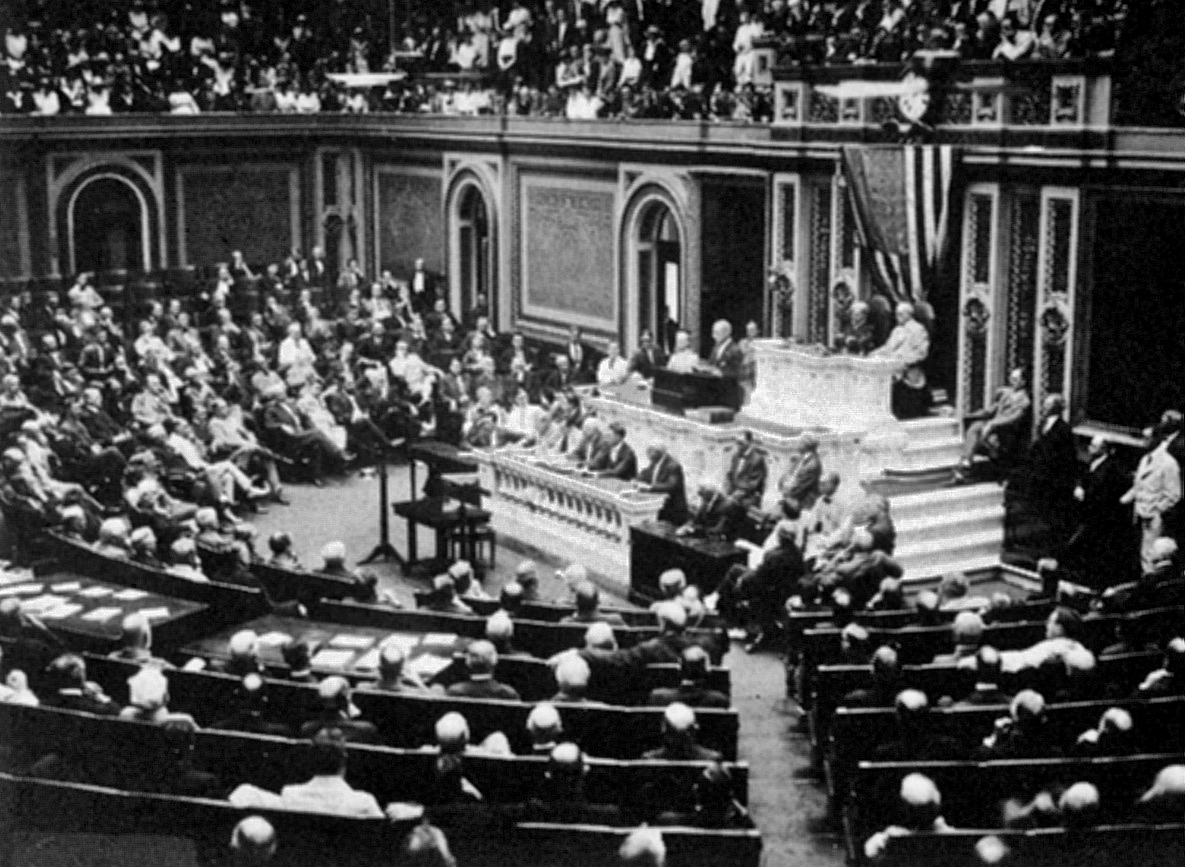
In this unit students will review the events leading up to the United States’ involvement in World War I, analyze President Wilson’s speech to Congress asking them to vote favorably for war, explore its effects on South Carolina and how South Carolinians contributed to the war efforts, and how it was perceived through media such as propaganda posters. Students will then design a war memorial commemorating South Carolina’s war efforts.
Lesson Partners: Writing Improvement Network (WIN), ETV Education, Knowitall.org
Essential Question
How would you commemorate a war?
Grade(s):
- 8
Subject(s):
Recommended Technology:
- Internet access, computer, tablets/iPads, or personal devices
- Applications for sharing group work with class (Padlet, Evernote, etc.)
- Applications for drawing, creating graphics (Apple Notes, One Note, Adobe Sketch, etc.)
- Applications for presentation (PowerPoint, Prezi, etc.)
Other Instructional Materials or Notes:
Social Studies textbook for Grade 8
Lesson Progression
Step 1 – Events leading to war
- Tell students that for the next few days they will be examining the reasons behind World War I, why the United States chose to enter the war, and the war’s effects on South Carolina. Students will be expected to keep a journal (paper or tech) as they work – they will need these notes to complete the project. Their challenge will be to take the information they learn about South Carolina and its involvement in the war to design a memorial commemorating South Carolina’s contributions to World War I – they will work in small groups to create the design.
- Gain an understanding of students prior knowledge and perceptions of World War I – ask students to conduct a quick write (five minutes maximum) of what they know about World War I. Allow five minutes for students to call out information from their quick writes. Review the causes for the beginning of World War I and the reasons behind the United States entering the war.
- Ask students to use their text books to find the answers to the following questions(allow them to respond verbally):
- Why was the assassination of Archduke Franz Ferdinand the catalyst for the war’s beginning?
- The United States decided to initially take a neutral stand to the war. The sinking of the Lusitania and the discovery of the Zimmerman telegram caused President Wilson to question this stand – why?
- Divide students into groups or have them create groups. Pass out copies of Wilson’s War Address to Congress or direct them to the provided website.
- Have groups write a gist statement (summary) of each paragraph in Wilson’s speech.
- Using the gist statements, have students summarize the key points in Wilson’s address.
- Students are going to take part in a strategy known as “voting with your feet.” They are going to assume the role of members of Congress. They will decide to agree or disagree with Wilson’s reasons for entering war strictly on his speech. Those convinced by President Wilson’s speech should stand on one side of the room, those not convinced stand on the opposite side.
- Have students on each side share their opinions. After all have shared, vote again – students who have changed their minds move to their new side. Depending on time, you can repeat the debate/vote scenario until you have the majority decide to agree with Wilson. Before students leave ask for the most convincing reason to enter the war? Why is their reason important? (This may be done on paper, or on apps such as Padlet, Evernote, Onenote, etc.
Step 2 – Explore the effects of World War I on South Carolina.
- Tell students they are going to look at the impact World War I had on South Carolina. They are going to watch documentary accounts and review websites examining South Carolina and how its people were affected by the war. They will need to take notes while they watch/read.
- Individually, in small groups, or as a class depending upon equipment available, review the websites containing propaganda posters. How do these posters show what was expected of military and non-military citizens/ and how everyone can show support during the war? What techniques were used? Is there a poster that seems more powerful than the others? If so, how?
- Individually, in small groups, or as a class depending upon equipment available, have students review the documentaries and articles about contributions of people to the war (African Americans, Baruch, Duke, military bases, women). Have students summarize what they learn from each piece of information and discuss as a class.
- Tell students that when they return to class they will be placed into small groups to begin the design of war memorial signifying the contributions of South Carolina to World War I efforts.
Step 3 – Creating a memorial commemorating South Carolina’s contributions to World War I.
- Divide students into small groups. Each group should use their notes to review what they have learned about the war and the various ways South Carolinians contributed to World War I.
- Tell groups they are now going to begin to create their memorial design (you may want to encourage students to review various war memorials online). Their design should be representative of South Carolina and its efforts to support the war. They may create their design electronically or using hands-on art media. They will then prepare a presentation to the class, showing their design and offering the rational/symbolism found within the design. These designs and their explanations will be scored using a rubric. Let students see the rubric (found in Evaluation/Assessment section.)
Step 4 – Groups share their World War I memorials.
How will students share their work? - In their assigned/chosen groups students will present their memorial designs and explanations for what is included in the design. This may be done using paper art work, electronic art work, Power Point, etc.
Teacher Notes
Extensions/Differentiation:
- Students might explore the extent US citizens took to avoid German products or terms with German connections. For example, dachshunds were renamed liberty pups, frankfurters were renamed hot dogs. What other changes in vocabulary occurred? Why did people feel a need to make these changes?
- Explore the music of this time period. What can you learn about the war through the lyrics of the songs popular at that time?
- Create a propaganda poster similar to the ones reviewed. What message are you trying to convey?
- Create a character related to the World War I time period. This character may be a soldier, a mother, a child, a farmer, etc. This character will be used to share their experiences during World War I. This may be represented through a diary entry, a letter, a poem, artwork, newspaper article, interview, etc.
For students that may have difficulty with the unit as written, modifications can be made. For example, if technology is an issue work can be a combination of paper and oral presentation, written work may be recorded, or completed by a scribe, individual work may be completed with a partner or assistant, articles such as Wilson’s speech and internet articles may be read aloud.
World War I | History In A Nutshell
A brief video on World War I: how the war started, the U.S.' involvement, fighting the war, and the aftermath, with the Treaty of Versailles. *Important Note: Italy was originally a member of the...
View AssetAfrican American World War I unit from SC fought with honor (from The State)
On September 28, 1918, just six weeks before the end of World War I, Cpl. Freddie Stowers, 21, of Sandy Springs, was killed while leading Company C of the black 371st Infantry Regiment into no-man's land to capture German positions.
View ResourceKnowitall.org - D is for Duke’s Mayonnaise | SC from A to Z
Joseph F. Collerd, Sr. Director of Marketing for the C.F. Sauer Company, tells us the history of Duke's Mayonnaise
View ResourceKnowitall.org - Bernard Baruch | SC Hall of Fame
Baruch was one of the most influential Americans of his era--and one of the wealthiest. Born in SC in 1870, Baruch was a governor of the NY Stock Exchange by age 33, amassing millions.
View ResourceSouth Carolina’s Military Base History (see section on World War I)
South Carolina became home to multiple training camps, several of which remain defense facilities today.
View ResourceA Total War on the Home Front: The Employment of Women in the United States During World War I
Women in World War I
View ResourceWoodrow Wilson’s War Message to Congress
In this message urging Congress to declare war on Germany, President Woodrow Wilson presents the Progressive understanding of foreign policy: America has a duty to spread liberty across the world.
View ResourceWorld War I in Pictures: An Overview of Prints & Photographs from the Library of Congress
The Library of Congress Prints & Photograph Division (P&P) has more than 76,000 pictures relating to World War I, in a wide array of formats, including photographic prints and negatives, cartoons, ephemera, posters and drawings. Most of the material was created during the war (1914-1918), but a portion deals with post-war topics such as injured veterans, pension distribution, and the aftermath in European cities. The Library of Congress acquired the materials through copyright deposit, gift, and purchase. In some cases, other Library of Congress units, particularly the Manuscript Division, transferred visual material to P&P for care and service.
View ResourceWorld War I Propaganda Posters:
Americans were not eager to enter the war, and Americans of German ancestry tended to support Germany. The government’s first task was to convince citizens they must support the war effort.
View ResourceLast Day of World War I (from PBS)
By the end of World War I, there were just two areas of fighting left, both of them on the Western Front.
View ResourceWorld War I Hero: Arlington's John Lyon
When World War I broke out in Europe, Arlington's John Lyon jumped into action, traveling to France to serve as an ambulance driver.
View ResourceOver Here: The Homefront During WWI, Part 1 - Anti-War
In comparison to other wars, particularly in South Carolina, on a scale of remembrance, probably World War II is right up there at the top. Civil War would be next, but World War I may be a forgotten war. Originally, South Carolinians wanted to stay out.
While Europeans began fighting the Great War in 1914, the people in South Carolina were still healing wounds from an earlier battle. South Carolinians, economically, were in a sad state as a result of the Civil War. In early 1917, on the eve of America's entry into World War I, South Carolina was more rural than urban, with many people living on farms and relying on horses for transportation. The textile industry was growing, but farm labor, including picking cotton, was still done by hand. Jim Crow laws meant South Carolina was strictly segregated. For African Americans and whites, poverty was widespread, education was limited, and poor health, common. With their own problems at home, South Carolinians showed little interest in fighting a war across the Atlantic, but by spring of 1917, that attitude was changing.
The slogan, "He kept us out of the war," was how President Woodrow Wilson had won reelection By late winter 1916, Wilson's determination to find a peaceful solution was no longer enough. In March, the Germans sank three U.S. ships, and on April 2, 1917, Wilson urged Congress to keep the world safe for democracy.
On April 6th, America declared war. In South Carolina, Governor Richard Manning supported Wilson.
Over Here: The Homefront During WWI, Part 2 - Pro-War
South Carolina's affection for President Wilson seemed to fuel Coleman Blease's outspoken opposition. Supported by newspapers in Aiken and Charleston, Blease tried to use race to stir opposition. He was elected by people who did not want government regulating their lives. Blease felt very strongly about this "rich man's war, poor man's fight." It was a political miscalculation because South Carolinians did rally to the war, even German-American and Irish-American communities.
Along with loyalty to Wilson, South Carolinians were swept forward by a nationwide propaganda campaign to rally support for the war. Originally, South Carolinians, like the rest of the country, wanted to stay out of the war. But once it was apparent that we were going to engage in the war, the propaganda was absolutely necessary to really get the message out, to show South Carolinians what they could really do to support America, to support the war.
In World War I there was this "100% Americanism" campaign. For example, to show you how touchy the issue was, Columbia College gave up the teaching of German during World War I because that would be seen as supporting the Kaiser. United in opposition to the Kaiser, South Carolinians finally rejoined the Union, thus closing the rift created by the Civil War.
One thing that World War I did-- for white South Carolinians, they began to take another look at the 4th of July. From the Civil War until World War I, the 4th of July was celebrated primarily by the African-American population in recognition of the Union victory and emancipation. Most white South Carolinians did not celebrate the 4th of July.
Over Here: The Homefront During WWI, Part 3 - Race
Although in 1917 more African Americans were educated and attempting to gain equality, Jim Crow laws and racial attitudes still controlled their political and economic opportunities in South Carolina. When WW1 began, there was a call for arms among all men, including African American men. The idea of African American men bearing arms was not accepted easily. South Carolina Governor, Richard Manning, called against black troops in the efforts to halt any black man from holding a gun.
The 371st infantry included poor sharecroppers but also literate and educated African American men. They were the top unit in Fort Jackson. Initially, they were not suppose fight in the war, but as demand for men grew, the 371st U.S infantry was deployed. African American soldiers were not allowed to fight alongside American white soldiers, so they were reassigned to the French Infantry.
The French Army awarded the 371st infantry for their valiance and service. When the infantry returned to the United States, they were welcomed with a parade in Columbia, South Carolina. But the recognition was short lived. Many of the men from the infantry went back to agricultural labor, poor wages and discrimination. Disappointed by the lack of opportunities, African American veterans move to the North.
Over Here: The Homefront During WWI, Part 4 - Women
Eugenia Duke went into business making sandwiches and would later become a successful entrepreneur with the production and selling of Duke Mayonnaise. Eugenia's mayonnaise did not call for sugar which proved useful because during the war in 1917 sugar was scarce. Eugenia made sandwiches and because of supply and demand she was making 100 sandwiches a day.
In 1917 South Carolinian women saw more opportunity. There were more women in men dominated occupations like doctors, realtors and lawyers. During wartime women not only participated in more jobs so men could go fight; but they also enlisted! They served as nurses and 143 women from South Carolina enlisted to aid the war effort. 1000 uniforms were sent from Charleston and Red Cross Women drove ambulances that transferred supplies and the wounded.
The war facilitated the women's right to vote. Women secured support from President Wilson and continued to rally for suffrage from President Roosevelt. In 1920, women were given the right to vote and this set the way for more equality with the rallying cry, "Women, Awake! Your country needs you!"
Over Here: The Homefront During WWI, Part 5 - Military Camps
World War I brought big business to towns that housed soldiers in military camps. On June 2, 1917 was Camp Jackson established. After 11 days of construction, the first trainees arrived. Owners of surrounding businesses welcome soldiers by selling them goods and services. There were other camps in South Carolina including Camp Sevier in Greenville, Camp Wadsworth in Spartanburg, Paris Island in Beaufort and the Charleston Navy Shipyard. These towns welcomed soldiers honor and the economic boom they brought.
View ResourceOver Here: The Homefront During WWI, Part 6 - Flu Epidemic
The flu epidemic created horrors not only oversees, but at home. The origin of the epidemic was not certain to doctors and scientists, but several theories were proposed. One theory proposed it came from Kansas in February of 1918. In Kansas, large groups of men were congregating around livestock and the germs that accompanied them. A troubling characteristic of the flu is that it affected those who were the youngest and healthiest. The rationale behind this was that young adults and teenagers congregated the most, and thus, spread the flu rapidly.
The focus became on helping the sick at home. President Wilson did not understand the serious nature of the illness and underestimated its severity. Because of this, the government continued to transport sick men oversees and to other camps, making the flu spread like wildfire. Tens of thousands of Americans died. In December 1918 the flu arrived in full force to South Carolina and it took weeks for people to recuperate, if they lived. High fever led to pneumonia, which was so lethal, people drowned in their own phlegm and had blue limbs due to lack of oxygen.
Hospitals were rare because medical doctors enlisted in the army. Few doctors were left in South Carolina, and they could not provide much help. Caskets came from Camp Severe and piled at the railroad station. To try to find an antidote or at least help the ailing, the State Health Board proposed to use confiscated alcohol. This had little affect and the community did not have the personnel to help every ailing person.
Because of the flu epidemic, 6 times of Americans died on the home front as died fighting the war. Across South Carolina, 8-10 thousands of people died in a two month period. 15-10 million people died worldwide.
Over Here: The Homefront During WWI, Part 7 - Armistice
The armistice was signed November 11, 1918 and it brought the end of a long and terrible war. For South Carolina, World War I brought unity and change. Camp Jackson was emptied a year after it was established and permanently named Fort Jackson. Today, it is the army's largest basic training post and an engine for Columbia economy. The Charleston Naval Yard is no longer a federal military operation, it is now privately owned where it houses architects and artists. South Carolina joined the Union and opened its eyes to the world. World War I is sometimes referred to as the "Forgotten War" as it is overshadowed by WWII, The Civil War, and even the Revolutionary War. The war was prolonged with horrific deaths from combat. World War I was violent, long, filled with propaganda, and a defining chapter in American history. It is important for South Carolinians to learn more about World War I, as it was it the first involvement that took place off American soil but had an huge impact on South Carolina. It is important to recognize what South Carolina contributed in the first international conflict.
View ResourceSC Veterans in History, Part 8 - Camp Jackson | Project Discovery
A group of Columbia businessmen met one afternoon, raised the money, bought the acreage, and made a gift to the federal government of the land on which the camp was to be built. On June 2, 1917, Camp Jackson was established. Just 11 days after the construction contract was signed, the first trainees arrived. Tram rails and railways had to be constructed, along with barracks, mess halls, auditoriums, stables for horses, an air field all had to be built quickly. Nothing was permanent, but hundreds of buildings went up, and three months after the start of construction, some 8,000 more draftees came to the camp.
Educated and ambitions, a new generation was emerging with the means to create a new way of life. There was hope that the war might serve as a platform for advancing civil rights for African Americans. Some came barefooted and tattered, but the 371st infantry also included a number of very literate, accomplished men who came as a result of the Selective Service Act. They proved that they were adaptable and flexible, and were given accolades for being the smartest-dressed and drilled unit at Camp Jackson. At first, the Army didn't intend to send these men into battle, but the demand in France for troops, and the confidence of the officers and their men, put the 371st in the center of the action. Not allowed to fight alongside white Americans, they were reassigned to the French Army. Armed with weapons they hadn't trained to use, they faced tough fighting in the trenches. They rose above that, and proved quite decisive in the French campaign against the Germans. Their bravery earned them a city-wide welcome home.
Standards
- 8-6 The student will demonstrate an understanding of the role of South Carolina in the nation in the early twentieth century.
- I Inquiry-Based Literacy Standards
- I.2 Transact with texts to formulate questions, propose explanations, and consider alternative views and multiple perspectives.
- I.3 Construct knowledge, applying disciplinary concepts and tools, to build deeper understanding of the world through exploration, collaboration, and analysis.
- I.4 Synthesize integrated information to share learning and/or take action.
- RI.MC.6 Summarize key details and ideas to support analysis of central ideas.
- C Communication
- C.MC Meaning and Context
- C.MC.2 Articulate ideas, claims, and perspectives in a logical sequence using information, findings, and credible evidence from sources.
- C.MC.1 Interact with others to explore ideas and concepts, communicate meaning, and develop logical interpretations through collaborative conversations; build upon the ideas of others to clearly express one’s own views while respecting diverse pe...
- C.MC Meaning and Context
Assessments
World War I - Memorial Rubric
https://docs.google.com/document/d/1_DvW5Y_kPflpiQQgr26i6eG05GNVB2AVf9l8...