National Great Outdoors Month

National Great Outdoors Month is celebrated in June and serves as a reminder to enjoy and appreciate our state parks and wildlife refuges. This observation, begun in 1998, encourages us to explore our parks and enjoy the beauty that awaits us in our natural world.

National Great Outdoors Month is celebrated in June and serves as a reminder to enjoy and appreciate our state parks and wildlife refuges. This observation, begun in 1998, encourages us to explore our parks and enjoy the beauty that awaits us in our natural world.

Content Type
Ocoee Salamander  | The Cove Forest Spotted Salamander | The Cove Forest

Video

Grades

  • 3
  • 4
  • 5
  • 6
  • 7
  • 8
  • 9
  • 10
  • 11
  • 12
Spotted Salamander | The Cove Forest
(Ambystoma maculatum) The spotted salamander is one of the most colorful of the ambystomid salamanders. The shiny black back of the animal has a series of large yellow/yellow orange spots. These...
 Black-Bellied Salamander | The Cove Forest

Video

Grades

  • 3
  • 4
  • 5
  • 6
  • 7
  • 8
  • 9
  • 10
  • 11
  • 12
Black-Bellied Salamander | The Cove Forest
(Desmognathus quadramaculatus) This is the largest of the lungless salamanders in the cove forests. They are usually found in streams that have a rocky bottom and usually rest on wet rocks near these...
Black-Bellied Salamander | The Cove Forest Ocoee Salamander  | The Cove Forest

Video

Grades

  • 3
  • 4
  • 5
  • 6
  • 7
  • 8
  • 9
  • 10
  • 11
  • 12
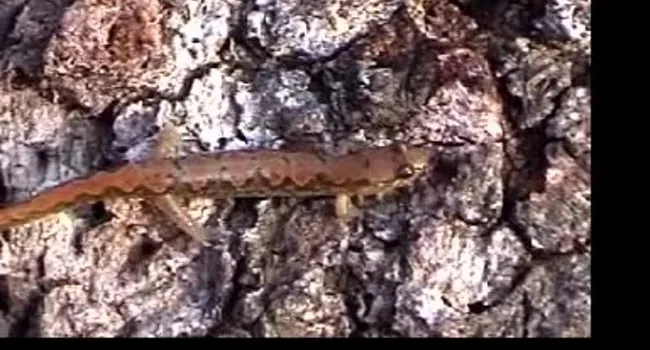
Ocoee Salamander | The Cove Forest
(Desmognathus ocoee) The ocoee salamander is lungless and lives in streams in wet areas adjacent to streams. It has a highly variable dorsal color patterning; usually a series of connected paired...
Ocoee Salamander  | The Cove Forest Red Salamader | The Cove Forest

Video

Grades

  • 3
  • 4
  • 5
  • 6
  • 7
  • 8
  • 9
  • 10
  • 11
  • 12
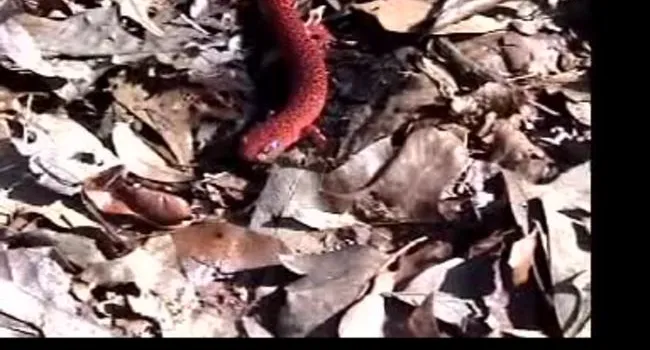
Red Salamader | The Cove Forest
(Pseudotrition ruber) The red is one of the most beautiful salamanders in the cove forest. Colors range from purplish brown to deep orange-red. It is lungless and terrestrial. Eggs are laid in water...
Ocoee Salamander  | The Cove Forest Jordan's Salamander | The Cove Forest

Video

Grades

  • 3
  • 4
  • 5
  • 6
  • 7
  • 8
  • 9
  • 10
  • 11
  • 12
Jordan's Salamander | The Cove Forest
(Plenthodon jordani) This lungless salamander is extremely abundant in cove forests at higher altitudes. Large quantities of sticky mucus are secreted by the tail for protection against avian...
 Two-Lined Salamander | The Cove Forest

Video

Grades

  • 3
  • 4
  • 5
  • 6
  • 7
  • 8
  • 9
  • 10
  • 11
  • 12
Two-Lined Salamander | The Cove Forest
(Eurycea bislineata) The two-lined is one of the smallest salamanders in the cove forest. This species is found under logs and rocks in the moist soil conditions, usually near water. Breeding occurs...
 Short-Tailed Shrew | The Cove Forest

Video

Grades

  • 3
  • 4
  • 5
  • 6
  • 7
  • 8
  • 9
  • 10
  • 11
  • 12
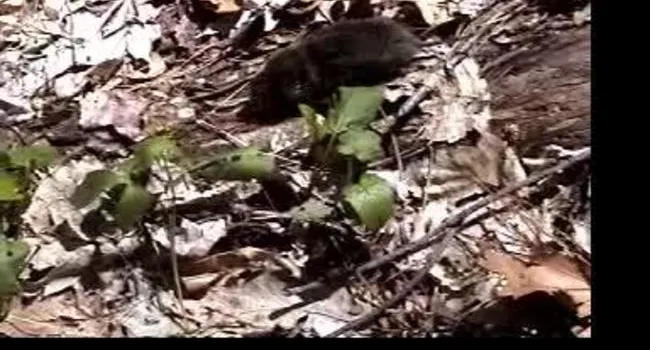
Short-Tailed Shrew | The Cove Forest
This shrew is very common and is one of the largest of the various shrew species weighing 11- 30 g. Food consists mainly of invertebrates such as earthworms, snails, and insects. However, these shrews...
 Eastern Pipistrelle Bat | The Cove Forest

Video

Grades

  • 3
  • 4
  • 5
  • 6
  • 7
  • 8
  • 9
  • 10
  • 11
  • 12
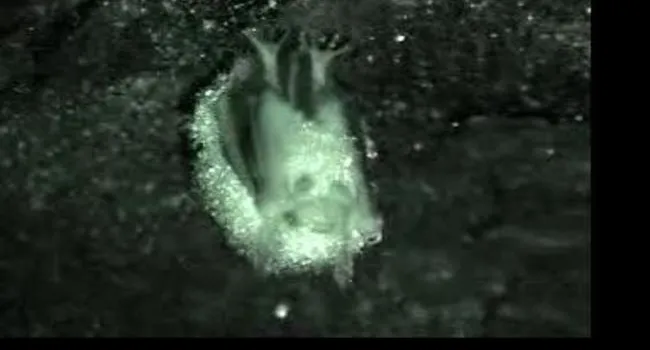
Eastern Pipistrelle Bat | The Cove Forest
The pipistrelle is the smallest bat in the southern US. This is one of the most common bats in the cove forest. This bat is a very early evening feeder and tends to feed at treetop levels.
 Red-Backed Vole | The Cove Forest

Video

Grades

  • 3
  • 4
  • 5
  • 6
  • 7
  • 8
  • 9
  • 10
  • 11
  • 12
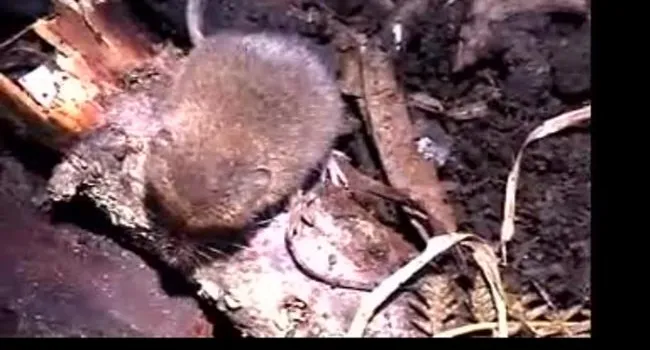
Red-Backed Vole | The Cove Forest
(clethrionomys gapper) This rodent is a relative of the muskrat and lemming. This vole is found only in cove forests at higher altitudes in the mountains of South Carolina. It is semifossorial using...
 Masked Shrew | The Cove Forest

Video

Grades

  • 3
  • 4
  • 5
  • 6
  • 7
  • 8
  • 9
  • 10
  • 11
  • 12
Masked Shrew | The Cove Forest
(sorex cinereus) This insectivore is related to the common moles. It is one of the smallest mammals found in the United States weighing between 2-5 g. It is constantly active with a very high...
 Deer Mouse | The Cove Forest

Video

Grades

  • 3
  • 4
  • 5
  • 6
  • 7
  • 8
  • 9
  • 10
  • 11
  • 12
Deer Mouse | The Cove Forest
(peromyscus maniculatus) This rodent is the most important prey item for the avian and mammalian predators that frequent the cove forest. This specis is the most widespread of North American rodents...
 Eastern Box Turtle | The Cove Forest

Video

Grades

  • 3
  • 4
  • 5
  • 6
  • 7
  • 8
  • 9
  • 10
  • 11
  • 12
Eastern Box Turtle | The Cove Forest
(Terrapene carolina) This turtle is very common and is highly terrestrial. The males have red eyes and the bottom of the shell (plastron) is scoped out; while the females have brown/yellow eyes and a...
 Rat Snake | The Cove Forest

Video

Grades

  • 3
  • 4
  • 5
  • 6
  • 7
  • 8
  • 9
  • 10
  • 11
  • 12
Rat Snake | The Cove Forest
(Elaphe obsoleta) The rat snake is one of the most diurnal of snakes found in the cove forest. This snake is a very adept climber and is frequently found climbing trees and nesting in tree cavities...
 Lee State Park (S.C.) Stop 2 | NatureScene 2

Video

Grades

  • 3
  • 4
  • 5
  • 6
  • 7
  • 8
  • 9
  • 10
  • 11
  • 12
Lee State Park (S.C.) Stop 2 | NatureScene
Episode 2
On this stop the hosts see more butterfly pea flowers. Watch the video to find out what animal tracks were seen. Learn about the structure of a turtle's shell.
 Lee State Park (S.C.) Stop 4  | NatureScene 4

Video

Grades

  • 3
  • 4
  • 5
  • 6
  • 7
  • 8
  • 9
  • 10
  • 11
  • 12
Lee State Park (S.C.) Stop 4 | NatureScene
Episode 4
This stop is considered floodplain. The hosts makes note of how the river flowed into this area carrying sand and also the height of the water. Native Americans used places like the Lynches river to...
 Lee State Park (S.C.) Stop 3 | NatureScene 3

Video

Grades

  • 3
  • 4
  • 5
  • 6
  • 7
  • 8
  • 9
  • 10
  • 11
  • 12
Lee State Park (S.C.) Stop 3 | NatureScene
Episode 3
The hosts come across some very large mosquitoes. Mosquitoes love standing water. It's the female mosquito that takes blood from us. There are flowers that grow along this stop like sweetgum, red...
 Lee State Park (S.C.) Stop 5 | NatureScene 5

Video

Grades

  • 3
  • 4
  • 5
  • 6
  • 7
  • 8
  • 9
  • 10
  • 11
  • 12
Lee State Park (S.C.) Stop 5 | NatureScene
Episode 5
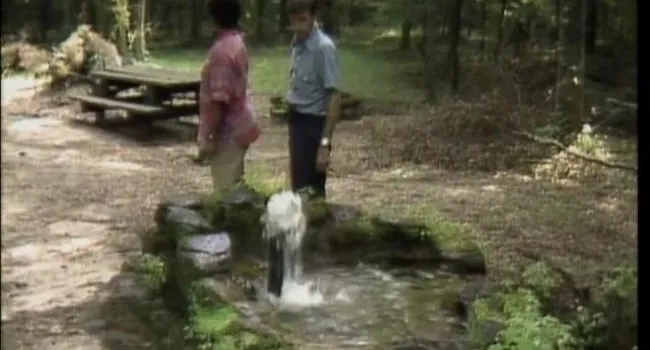
The host visit an artesian well at this stop. There are many primitive plants that thrive near this source of water. Learn about muscadines and how they're formed. On this last stop the host see a...
 Lee State Park (S.C.) Stop 1 | NatureScene 1

Video

Grades

  • 3
  • 4
  • 5
  • 6
  • 7
  • 8
  • 9
  • 10
  • 11
  • 12
Lee State Park (S.C.) Stop 1 | NatureScene
Episode 1
Lee State Park is located in Lee County, around the Lynches River. Some of the items found along this stop include a butterfly pea flower, the eastern tailed blue butterfly and a tail feather of the...
Cartwheel Bay (S.C.) Stop 1 - Ferns, Pitcher Plants and Indigo | NatureScene
   - Episode 1 Cartwheel Bay (S.C.) Stop 4 4

Video

Grades

  • 3
  • 4
  • 5
  • 6
  • 7
  • 8
  • 9
  • 10
  • 11
  • 12
Cartwheel Bay (S.C.) Stop 4
Episode 4
Edge of the Bay - The edge of the bay has red bay growing, along with groups of Trumpet Pitcher Plants.
Purple Pitcher Plant | Cartwheel Bay  (S.C.) Cartwheel Bay (S.C.) Stop 6 8

Video

Grades

  • 3
  • 4
  • 5
  • 6
  • 7
  • 8
  • 9
  • 10
  • 11
  • 12
Cartwheel Bay (S.C.) Stop 6
Episode 8
Here we have a view of Pond Pine, Sweet Bay, Magnolias and Pepper Bush. We also get a look at the Oak Toad.
Black Jack Oak | Cartwheel Bay (S.C.) Cartwheel Bay (S.C.) Stop 5 7

Video

Grades

  • 3
  • 4
  • 5
  • 6
  • 7
  • 8
  • 9
  • 10
  • 11
  • 12
Cartwheel Bay (S.C.) Stop 5
Episode 7
Here we see Running Oak and Sweet Pitcher Plants. Also view a dragonfly and a Cottonmouth snake
Cartwheel Bay (S.C.) Stop 1 - Ferns, Pitcher Plants and Indigo | NatureScene
   - Episode 1 Cartwheel Bay (S.C.) Stop 2 2

Video

Grades

  • 3
  • 4
  • 5
  • 6
  • 7
  • 8
  • 9
  • 10
  • 11
  • 12
Cartwheel Bay (S.C.) Stop 2
Episode 2
We find dwarf azaleas in this sweet smelling area. We also see the Blackjack Oak, Sundew, the grass stage of the Long Leaf Pine, and Fleabane all along the road.