A Path to Victory, Part 7 - Battle of the Bulge | South Carolinians in WW II - Episode 7

Kaltura

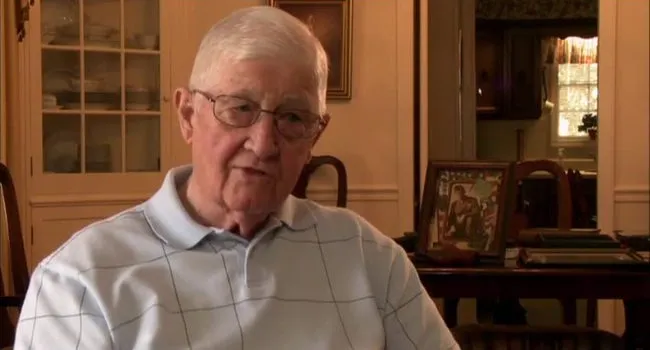
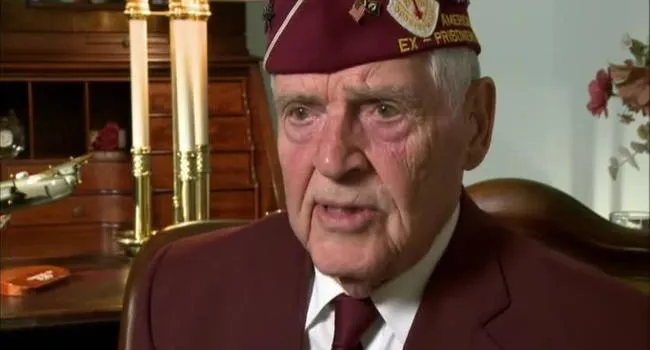
Headed into in area in northern France, in which they thought they could rest, the 106th infantry division, 424th infantry, expected to have time to clean their weapons, take showers and have some nice, hot food. They thought the Germans were retreating and the war would be over soon. The assumption was that all was quiet because they had broken the German codes, they were watching the message traffic, and no one said anything about a German offensive.

They were aware of a lot of noise in the area and lights flashing off the clouds, but when they enquired about it, they were told the Germans were playing loud speakers. A division should cover a five to seven-mile area, but they were covering a 27-mile front, so they were spread very thin. On December 16, the artillery barrage started at about 5:00 a.m. and ran until about 7:00 a.m., and it was one shell after another. They had never heard of Screaming Mimis but they made one of the worst sounds ever heard. The Germans kept coming. There was no ammunition, food or water. In the 422nd and 423rd infantries, there were roughly five thousand men, and they were all either killed or captured at this time.

The men had not been issued winter clothing and had no weapons, no gloves, and no overshoes. Whether a mail clerk or a cook, everyone had to fight. They were knee-deep in snow, and it was the coldest winter in Belgium in 50 years. In foxholes underground, under four feet of snow, no fires could be built. It was so cold that when you picked up a weapon without gloves on, you would leave some skin on it. It was 40 to 50 degrees below zero. The Germans were killing anyone who asked for help.  

More in this Series

SCETV Specials / South Carolinians in WW II / Episode 3: A Path to Victory

 A Path to Victory, Part 1 1

Video

Grades

  • 9
  • 10
  • 11
  • 12
  • Higher Education
A Path to Victory, Part 1
Episode 1
This segment begins with reflections of the Parisians playing "Dixie" on the Champs-Élysées, and a band marching, and a reference to "high cotton." These are some of the memories that have lived on...
 A Path to Victory, Part 2 2

Video

Grades

  • 9
  • 10
  • 11
  • 12
  • Higher Education
A Path to Victory, Part 2
Episode 2
The Hedgerows were unanticipated and required a new type of warfare. They were quite entangled and provided lots of cover, and made the terrain difficult to maneuver. No one could see what they were...
 A Path to Victory, Part 3 3

Video

Grades

  • 9
  • 10
  • 11
  • 12
  • Higher Education
A Path to Victory, Part 3
Episode 3
Veterans reflect on General Patton, from the way he required his men to dress to the way he so directly addressed his men right up front, saying, "Some who sailed over here are not going back home."...
 A Path to Victory, Part 4 4

Video

Grades

  • 9
  • 10
  • 11
  • 12
  • Higher Education
A Path to Victory, Part 4
Episode 4
A first-hand account of Auschwitz is provided by Lou Fowler. "The Germans were absolutely obsessed with killing people. It was a killing machine."
 A Path to Victory, Part 5 5

Video

Grades

  • 9
  • 10
  • 11
  • 12
  • Higher Education
A Path to Victory, Part 5
Episode 5
The Allies were finishing up the liberation of France and they were hoping the war would be over by the end of the year. Montgomery was the Allied commander of that section and he was looking for a...
 A Path to Victory, Part 6 6

Video

Grades

  • 9
  • 10
  • 11
  • 12
  • Higher Education
A Path to Victory, Part 6
Episode 6
Veterans discuss how they spent their time off while serving during World War II. *** Teachers, this video contains references to behavior that may not be suitable for students. Please view before...