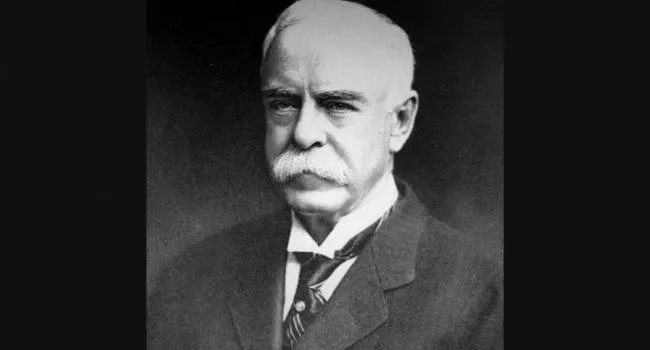
"There's no such thing as bad publicity..." This remark, attributed to Irish playwright Brendan Behan, sums up the advertising philosophy of noted textile executive Elliott White Springs of Springs Mills, Inc. "Colonel" Springs was nothing if not flamboyant. From the late 1940's until his death in 1959, he spearheaded an innovative ad campaign that made "Springmaid" sheets a household word and changed the landscape of the American advertising industry.
Springs was the son of a textile man, Leroy Springs, who inherited his wealth from a rich family of cotton merchants.
Young Elliott was a firebrand—blazing his way through Culver Military School, Princeton University, and buzzing over France in an open cockpit fighting Germans during World War One.
Springs was decorated as a flying ace and authored a memoir, War Birds: Diary of an Unknown Aviator, based on the life of a fallen comrade.
Elliott became an author, spending the twenties in New York City writing for the posh literary magazines of the Jazz Age.
Throughout his early life, he had a tempestuous relationship with his father, which served to motivate him toward success, in his own way and on his own terms!
In the 1930's Elliott Springs inherited his father's textile "empire" and restored Springs Mills to incredible prosperity during the Depression years and World War Two.
After the war, Springs determined he would make a name for himself and his company, seeking a new approach in his magazine advertisements. He began acquiring and commissioning artwork depicting attractive young women as "Springmaids," and he employed sexual innuendo in the ad copy he wrote. These efforts quickly captured the public's imagination.
Some were outraged, but within a year there was convincing proof that "sex sells." Springmaid sheets were being sold as fast as they could make them, and sales increased steadily until Springs' death in 1959. Initially, the advertising industry called his ads "degrading," but today Springs' potpourri of risqué images, puns, and double-ententres are studied at major universities and hailed as the beginning of Madison Avenue's hold on the nation's sexual consciousness.
"There's no such thing as bad publicity..." This remark, attributed to Irish playwright Brendan Behan, sums up the advertising philosophy of noted textile executive Elliott White Springs of Springs Mills, Inc. "Colonel" Springs was nothing if not flamboyant. From the late 1940's until his death in 1959, he spearheaded an innovative ad campaign that made "Springmaid" sheets a household word and changed the landscape of the American advertising industry.
Springs was the son of a textile man, Leroy Springs, who inherited his wealth from a rich family of cotton merchants.
Young Elliott was a firebrand—blazing his way through Culver Military School, Princeton University, and buzzing over France in an open cockpit fighting Germans during World War One.
Springs was decorated as a flying ace and authored a memoir, War Birds: Diary of an Unknown Aviator, based on the life of a fallen comrade.
Elliott became an author, spending the twenties in New York City writing for the posh literary magazines of the Jazz Age.
Throughout his early life, he had a tempestuous relationship with his father, which served to motivate him toward success, in his own way and on his own terms!
In the 1930's Elliott Springs inherited his father's textile "empire" and restored Springs Mills to incredible prosperity during the Depression years and World War Two.
After the war, Springs determined he would make a name for himself and his company, seeking a new approach in his magazine advertisements. He began acquiring and commissioning artwork depicting attractive young women as "Springmaids," and he employed sexual innuendo in the ad copy he wrote. These efforts quickly captured the public's imagination.
Some were outraged, but within a year there was convincing proof that "sex sells." Springmaid sheets were being sold as fast as they could make them, and sales increased steadily until Springs' death in 1959. Initially, the advertising industry called his ads "degrading," but today Springs' potpourri of risqué images, puns, and double-ententres are studied at major universities and hailed as the beginning of Madison Avenue's hold on the nation's sexual consciousness.
Standards
- 3-5 The student will demonstrate an understanding of the major developments in South Carolina in the late nineteenth and the twentieth century.
- South Carolina experienced major economic, political, and social changes during the late nineteenth and the twentieth century. To understand the effects of these changes, the student will utilize the knowledge and skills set forth in the following ind...
- 3-5.1 Summarize the social and economic impact of developments in agriculture, industry and technology, including the creation of Jim Crow laws, the rise and fall of textile markets, and the expansion of the railroad.
- 3-5.3 Explain the effects of the Great Depression on daily life in South Carolina, including the widespread poverty and unemployment and the efforts of the federal government to create jobs through a variety of New Deal programs.
- 3-5.4 Summarize the social and economic impact of World War II and the Cold War on South Carolina, including the end of the Great Depression, improvements in modern conveniences, increased opportunities for women and African Americans, and the signific...
- South Carolina experienced major economic, political, and social changes during the late nineteenth and the twentieth century. To understand the effects of these changes, the student will utilize the knowledge and skills set forth in the following ind...
- 5-4 The student will demonstrate an understanding of American economic challenges in the 1920s and 1930s and world conflict in the 1940s.
- Along with the rest of the world, the United States experienced a boom-and-bust period during the 1920s and 1930s. In the United States, this situation led to significant government intervention to stimulate the economy. Other countries did not follow...
- 5-4.1 Summarize daily life in the post–World War I period of the 1920s, including improvements in the standard of living, transportation, and entertainment; the impact of the Nineteenth Amendment, the Great Migration, the Harlem Renaissance, and ...
- 5-4.2 Summarize the causes of the Great Depression, including overproduction and declining purchasing power, the bursting of the stock market bubble in 1929, and the resulting unemployment, failed economic institutions; and the effects of the Dust Bowl.
- 5-4.7 Summarize the social and political impact of World War II on the American home front and the world, including opportunities for women and African Americans in the work place, the internment of the Japanese Americans, and the changes in national b...
- Along with the rest of the world, the United States experienced a boom-and-bust period during the 1920s and 1930s. In the United States, this situation led to significant government intervention to stimulate the economy. Other countries did not follow...
- 8-6 The student will demonstrate an understanding of the role of South Carolina in the nation in the early twentieth century.
- South Carolina’s response to national crises during the first half of the twentieth century brought it back into full participation in the national experience. To understand the state’s changed status, the student will utilize the knowledg...
- 8-6.1 Explain the reasons for United States involvement in World War I and the war’s impact on South Carolina and the nation as a whole, including the building of new military bases and the economic impact of emigration to industrial jobs in the ...
- 8-6.3 Explain the reasons for depressed conditions in the textile mills and on farms in South Carolina and other regions of the United States in the 1920s and the impact of these conditions on the coming of the Great Depression.
- 8-6.5 Compare the ramifications of World War II on South Carolina and the United States as a whole, including the training of the Doolittle Raiders and the Tuskegee Airmen, the building of additional military bases, the rationing and bond drives, and t...
- South Carolina’s response to national crises during the first half of the twentieth century brought it back into full participation in the national experience. To understand the state’s changed status, the student will utilize the knowledg...
- 8-7 The student will demonstrate an understanding of the impact on South Carolina of significant events of the late twentieth and early twenty-first centuries.
- Changes that took place in the United States during the late twentieth and early twenty-first centuries revitalized the economy and challenged traditional society and politics in South Carolina. To understand the response of South Carolina to these ch...
- 8-7.1 Compare the social and economic impact of World War II and the Cold War on South Carolina with its impact on the rest of the United States, including the increases in the birth rate; the emergence of the consumer culture; the expanding suburbaniz...
- 8-7.4 Summarize key economic issues in present-day South Carolina, including the decline of the textile industry, the state’s continuing right-to-work status, the changes in agricultural emphasis, the growing globalization and foreign investment,...
- Changes that took place in the United States during the late twentieth and early twenty-first centuries revitalized the economy and challenged traditional society and politics in South Carolina. To understand the response of South Carolina to these ch...
- This indicator was developed to encourage inquiry into the significant causes of World War I and the factors leading to U.S. involvement. This indicator was also developed to promote inquiry into the effects of the war, to include its impact on the homefront, migration patterns, and continued foreign policy debates.