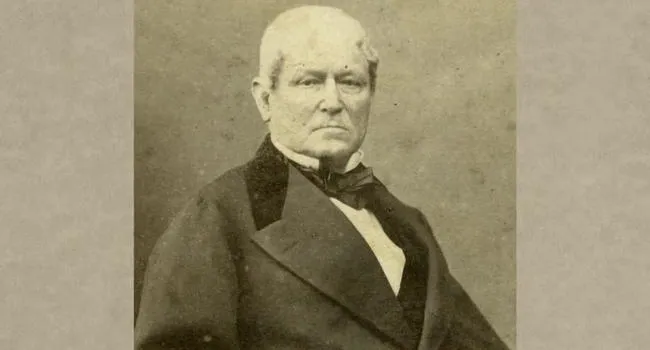
Statesman Charles Pinckney's beliefs helped forge the United States Constitution. Fluent in five languages, yet educated and reared entirely on South Carolina soil, this man was elected four times to serve as Governor of South Carolina. He was a South Carolina state representative, a United States Congressman, a delegate to the 1787 Constitutional Convention and ambassador to Spain. As an advocate for a strong central government, his voice in those crucial days during the formation of our nation helped directly to guarantee such basic doctrines as religious freedom, trial by a jury, freedom of the press, and the subordination of the military to civil authority. He presided over the move of South Carolina's state capital from Charleston to Columbia and secured Spain's approval of the Louisiana Purchase. Seven South Carolina governors claim lineage to Charles Pinckney.
Statesman Charles Pinckney's beliefs helped forge the United States Constitution. Fluent in five languages, yet educated and reared entirely on South Carolina soil, this man was elected four times to serve as Governor of South Carolina. He was a South Carolina state representative, a United States Congressman, a delegate to the 1787 Constitutional Convention and ambassador to Spain. As an advocate for a strong central government, his voice in those crucial days during the formation of our nation helped directly to guarantee such basic doctrines as religious freedom, trial by a jury, freedom of the press, and the subordination of the military to civil authority. He presided over the move of South Carolina's state capital from Charleston to Columbia and secured Spain's approval of the Louisiana Purchase. Seven South Carolina governors claim lineage to Charles Pinckney.
Standards
- 4.2.CX Contextualize South Carolina’s role in the development of the new nation.
- 4.2.E Analyze multiple perspectives on the economic, political, and social developments of the new nation.
- 8.2.CX Contextualize the roles of various groups of South Carolinians as the colonies moved toward becoming an independent nation.
- This indicator was developed to encourage inquiry into the motivations of colonists during the American Revolution and the progression of conflict and failed compromise that ultimately led to revolution.
- 8.2.P Analyze significant founding principles that led to the development of federalism in South Carolina and the United States.
- This indicator was designed to encourage inquiry into the development of the Constitution, Declaration of Independence, the Articles of Confederation, and representative democracy.
- 8.2.E Utilize a variety of primary and secondary sources to analyze multiple perspectives on the development of democracy in South Carolina and the United States.
Resources
Charles Cotesworth Pinckney | S.C. Hall of Fame
5-minute historical visualization of the biography of Charles Cotesworth Pinckney who is an example of the enormous contribution South Carolinians made to the formation of the government of the United...
View AssetDavid Drake a.k.a “Dave the Potter” | S.C. Hall of Fame
David Drake was an enslaved African American in Edgefield, South Carolina during the first three quarters of the nineteenth century. He’s known today for the magnificent quality of the pots he made...
View AssetPierce Butler | S.C. Hall of Fame
Biography of statesman Pierce Butler, who was an American Revolutionary War leader, South Carolina delegate to both the Continental Congress and Constitutional Conventions, as well as a United States...
View AssetRobert Mills | S.C. Hall of Fame
Robert Mills was born in SC in 1781 and became the first native born American to study specifically in a career in Architecture. He went on to build buildings from New Orleans, to Newberry Port Mass...
View AssetTravis & Bonham | S.C. Hall of Fame
William Barret Travis and James Butler Bonham were born in what is now Saluda County. These two men fought and died at the Alamo in San Antonio, Texas. We will look back to their South Carolina roots...
View AssetWilliam Gregg | S.C. Hall of Fame
William Gregg (1800-1867) was born in Charleston and was a leading advocate of Southern industrialization. He founded a successful cotton mill in Graniteville, South Carolina and brought the concept...
View Asset