Traditional Art

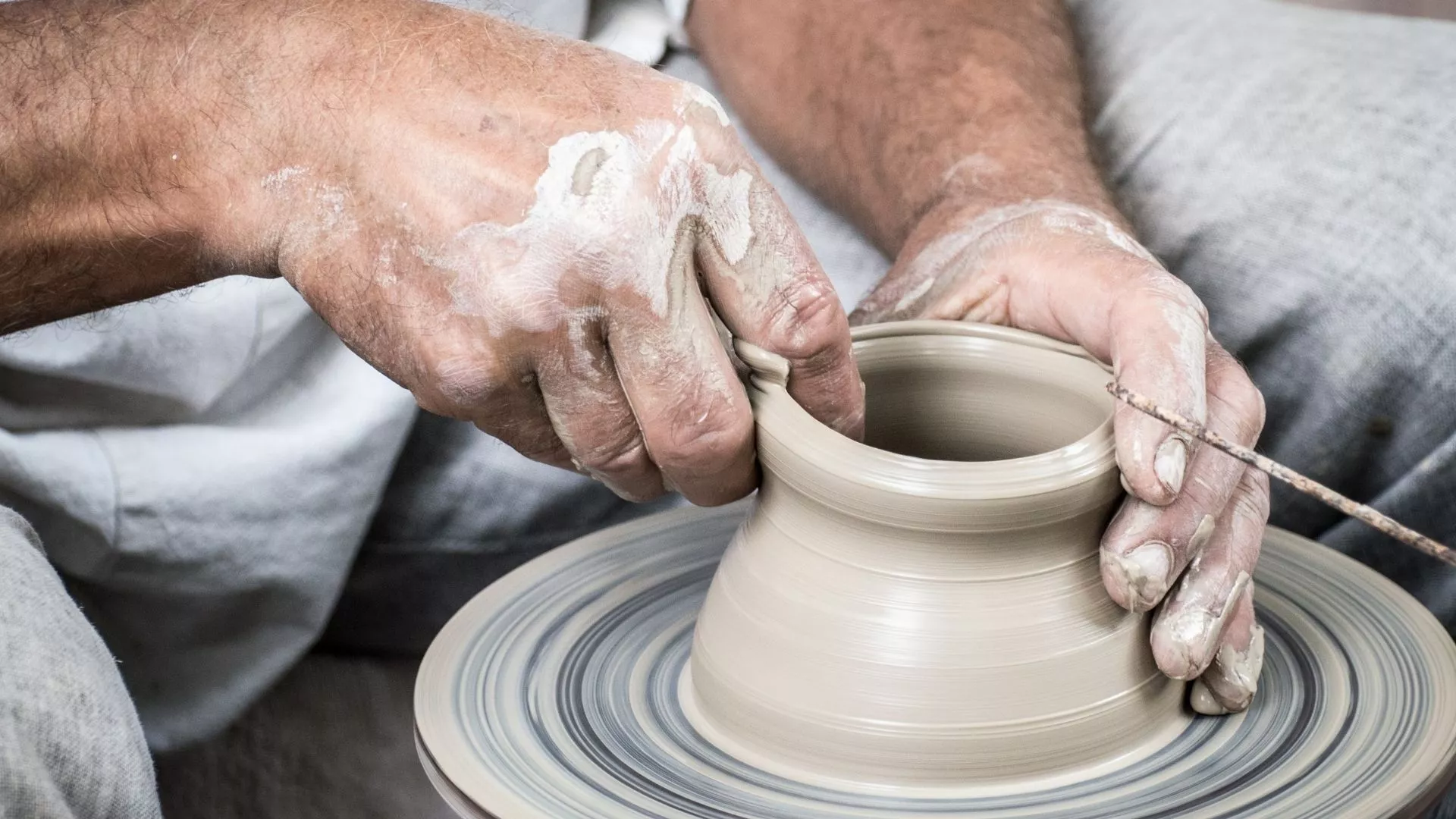
The traditional arts of basketry, pottery, textiles, weaving, and woodworking are demonstrated. 
Traditional Art | Topics
Collapse
Expand
Toggle Filters

Filter By:

Clear Filters

Grade Levels

close

Grade

Resource Type

close

Resource Type

Downloadable Content

close

Downloadable Content
Traditional Art | Topics
Collapse
Expand
Artifacts | A Natural State
   - Episode 8 Bean Pot | A Natural State 9

Video

Grades

  • 3
  • 4
  • 5
  • 6
  • 7
  • 8
  • 9
  • 10
  • 11
  • 12
Bean Pot | A Natural State
Episode 9
The bean pot is a traditional form that resurfaced in the Catawba potter’s repertoire in the early 1990s. Master potters used an image from an anthropological record of the early 1900s to guide their...
 Carving 8

Video

Grades

  • 3
  • 4
  • 5
  • 6
  • 7
  • 8
  • 9
  • 10
  • 11
  • 12
Carving
Episode 8
No carving tool keeps an edge without occasional sharpening on a stone. Farmers and woodworkers brought hand-powered grinding wheels to the Americas during the 16th century. Many artisans and farmers...
 Eastern White Cedar | A Natural State  9

Video

Grades

  • 3
  • 4
  • 5
  • 6
  • 7
  • 8
  • 9
  • 10
  • 11
  • 12
Eastern White Cedar | A Natural State
Episode 9
Decoy wood needs to be light and resistant toward water and waterborne, termite-like insects that bore into wood. Atlantic white cedar is an excellent variety of such wood, but the tree’s population...
 Spotlight 1

Video

Grades

  • 3
  • 4
  • 5
  • 6
  • 7
  • 8
  • 9
  • 10
  • 11
  • 12
Spotlight
Episode 1
The ability to work with wood was an asset on rural farms where lifestyles required self-sufficiency and living off the land was common. As a boy, Tom carved his toys - small boats that he floated...
 Making a Duck Decoy 3

Video

Grades

  • 3
  • 4
  • 5
  • 6
  • 7
  • 8
  • 9
  • 10
  • 11
  • 12
Making a Duck Decoy
Episode 3
Ducks use their tails to signal whether they are at rest or in danger. Tom carves the tail so that it feathers slightly upward, a sign that the duck is at ease with its surroundings. The process uses...
 Making a Duck Decoy 4

Video

Grades

  • 3
  • 4
  • 5
  • 6
  • 7
  • 8
  • 9
  • 10
  • 11
  • 12
Making a Duck Decoy
Episode 4
To float properly, the body of the duck must be hollowed out with a hand drill and chisel. Buoyancy and stability are achieved by combining a hollow interior with lead weights applied to the underside...
 Making a Duck Decoy 2

Video

Grades

  • 3
  • 4
  • 5
  • 6
  • 7
  • 8
  • 9
  • 10
  • 11
  • 12
Making a Duck Decoy
Episode 2
Tom uses keen eyes and a drawknife to carve the slope of a duck's back from the natural curve along a block of white cedar. The basic forms of a tail and the base of the neck are revealed during body...
Land - Robert Middleton | A Natural State
   - Episode 9 Process of Making Batik 2

Video

Grades

  • 3
  • 4
  • 5
  • 6
  • 7
  • 8
  • 9
  • 10
  • 11
  • 12
Process of Making Batik
Episode 2
Arianne uses the batik process of fabric design, a traditional art she mastered while living with the Yoruba culture of Nigeria. Batik uses wax and layers of color to create vibrant images on textiles...
 Tom Boozer's Tool Box | A Natural State 7

Video

Grades

  • 3
  • 4
  • 5
  • 6
  • 7
  • 8
  • 9
  • 10
  • 11
  • 12
Tom Boozer's Tool Box | A Natural State
Episode 7
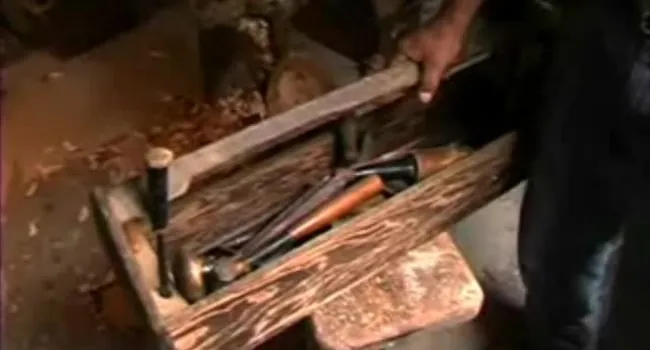
Tom's toolbox is a museum of traditional woodworking implements. It contains a 150-year-old drawknife, a hatchet, his father's wood rasp, his grandfather's brace and bit, a mallet of resilient...
 Culture 6

Video

Grades

  • 3
  • 4
  • 5
  • 6
  • 7
  • 8
  • 9
  • 10
  • 11
  • 12
Culture
Episode 6
Adesola Falade processes indigo and designs fabrics for Arienne’s studio and boutique, the Ibile Indigo House. Ibile (pronounced E-be-lae) is a West African word meaning, "those who are messengers...