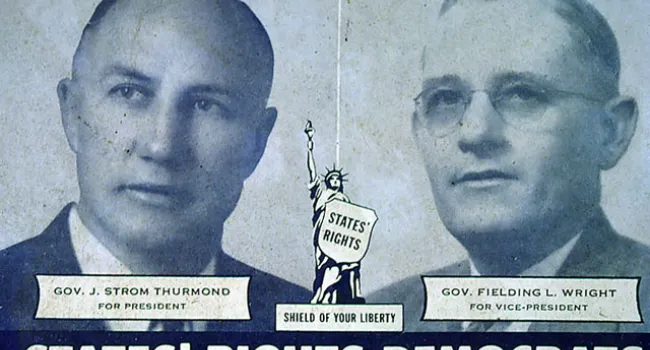
This indicator was designed to foster inquiry into the changes in South Carolina’s political party platforms resulting from the Civil Rights Movement, from Elmore v. Rice to the national Democratic Party’s support of civil rights to Nixon’s Southern Strategy. This indicator also supports inquiry into the effect on South Carolina’s political party platforms resulting from the emergence of the national Republican Party’s positions on foreign policy, limited government, and free trade policies.

Grade(s): 8

Subject(s): Social Studies

Year: 2019

Content Type
 Pages of History: Mid 20th Century | Carolina Stories 6

Video

Grades

  • 8
Pages of History: Mid 20th Century | Carolina Stories
Episode 6
William Watts Ball, who had previously worked at The Evening Post and The State, became the new editor. He was an outspoken critic of “The New Deal”, along with too much government, and these views...
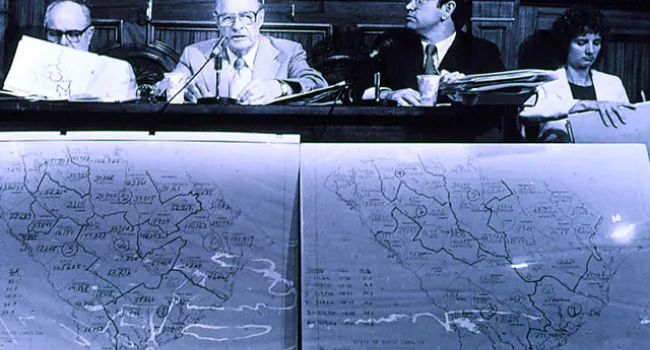
Marion Gressett | History of SC Slide Collection

Photo

Grades

  • 5
  • 8
Marion Gressett | History of SC Slide Collection
Episode 5
Marion Gressett (1902-1984, see Marion Gressett And Hyman Rubin) was first elected to the South Carolina state Senate from Calhoun County in 1937. A powerful political figure during the 1950s and...
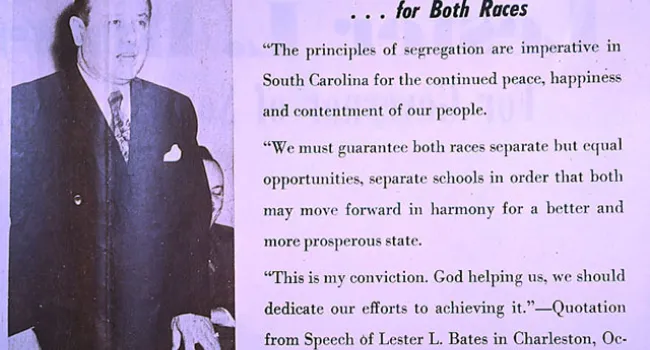
Lester Bates | History of SC Slide Collection

Photo

Grades

  • 5
  • 8
Lester Bates | History of SC Slide Collection
Episode 10
The growing pressures brought to bear against legal segregation by the federal court system, that culminated in the 1954 Supreme Court decision in "Brown v. The Board of Education" of Topeka, Kansas...
George A. Elmore (1905-1954) | Road Trip

Photo

Grades

  • 6
  • 7
  • 8
George A. Elmore (1905-1954) | Road Trip
In 1946, George Elmore attempted to vote in the all-White Democratic primary but was denied the right to vote. In February 1947, the NAACP filed a class-action lawsuit in federal court against John I...