Tom Boozer | A Natural State | Coastal Zone

Decoy Duck Maker

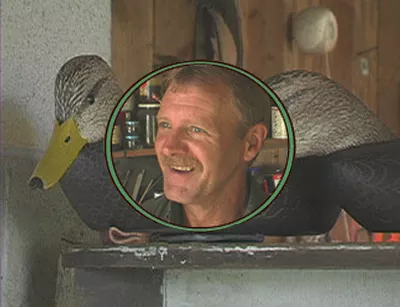
Tom Boozer is a renowned carver of duck decoys, a craft known as one of the oldest American folk arts. Early Native Americans made decoys out of reeds, grasses and natural dyes. Colonists of the 16th century learned the concept and used metal hand tools to craft decoys of wood. Today, Tom carves traditional wooden decoys using only hand tools, a technique that makes him both artisan and historian.

To learn more about Tom Boozer and the art of duck decoy making, click on the videos below.

Resource Type
Making a Duck Decoy - Step 2 | A Natural State
   - Episode 3 Making a Duck Decoy 5

Video

Grades

  • 3
  • 4
  • 5
  • 6
  • 7
  • 8
  • 9
  • 10
  • 11
  • 12
Making a Duck Decoy
Episode 5
After the body is hollowed, Tom attaches the carved head of the duck. Tom takes care to attach the head at an angle that appears natural and in keeping with the attitude of the body. After the head is...
Making a Duck Decoy - Step 2 | A Natural State
   - Episode 3 Making a Duck Decoy 6

Video

Grades

  • 3
  • 4
  • 5
  • 6
  • 7
  • 8
  • 9
  • 10
  • 11
  • 12
Making a Duck Decoy
Episode 6
Decoy makers use field guides, photographs, and duck mounts as references for painting their decoys. Tom mixes ordinary house paints to achieve the unique colors of many species of waterfowl. After...
 The Land 10

Video

Grades

  • 3
  • 4
  • 5
  • 6
  • 7
  • 8
  • 9
  • 10
  • 11
  • 12
The Land
Episode 10
The Boozer family's move from the midlands of South Carolina to its coast was a bit of a homecoming. In 1734, Tom's ancestors emigrated from Germany to the Charleston area, where they worked as...
Making a Duck Decoy - Step 2 | A Natural State
   - Episode 3 The Hunt | A Natural State 11

Video

Grades

  • 3
  • 4
  • 5
  • 6
  • 7
  • 8
  • 9
  • 10
  • 11
  • 12
The Hunt | A Natural State
Episode 11
A hunt with Tom is a lesson in waterfowl behavior, habitat, and patience. Our hunting trip with Tom could be considered a "blue bird day", a pleasant, calm day, yet not one conducive to duck hunting...
 Spotlight 1

Video

Grades

  • 3
  • 4
  • 5
  • 6
  • 7
  • 8
  • 9
  • 10
  • 11
  • 12
Spotlight
Episode 1
The ability to work with wood was an asset on rural farms where lifestyles required self-sufficiency and living off the land was common. As a boy, Tom carved his toys - small boats that he floated...
Making a Duck Decoy - Step 2 | A Natural State
   - Episode 3 Making a Duck Decoy 2

Video

Grades

  • 3
  • 4
  • 5
  • 6
  • 7
  • 8
  • 9
  • 10
  • 11
  • 12
Making a Duck Decoy
Episode 2
Tom uses keen eyes and a drawknife to carve the slope of a duck's back from the natural curve along a block of white cedar. The basic forms of a tail and the base of the neck are revealed during body...
 Making a Duck Decoy 3

Video

Grades

  • 3
  • 4
  • 5
  • 6
  • 7
  • 8
  • 9
  • 10
  • 11
  • 12
Making a Duck Decoy
Episode 3
Ducks use their tails to signal whether they are at rest or in danger. Tom carves the tail so that it feathers slightly upward, a sign that the duck is at ease with its surroundings. The process uses...
Making a Duck Decoy - Step 2 | A Natural State
   - Episode 3 Making a Duck Decoy 4

Video

Grades

  • 3
  • 4
  • 5
  • 6
  • 7
  • 8
  • 9
  • 10
  • 11
  • 12
Making a Duck Decoy
Episode 4
To float properly, the body of the duck must be hollowed out with a hand drill and chisel. Buoyancy and stability are achieved by combining a hollow interior with lead weights applied to the underside...
Making a Duck Decoy - Step 2 | A Natural State
   - Episode 3 Tom Boozer's Tool Box | A Natural State 7

Video

Grades

  • 3
  • 4
  • 5
  • 6
  • 7
  • 8
  • 9
  • 10
  • 11
  • 12
Tom Boozer's Tool Box | A Natural State
Episode 7
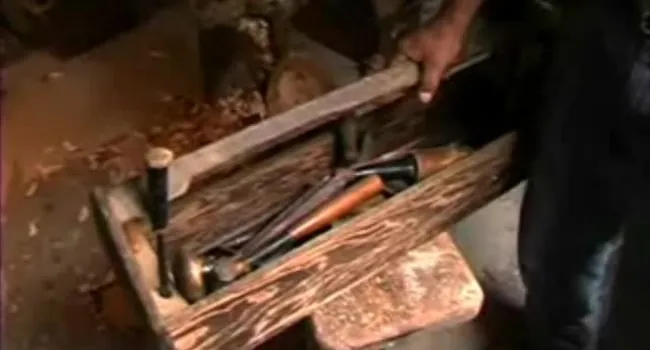
Tom's toolbox is a museum of traditional woodworking implements. It contains a 150-year-old drawknife, a hatchet, his father's wood rasp, his grandfather's brace and bit, a mallet of resilient...
Making a Duck Decoy - Step 2 | A Natural State
   - Episode 3 Carving 8

Video

Grades

  • 3
  • 4
  • 5
  • 6
  • 7
  • 8
  • 9
  • 10
  • 11
  • 12
Carving
Episode 8
No carving tool keeps an edge without occasional sharpening on a stone. Farmers and woodworkers brought hand-powered grinding wheels to the Americas during the 16th century. Many artisans and farmers...
Making a Duck Decoy - Step 2 | A Natural State
   - Episode 3 Eastern White Cedar | A Natural State  9

Video

Grades

  • 3
  • 4
  • 5
  • 6
  • 7
  • 8
  • 9
  • 10
  • 11
  • 12
Eastern White Cedar | A Natural State
Episode 9
Decoy wood needs to be light and resistant toward water and waterborne, termite-like insects that bore into wood. Atlantic white cedar is an excellent variety of such wood, but the tree’s population...