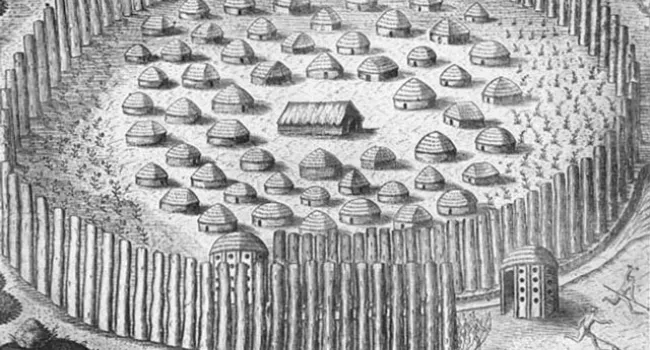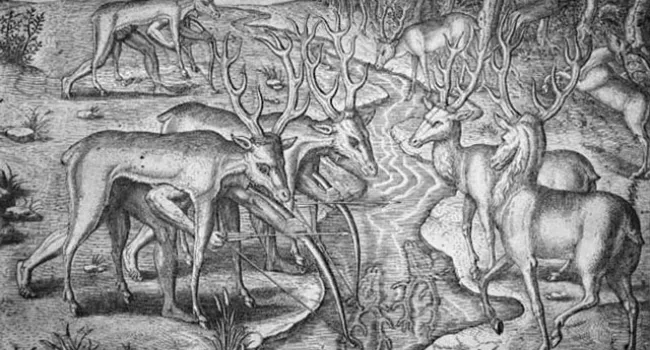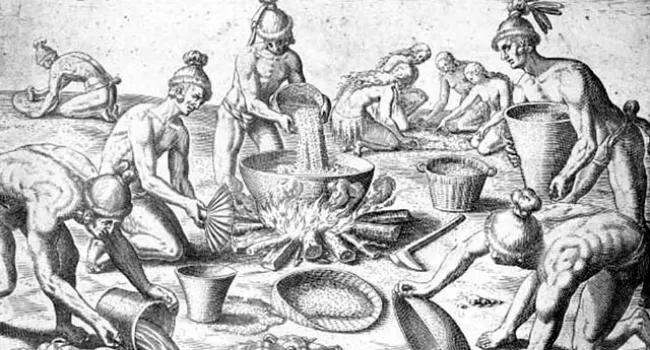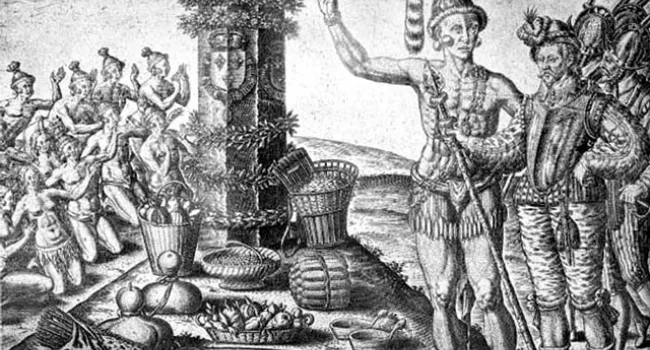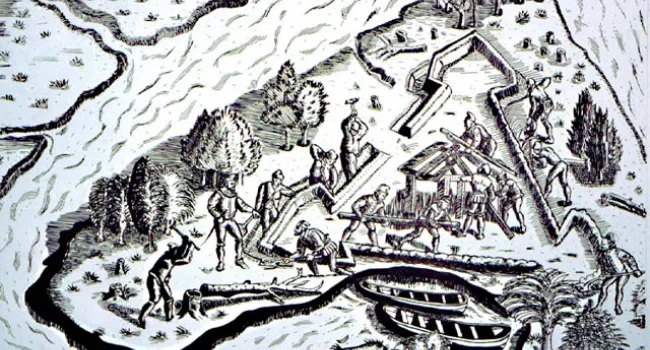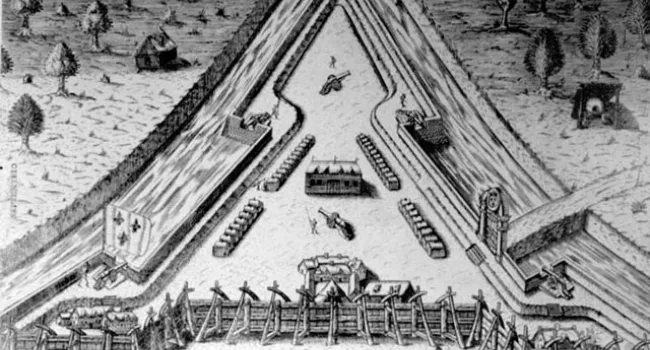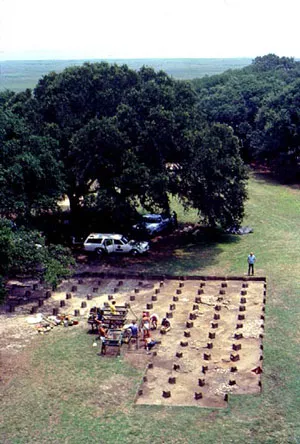
How do we know about the people who lived in South Carolina so long ago, whether natives or Europeans? We have a few paintings and drawings, such as those made by John White and Jacques LeMoyne de Morgues. A number of early explorers left written accounts. But it is sometimes difficult to identify the exact place described in a document or pictured on a map or in a drawing. Archaeology is an important source for locating the exact place where an ancient building stood, and for recovering artifacts that tell us about everyday things, such as what people ate and used - things that seemed so commonplace to the people then that they did not think it was important to write them down or make a drawing. Archaeologists from the South Carolina Institute for Archaeology and Anthropology are here carefully excavating a part of the golf course on Parris Island, beneath whose fairways lie the remnants of the village of Santa Elena. Photo by Stanley South.
Courtesy of the South Carolina Institute for Archaeology and Anthropology.