Understanding the Reconstruction Era Amendments
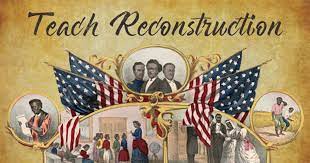
Students will be able to analyze and interpret the meaning of the 13th, 14th, and 15th Amendment and the impact it had on individuals and families in the Northern and Southern states in the United States of America.
Lesson Partners: South Caroliniana Library, PBS LearningMedia, Knowitall.org
Essential Question
What impact did the 13th, 14th, and 15th Amendments have on African Americans and society in the United States?
Grade(s):
- 8
Recommended Technology:
SMARTBoard, iPads, Chromebook, or computer/ with internet access
Other Instructional Materials or Notes:
Lesson Progression
- The teacher will introduce the lesson by having students look at the following video Reconstruction Era Video. 14:00 Minutes
- Students will be placed in groups of 3-5 members and interpret the 13th, 14th, and 15th Amendment. Each group will have one of the Amendment documents at their station. The students will have 10 minutes to read and review the document. While reading the document, students will highlight any word or phrase they do not know or understand.
- After the 10 minutes has passed the teacher will facilitate discussion by asking each group to have a spokesperson for their group. The spokesperson will share with their class what words they did not understand and what their group's interpretation of the documents is. The teacher will provide context to the documents and explain the meaning and purpose behind each of the amendments.
- Students will use their electronic devices (Chromebook, IPad, etc.) to look at the following weblink. Responses to Reconstruction, Acts and Codes. Students will then use Padlet to answer the following questions:
1.What was the purpose of the Black Codes?
2.What does the term “separate but equal” mean?
3. Which code or act had the most significant impact on African Americans?
.
13th Amendment Website
Website gives source documentation to 13th Amendment for analysis.
View Resource14th Amendment Website
Website gives source documentation to 14th Amendment for analysis.
View Resource15th Amendment Website
Website gives source documentation to 15th Amendment for analysis.
View ResourceStandards
- 8.3.P Analyze the Civil War Amendments (i.e., 13th, 14th, and 15th) as a turning point in the economic, political, and social structures of South Carolina.
- This indicator was developed to encourage inquiry into the changes that served as a catalyst for Reconstruction. The indicator was also designed to promote inquiry into how these actions affected the economic, political, and social conditions in the South.
- 8.4.CC Analyze continuities and change in the African American experience in the period of Reconstruction and Jim Crow eras within South Carolina.
- This indicator was developed to encourage inquiry into the successes and failures of Reconstruction, beginning with the Port Royal Experiment, in South Carolina. This indicator was written to explore development of the Constitutions of 1868 and 1895 and to analyze the evolution of restrictions for African Americans from the Black Codes in 1866 through the Plessy decision in 1898.
- 8.4.CX Evaluate South Carolinians’ struggle to create an understanding of their post-Civil War position within the state, the country, and the world.
- This indicator was developed to encourage inquiry into how the former planter class, African Americans, women, and others adjusted to, gained, lost, and/or regained position and status during Reconstruction. This indicator was also written to foster inquiry into how South Carolina worked with a stronger federal government and expanding international markets.
Assessments
Students will use Padlet Activity to review and analyze the overall purpose of the Reconstruction Era Amendments and the Responses to Reconstruction.