South Carolina Voices: Lessons from the Holocaust - Teaching Lesson Two

Lesson two deals with the life experiences of young people under Hitler's Germany. The goal of this lesson is to focus on the Holocaust experiences of South Carolinians to personalize the experience for students.
Lesson Partners: ETV Education, Knowitall.org, South Carolina Council on the Holocaust
Grade(s):
- 7
- 10
- 11
Subject(s):
Recommended Technology:
None needed, but computers with internet access may aid in the completion of the lesson progression.
Other Instructional Materials or Notes:
Handout 2A: The Hangman, Handout 2B: The News From Germany, and Handout 2C: Two Experiences of Hitler's Germany
Lesson Progression
Motivate: Read Overview II and summarize for students. Then write on the board the following quotation from the British philosopher Edmund Burke: "All that is necessary for the forces of evil to win is for good men to do nothing." Ask students what they think this quote means. Have students suggest reasons why otherwise good people might not act when confronted with behavior that they know to be wrong. (Fear of physical harm, fear of hurting standing in the community or of public disapproval, apathy, indifference, ignorance of how the problem can be solved)
This lesson can also be introduced with the poem "The Hangman" by Maurice Ogden, reprinted in Handout 2A. This poem is also used in a powerful film "The Hangman" listed in the bibliography and available on loan from the South Carolina Department of Education Audiovisual Library. Tell students that in this lesson they will read about some German men and women who did try to protest against Nazi policy. They will also look at the effects of Hitler's takeover of German Jews.
Handout 2B can be used to help students contrast the way dissent or opposition to government policy is treated in a democracy with the treatment of dissenters in a totalitarian state. Distribute Handout 2B. Make sure students realize that each of these newspaper reports comes from actual 1930s newspaper articles.
Develop: As students read each article, have them note the date and the place where each occurred. Martin Niemoeller was a German Protestant minister who served in the German navy as a submarine commander in World War I. In the years after World War I, he was at first a supporter of the Nazi party. However, after Hitler came to power in 1933, Niemoeller preached against the Nazis and became the leader of the Confessing Church. This group opposed the Nazi-sponsored German Christian Church. Niemoller, imprisoned briefly in 1937, spent eight years in prison from 1938 to 1945 until the Allies liberated the camps.
When students have completed reading Handout 2B, have them make a chart which indicates the crime discussed, the people accused, and the punishment they received. Ask students what effect they think the punishments for these acts had on German citizens who did not agree with Nazi policies. Through discussion, students should recognize that the increasing severity of punishments in the decade before the war had a chilling effect on dissent. Stress that without the cooperation and support of major institutions of German society such as the Church and universities, individual resistance, even on a larger scale, would not have been very effective.
Next ask students whether any of the actions described in these newspaper articles would be considered a crime in the United States. (No) What rights do Americans have that protect them from arrest for such activities? (freedom of speech or assembly, writ of habeas corpus) Have students think of periods in American history when opposition to government policies has been strong. (Civil War, Vietnam War, protest era of the 1960s) Some of the ways opponents of the Vietnam War expressed their views were through marches, protests, refusing to salute the flag, refusing to sing the national anthem. None of these actions was illegal. What would have been the response to such actions in Nazi Germany? (Clearly, such actions would have been considered criminal acts in Nazi Germany.) Point out that in the United States opposition to the war expressed through such activities as flag burning, refusing to register for the draft, and takeovers of buildings were illegal. Students can consider reasons for this.
Before distributing the handout, review what students have learned in Overview I about anti-Semitism. Remind students that in earlier times anti-Semitism had roots in religious differences or economic tensions. Distrust or hatred of Jews often stemmed from dislike or ignorance of Jewish religious beliefs. It also stemmed from the roles of Jews as tax collectors in the medieval period, and as moneylenders in Eastern European communities. During economic hard times well into the 20th century, Jews became convenient scapegoats for the failures of government economic policies.
Beginning in the late 1800s the racist idea of Aryan superiority, an even more dangerous form of anti-Semitism, took hold in Germany. Jews were singled out for ridicule and harsh treatment because of pseudo racial theories which labeled them an "inferior race."
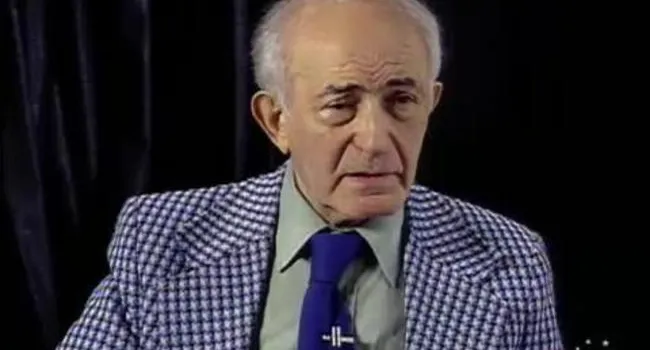
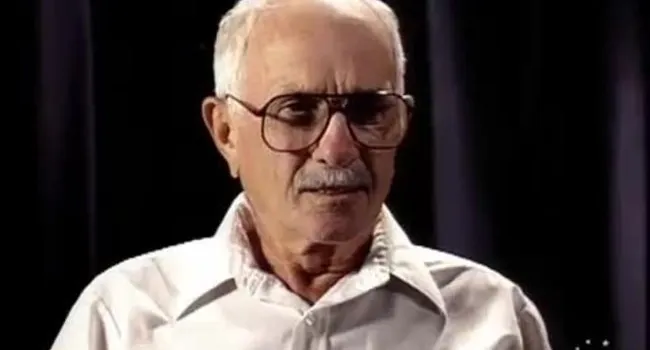
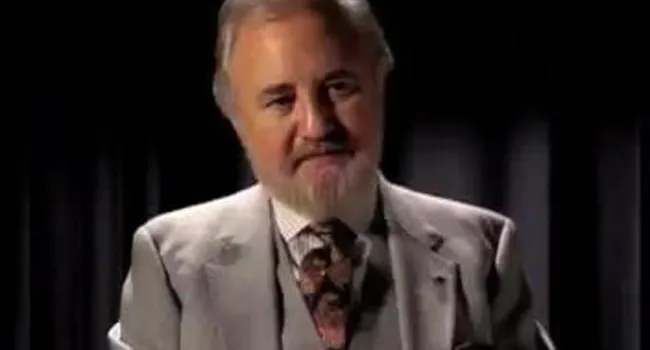
Distribute Handout 2C. Rudy Herz, who lives in Myrtle Beach, and Leo Diamantstein, who makes his home in Greenville, describe life in early Nazi Germany. These questions may be used to discuss the experiences of Rudy and Leo:
1. What event changed Rudy's life at school? How did his school mark this event? How do you think Rudy felt when he first saw the Nazi flag raised at his school? Emphasize that flags, songs, slogans, swastikas, Hitler Youth uniforms, and other Nazi symbols were skillfully used by the Nazis to build and maintain power. Even young Rudy was, at first, drawn in by Hitler's masterful use of propaganda. Such symbols as the flag and banner were used to make Germans feel proud of their German heritage and citizenship and to associate this pride with Nazi power.
2. Why did Rudy think Hitler's coming to power would not have any particular effect on him or his family?
3. Compare Nazi anti-Semitism and the prejudice Rudy experienced before the Nazis took over in Germany. How was Rudy's view of himself different from the way Nazis encouraged non-Jewish Germans to think of him? (Rudy saw himself as a loyal German citizen of the Jewish religion, proud of his nationality and his German culture and heritage.)
4. How did Hitler's takeover of the government affect Leo? Compare Leo's experience to Rudy's. What made Leo's father decide the family should leave Germany?
5. Do you think Rudy's or Leo's family would have been successful if they had tried to protest, complain to the police, or go to court about their treatment? Why or why not? Would these same actions aid a family under duress in the United States today? Why or why not? (Point out that hate songs like the one Rudy describes in this reading were forms of propaganda, educating Nazi followers in anti-Semitism and uniting them as a powerful "in-group" against a powerless "out-group." Such songs labeled the Jews as "enemies of the state" by suggesting that when they are killed "our lives will be twice as good." Such labeling helped to set the Jews apart and would serve later to justify Hitler's Final Solution, and make it seem more acceptable to the German people.)
Teacher Notes
Extend: Explore the difficult choices a democracy faces in determining the limits of dissent.
1. Should a civil rights group be allowed to hold a test march or a rally?
2. Should the same rights be given to the Ku Klux Klan, the Aryan Nation, skinheads and other neo Nazi groups?
3. What are the free speech rights of a former Nazi party member like David Duke, who ran for governor of Louisiana and sought the Republican nomination for president?
Students can research the Nazi party rally planned for Skokie, Illinois, in 1977. Many Skokie residents, among whom were Nazi concentration camp survivors, opposed giving the Nazi party a permit to hold the rally. Town leaders obtained a court order banning the rally and passed local laws to stop it. The American Civil Liberties Union defended the Nazis' right to assemble; arguing that stopping the march violated the Nazis' First Amendment rights. Students can use the Reader's Guide to Periodical Literature for 1977 and 1978 to find out more about this incident.
HANDOUT 2A—"The Hangman" by Maurice Ogden
Google doc - Seared Souls: S.C. Voices of the Holocaust
View ResourceHANDOUT 2B—THE NEWS FROM GERMANY
Google doc - Seared Souls: S.C. Voices of the Holocaust
View ResourceHANDOUT 2C—TWO EXPERIENCES OF HITLER'S GERMANY
Google doc - Seared Souls: S.C. Voices of the Holocaust
View ResourceLessons from the Holocaust/Seared Souls – Videos
Introduction | Seared Souls: S.C. Voices of the Holocaust
View ResourcePart 1: Beginnings | Seared Souls: S.C. Voices of the Holocaust
Holocaust survivors reflect on the time immediately following Hitler's rise to the position of vice chancellor.
View ResourcePart 2: The Gathering Storm | Seared Souls: S.C. Voices of the Holocaust
Reflections on the anti-Semitism that began and the systematic isolcation of Jews over time, taking away their rights, possessions and freedom.
View ResourcePart 3: The War Begins Seared Souls: S.C. Voices of the Holocaust
By 1939, after seizing land in Czekoslavakia and promising England's Prime Minister, Neville Chamberlain, that he would remain at peace, Adolf Hitler began World War II. Germany invaded Poland and bombed many targets. The German army came through the towns and burned them, including the homes. The Jews were required to wear the Star of David on their sleeves. If they were out without it and were asked if they were Jewish and they were, they were taken away and shot, and never returned.
View ResourcePart 4: The Final Solution | Seared Souls: S.C. Voices of the Holocaust
By 1939, the schools were closed for Jewish children, the synagogues were closed, and the business were closed. Jews were not allowed to have any businesses. Getting food was difficult and had to be smuggled in. The penalty was death. The Germans took able-bodied men and boys for forced labor. Everyone lived in fear.
View ResourcePart 5: Concentration Camps | Seared Souls: S.C. Voices of the Holocaust
In 1939 and 1940, more than 70,000 Germans and Austrians, such as the chronically sick and the mentally retarded, had been gassed in six special euthanasia institutions. The euthanasia program became the training ground for the SS personnel, who would use these skills to manage the Nazi death camps.
View ResourcePart 6: Holocaust | Seared Souls: S.C. Voices of the Holocaust
The conditions in the camps are described in detail.
View ResourcePart 7: Luck | Seared Souls: S.C. Voices of the Holocaust
Recollections of the camps continue with stories in which a little bit of luck was helpful, in terms of survival. Everyone who survived has a story like this to tell.
View ResourcePart 8: Survival | Seared Souls: S.C. Voices of the Holocaust
olocaust survivors discuss the determination that was required to survive under the horrid conditions.
View ResourcePart 9: Liberation | Seared Souls: S.C. Voices of the Holocaust
Recollections of being rescued by the Red Cross are shared, including being taken to a hospital, and a first meal of milk and rice. Men and women who served in the U.S. Army tell of their arrival at the camps, and relay what they saw when they arrived to rescue the survivors. In the case of some, the rescuers arrived to find that many had been burned alive, just as the Americans were arriving to save them.
Part 10: Never Again | Seared Souls: S.C. Voices of the Holocaust
This segment provides a glimpse of the after-effects of the experiences that these survivors endured and what their experiences should teach to all of us, and also some advice, such as avoiding generalizing based on nationality or religion: judge instead by a person's deeds. The point is made that most people are followers, and if we don't stop bigotry, racism, and prejudice, and educate people about what happened, then a holocaust could happen again.
View ResourceLessons from the Holocaust Resource Guide
Teaching about the Holocaust is often limited by teachers' familiarity with the subject and the amount of time available for this topic. The materials in this guide were designed with these concerns in mind.
View ResourceIntroduction - The ETV Holocaust Forum
Thanks to a grant from the South Carolina Council on the Holocaust, ETV created a forum on the Holocaust to provide teachers access to a variety of resources when teaching their students about this tragic chapter from human history.
Seared Souls Glossary
Glossary to aid in your understanding of the series, "Seared Souls".
View ResourceStandards
- 7-4 The student will demonstrate an understanding of the causes and effects of world conflicts in the first half of the twentieth century.
- USHC-7 The student will demonstrate an understanding of the impact of World War II on the United States and the nation’s subsequent role in the world.