South Carolina Voices: Lessons from the Holocaust - Teaching Lesson Three

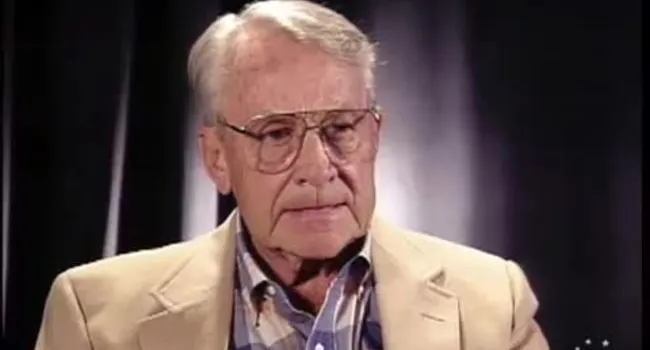
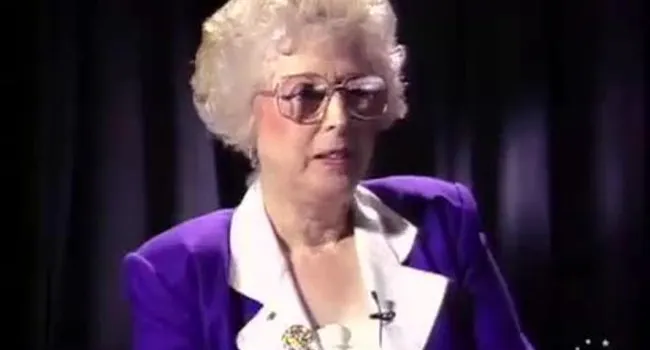
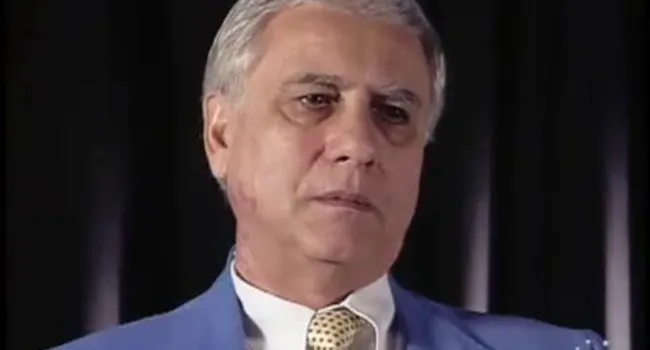
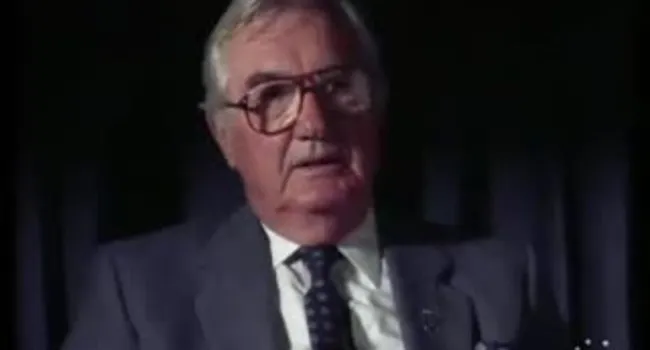
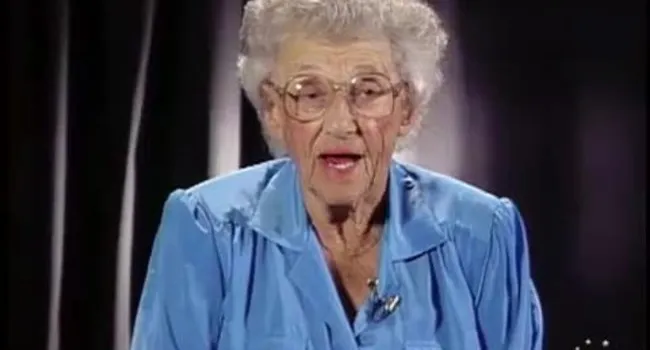
The Holocaust lessons were created to help students learn about the Holocaust from the testimonies of Holocaust survivors. Lesson 3 shares the recollections of a 12-year-old girl whose entire family were taken away, including her siblings and both parents. The girl's mother insisted that she stay in hiding and told her daughter that she would survive. The girl eventually found the strength to get out of the trunk she was hiding in and go outside. When asked about being Jewish, she lied, saying she was visiting a Jewish friend, and then she ran and ran for miles.
Lesson Partners: ETV Education, Knowitall.org, South Carolina Council on the Holocaust
Grade(s):
- 7
- 10
- 11
Subject(s):
Recommended Technology:
Technology is not required, but can aid in completion of the lesson.
Other Instructional Materials or Notes:
Handout 3A: News From Germany; Handout 3B: Rudy and the Nuremberg Laws; Handout 3C: Trude Describes the German Takeover; Handout 3D: Two Views of Crystal Night; Handout 3E: Anne Frank Writes in Her Diary
Lesson Progression
Motivate: Read Overview III and summarize for students. Several of the handouts for this lesson look at the impact of the Anschluss and Kristallnacht on European Jews. Write the terms democracy and dictatorship on the board. Have students identify the major differences between these two forms of government. Through discussion, students should recognize that a dictatorship is a government in which power is held by one person or a small group.
A key characteristic of a dictatorship is that it is not responsible to the people and cannot be limited by them. Those in power have absolute authority over the people they govern. Many modern dictatorships are also totalitarian. This means that those in power exercise total control over every aspect of citizens' lives, from school to the workplace, from what people read, to how they spend their leisure time.
In a democracy, political authority rests with the people, and democratic leaders govern with the consent of the governed. The rights of citizens are protected by law. The majority rules, but the minority has rights that are protected by law. Among these rights are freedom of religion, assembly, petition, speech, and press.
After a brief review of the differences between these forms of government, distribute Handout 3A. Explain that this is a copy of an actual newspaper article that appeared in the "New York Herald" in 1935. Use these questions to start discussion:
1. What lawmaking body passed the Nuremberg Laws?
2. To what political party did most members of the Reichstag belong?
3. The members of the Reichstag were elected by the people of Germany. Does this mean that it was a democratic legislature? Why or why not?
4. What is meant by the statement that the Reichstag is "now nothing more than a rubber stamp"?
5. Was there any discussion of this law before it was passed? Did any members of the Reichstag oppose the laws? How do you think opposition to the laws would have been treated?
6. Who was hurt by these laws?
7. What restrictions were put on Jews by these laws? What were the penalties for breaking these laws?
8. What do you think the Nazi party hoped to achieve with these laws? Focus discussion on the following question: What is the difference, if any, between individual acts of prejudice and discrimination and those which are carried out through government laws? (Through discussion, students recognize that the passage of the Nuremberg Laws by the Reichstag encouraged and supported prejudice and made hatred of the Jews acceptable. A society that tolerates or legalizes bigotry through its government is different from a society where discrimination is unlawful.
In a democratic society like the United States, individual acts of discrimination and prejudice do occur. However, they are not sanctioned by the government and are often actively opposed by government laws and regulations. Furthermore, in countries where discrimination is against the law, people who believe they have been treated unfairly can seek redress through the legal system and the courts.)
Next have students suggest ways laws such as these would have been discussed in a democratic legislature like the Congress. Point out that German Jews had no way of protesting these laws, because they were not represented in the legislature. Ask students how Americans opposed to the passage of such laws could protest against them in the United States before their passage. (contacting their legislative representatives, public petitions and protests) How would a minority group in a democracy protest such laws once they were passed? (public protests, voting against elected officials who supported such laws, challenging the laws in court)
Distribute Handout 3B. Have students read the handout and describe the way that the Nuremberg Laws affected Rudy. Have students explain how the Nazis changed Rudy's textbooks.
1. What was the purpose of these changes? Why might such changes have been popular among the German people, particularly after the signing of the Versailles Treaty? (Note that the changes in the textbooks, like the flags and swastikas, built nationalism and linked Germany's past glory with support for Nazi power in the present.)
2. What did Rudy think about the way German history had been rewritten in his textbooks? If time allows, examine both the positive and negative aspects of strong nationalistic feeling. Consider ways nationalism helps a nation grow by uniting its people. Then consider the negative consequences intense nationalism might have for minorities within a nation.
3. In what ways was the daily life of Rudy and his family changing? Why do you think merchants agreed to put up signs saying Aryan Business or Aryan Proprietor? What effect did these signs have on the way people thought about Germans who were Jewish? How did such actions help the Nazis build support for anti-Semitism?
4. What might have happened if all the merchants in a community had agreed not to put such signs in their windows and had taken a stand against this treatment of the Jews? Were the merchants who put signs in their store windows in any way responsible for the growth of anti-Semitism? (Victimization of the Jews continued and grew because there was no strong counter pressure to stop it.)
Distribute Handout 3C. Explain that the Anschluss, or union of Austria and Germany that took place in March 1938, was a direct violation of the Treaty of Versailles. Threatened by German military action, Austria's chancellor was forced to resign and appoint an Austrian Nazi party official in his place.
Explain that Trude's schooling ended because Austrian Jews were banned from going to school with other Austrians.
1. What was the first change Trude noticed on her way home from gym class? What did this change indicate? What did Trude notice on her way home that signaled the Anschluss would have a direct impact on Jews?
2. Why did her father favor leaving? Why did her mother oppose it? What difficulties would the family have faced if they had left then? Would staying or leaving have seemed safer in 1935? How did Trude's concerns compare with those of an American teenager at that age?
3. What evidence can you find that laws similar to the Nuremberg laws were passed in Austria after Hitler took over?
4. How did Trude's neighbors respond when they saw her washing the streets? Why do you think none of the neighbors tried to help her? Would the humiliation of Trude have continued if the crowd watching had objected? Were Trude's neighbors responsible in any way for her frightening experience or does all the blame fall on the Austrian Nazis? Give reasons for your opinion.
Ask a student to explain what Kristallnacht was and why it is called the Night of Broken Glass. Distribute Handout 3D. Ask volunteers to read Rudy's and Trude's accounts of Kristallnacht aloud to the class. You may want to explain that "denounced" means reported to the police or the Nazis.
1. What stopped the Germans from treating Rudy's family more harshly? What do students think would have happened if they had not seen the picture of Hindenburg or learned of Rudy's father's service in World War I? What happened to the neighbor who helped Rudy's grandmother?
2. How did Trude and her family survive Kristallnacht? What rights or freedoms did Trude's family lose after Kristallnacht?
3. Kristallnacht has been called a turning point in Hitler's treatment of the Jews. Why do think this is? (Kristallnacht stepped up the campaign against the Jews. Up to this point, Jews had been threatened and intimidated. Laws had been passed to exclude them from many aspects of daily life and to deprive them of their civil rights. But Kristallnacht was the first organized act of mass violence against Jewish citizens.)
Distribute Handout 3E. As a class, make a list on the board of the restrictions Anne and Bert describe. (Restrictions included riding on a train or subway, driving a car, going to the movies. Emphasize that Dutch Jews faced these restrictions solely because they were born Jewish or had Jewish parents, grandparents, or great-grandparents. Prejudice rather than any wrongdoing by Jews made them subject to these laws.)
Next ask students to imagine that such laws were applied today in their own community to all families with children between the ages of 11 and 17. The reasons why these laws apply only to these families is not clear to students. However, they must follow the laws or face serious penalties. Have each student write a paragraph, a letter to a friend, or a diary entry describing how his or her life would suddenly change if faced with such restrictions. Have students describe a typical school day and a weekend day. How would students' after-school activities change? How would their relationships with friends and other people who were not subject to these laws change?
Teacher Notes
Extend: Encourage students to think of periods in American history when citizens have been treated unfairly through government legislation because of prejudice and discrimination. Compare and contrast the Nuremberg Laws with such laws as the Indian Removal Act during the presidency of Andrew Jackson, the black codes and Jim Crow laws during the period following Reconstruction, (Selected items from the black codes and Jim Crow laws can be found in the South Carolina Black History Modules.) and the internment camps for Japanese-Americans during World War II. (Areas for comparison and contrast include purpose or aims of such laws, groups affected by the laws, responses of citizens to such laws, legal repercussions at the time the laws were passed or at a later period, and differences in ways citizens in a democracy and authoritarian society can respond to such laws.)
Provide students with a copy of the Bill of Rights. Have students decide which of the Nuremberg Laws and the laws cited by Anne Frank and Bert Gosschalk would be illegal under the Bill of Rights.
The War Begins | Seared Souls: S.C. Voices of the Holocaust
By 1939, after seizing land in Czechoslovakia and promising England's Prime Minister, Neville Chamberlain, that he would remain at peace, Adolf Hitler began World War II. Germany invaded Poland and...
View AssetHolocaust Timeline
Learn the series of events that led to the Holocaust and related events that occurred during this period.. 1933 January 30: Hitler appointed chancellor of Germany. March 5: Hitler receives strong vote...
View AssetHolocaust Glossary | Holocaust Forum
Learn key terms from the Holocaust. Anti-Semitism. Acts or feelings against Jews; takes the form of prejudice, dislike, fear, discrimination, and persecution. Aryan. A term used by the Nazis to mean a...
View AssetHANDOUT 3A—NEWS FROM GERMANY 1935
New York Herald Tribune, September 16, 1935 - "The Shame of Nuremberg" by Rudy Barnes
HANDOUT 3B—RUDY AND THE NUREMBERG LAWS
In the reading, Rudy describes how the Nuremberg Laws affected his family and explains why the family moved from Frankfurt, Germany to the even larger city of Cologne.
HANDOUT 3C—TRUDE DESCRIBES THE GERMAN TAKEOVER
On March 13, 1938, Austria was annexed by Germany. This event was called the Anschluss (Ann-Sh-Loose), and for some Austrians this new union was cause for celebration. Trude, living in Vienna, describes how it affected her family.
View ResourceHANDOUT 3D—TWO VIEWS OF CRYSTAL NIGHT
Crystal Night or Kristallnacht, the Night of Broken Glass as it is sometimes called, began on November 9, 1938. In the readings two people recall their experiences on this frightening night.
View ResourceLessons from the Holocaust Resource Guide
Teaching about the Holocaust is often limited by teachers' familiarity with the subject and the amount of time available for this topic. The materials in this guide were designed with these concerns in mind.
View ResourceIntroduction - The ETV Holocaust Forum
Thanks to a grant from the South Carolina Council on the Holocaust, ETV created a forum on the Holocaust to provide teachers access to a variety of resources when teaching their students about this tragic chapter from human history.
Standards
- 7-4 The student will demonstrate an understanding of the causes and effects of world conflicts in the first half of the twentieth century.
- The influence of both world wars and the worldwide Great Depression are still evident. To understand the effects these events had on the modern world, the student will utilize the knowledge and skills set forth in the following indicators:
- 7-4.5 Summarize the causes and course of World War II, including drives for empire, appeasement and isolationism, the invasion of Poland, the Battle of Britain, the invasion of the Soviet Union, the "Final Solution," the Lend-Lease program, Pearl Harbo...
- 7-4.6 Analyze the Holocaust and its impact on European society and Jewish culture, including Nazi policies to eliminate the Jews and other minorities, the Nuremberg trials, the Universal Declaration of Human Rights, the rise of nationalism in Southwest...
- The influence of both world wars and the worldwide Great Depression are still evident. To understand the effects these events had on the modern world, the student will utilize the knowledge and skills set forth in the following indicators:
- WG-4 The student will demonstrate an understanding of the characteristics of culture, the patterns of culture, and cultural change.
- WG-7 The student will demonstrate an understanding of how cooperation and conflict among people influence the division and control of Earth’s surface.
- Earth is globally interdependent and locally controlled. Its territorial divisions are capable of cooperation or conflict. To analyze the reasons for and the results of Earth’s territorial divisions, the student will utilize the knowledge and sk...
- WG-7.1 Explain how cooperation and/or conflict can lead to the control of Earth’s surface (e.g., the establishment of new social, political, or economic divisions).
- WG-7.2 Explain the causes of boundary conflicts and internal disputes between culture groups (e.g., the ongoing Israeli-Palestinian conflict).
- Earth is globally interdependent and locally controlled. Its territorial divisions are capable of cooperation or conflict. To analyze the reasons for and the results of Earth’s territorial divisions, the student will utilize the knowledge and sk...
- USHC-7 The student will demonstrate an understanding of the impact of World War II on the United States and the nation’s subsequent role in the world.