South Carolina Voices: Lessons from the Holocaust - Teaching Lesson One
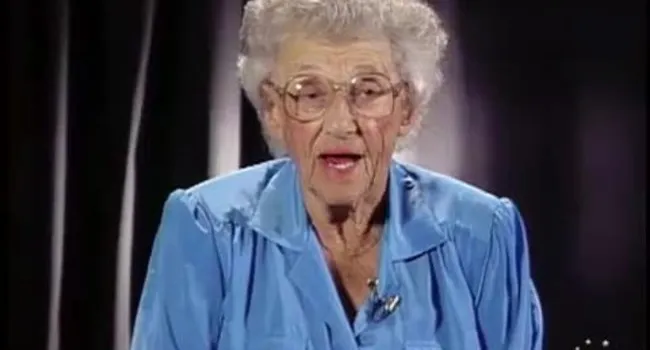
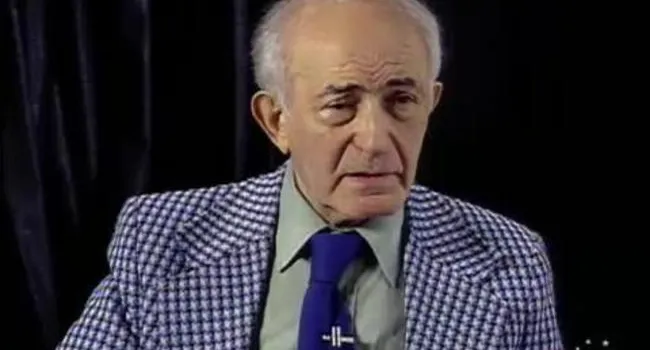
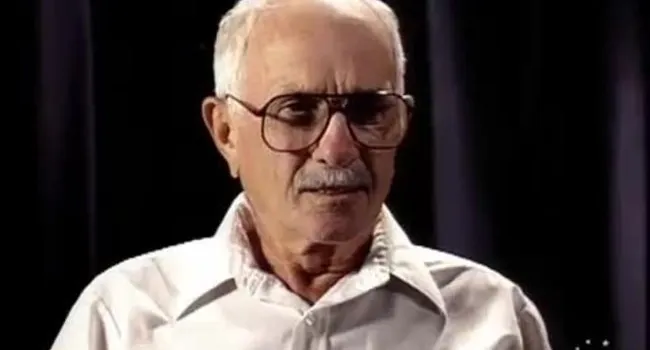
The Holocaust lessons were created to help students learn about the Holocaust from the testimonies of Holocaust survivors. Lesson 1 deals with the rememberances of Trude (pronounced Tru-dee) Heller and Pincus (pronounced Pink-us) Kolendar. Like all of the survivors students will read about in these lessons, they live in South Carolina. Trude lives in Greenville and Pincus in Charleston. The goal of this lesson is to focus on the Holocaust experiences of South Carolinians to personalize the experience for students.
Lesson Partners: ETV Education, Knowitall.org, South Carolina Council on the Holocaust
Grade(s):
- 5
- 7
- 10
- 11
Subject(s):
Recommended Technology:
Technology is not needed, but computers with internet access may aid in the lesson progression.
Other Instructional Materials or Notes:
Handout 1A: Imagine This and Handout 1B: Fact Not Fantasy
Lesson Progression
Motivate: Read Overview I and summarize for students. Then distribute Handout 1A. Have students discuss the reading, using the questions that follow.
1. Do you think the events described in this story could happen to anyone in the community where you live? Why or why not?
2. Do you think this could happen anywhere? If so, where?
If students say that such events could not happen in their community, have them give reasons for their opinions. What would prevent such events from happening? (public opinion and public protest, laws, police, government leaders) What rights do private citizens have in the United States that protect them from being evicted from their homes or arrested? (Bill of Rights, habeas corpus, and so on)
Develop: After a brief discussion of Handout 1A, tell students that the next accounts they will read are facts, not fiction. They are part of the testimonies of Holocaust survivors Trude (pronounced Tru-dee) Heller and Pincus (pronounced Pink-us) Kolendar. Like all of the survivors students will read about in this guide, they live in South Carolina. Trude lives in Greenville and Pincus in Charleston. The goal of this guide is to focus on the Holocaust experiences of South Carolinians to personalize the experience for students. As you use other lessons from this guide, consider locating and marking the cities in South Carolina where the survivors and liberators live. Students can tag the cities with the names of the survivors and liberators. Use string on a globe or a world map to connect the areas of Europe where these lessons take place and South Carolina.
As students read the lessons about Trude, Pincus, and the other survivors, the class can create a lifeline for each person or place all the survivors on a single line using a different color for each. A lifeline is a string or rope stretched and tied between two points on which slips of paper representing the events in a person's life are hooked. Paperclips work well for this. Knots can be tied in the string or rope to represent the years involved. To further personalize these events have students place events from the lives of members of their own families or from this period in history on the lifeline also.
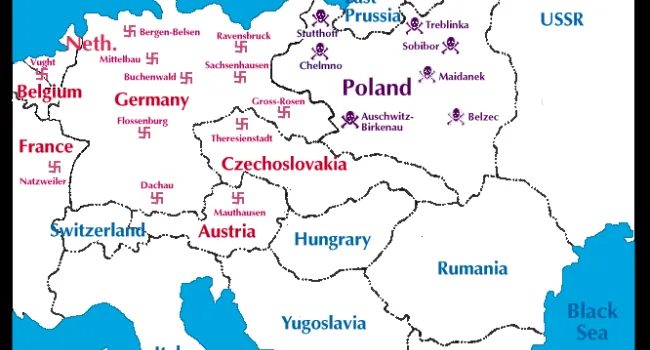
Locate Vienna, Austria, and Bochnia, Poland, on a map of Europe. As you study the other lessons, locate the sites named in the survivors' testimonies. Review the definitions of the key terms for this lesson. Stress that the experiences of Trude and Pincus were not unusual, but quite typical of the first contacts many Jews had with the Nazis. In 1938, when the Nazis took over Austria, Trude's parents were merchants, leading a comfortable, middle class life. They lived in an area of Vienna occupied by many Jewish families. Pincus, who lived in Poland, came from a very religious, poor family.
Distribute Handout 1B. Use the following questions to discuss the reading:
1. What changes did Hitler's takeover of Austria make in Trude's life? What evidence can you find that some Austrians supported or benefited from Nazi hatred of Jews?
2. What did Trude mean by the statement that we moved to a place where "people like us" could live? What effect do you think this experience had on the way Trude thought about herself and her family?
3. How did anti-Semitism affect the way Pincus lived before 1939 when the war began? After the war began and the Germans conquered Poland? What evidence can you find that prejudice against Jews existed among Polish people before the rise of Nazism?
4. Do you think this experience changed the way Trude's and Pincus's friends and neighbors thought about them? How other Austrians and Poles thought about Jews? Through discussion, students should recognize that this treatment was a deliberate attempt to isolate and humiliate Trude, Pincus and other Jews, to make them outsiders or different from their classmates, and to encourage non-Jews to think of them as inferior.
5. How would you feel if you were suddenly forced to give up your home or watch your parents lose their jobs because of their race or religion? What response could you make if such treatment were official government policy? What can Americans do if someone attempts to take away their property? Why couldn't either family protest their treatment? Emphasize that the actions of the Nazis were government policy or had the unofficial approval of government leaders, thus the choice of responses was very limited.
Conclude by speculating on the types of governments existing in Poland and Austria at this time which allowed such actions to take place. Explain that students will learn more about the governments of countries occupied by the Nazis in Lesson Two.
Teacher Notes
Extend: In recent years both anti-Semitism and many kinds of hate crimes have risen sharply in the United States. Hate crimes can be defined as crimes motivated by a victim's race, ethnicity, religion, or sexual persuasion. Such crimes take many forms from harassment and vandalism such as spray painting swastikas on synagogues, to cross-burnings, arson, bombings, and murder. Experts think that America's economic problems, particularly the recession of the early 1990s, may be one cause of the increase in bigotry and violence against minorities. But experts also say there is a strong link between such crimes and the values perpetrators learn from parents, friends, and community. The most extreme violence arises from prejudices learned in childhood and reinforced by family, friends, and society. Students can bring to class newspaper or news magazine articles describing hate crimes in South Carolina or in other parts of the country.
Ask the class to imagine that they were friends or acquaintances of the perpetrators of hate crimes or observers or witnesses to such crimes. Explore what they might have done to stop the crime or prevent a recurrence of such a crime. What punishment would they recommend for juveniles who commit acts of vandalism as hate crimes?
Introduction | Seared Souls: S.C. Voices of the Holocaust
In this introduction to the 10-part documentary, an overview provides the context, and South Carolinians who survived the Holocaust reflect on these events, telling their individual stories.
View AssetBeginnings | Seared Souls: S.C. Voices of the Holocaust
Holocaust survivors reflect on the time immediately following Hitler's rise to the position of vice chancellor.
View AssetGoogle Doc - HANDOUT 1A—IMAGINE THIS
South Carolina Voices: Lessons from the Holocaust
Google document
Google Doc - HANDOUT 1B—FACT NOT FANTASY
South Carolina Voices: Lessons from the Holocaust - google doc
View ResourceLessons from the Holocaust/Seared Souls - Videos
Introduction | Seared Souls: S.C. Voices of the Holocaust
View ResourcePart 1: Beginnings | Seared Souls: S.C. Voices of the Holocaust
Holocaust survivors reflect on the time immediately following Hitler's rise to the position of vice chancellor.
View ResourcePart 2: The Gathering Storm | Seared Souls: S.C. Voices of the Holocaust
Reflections on the anti-Semitism that began and the systematic isolcation of Jews over time, taking away their rights, possessions and freedom.
View ResourcePart 3: The War Begins Seared Souls: S.C. Voices of the Holocaust
By 1939, after seizing land in Czechoslovakia and promising England's Prime Minister, Neville Chamberlain, that he would remain at peace, Adolf Hitler began World War II. Germany invaded Poland and bombed many targets. The German army came through the towns and burned them, including the homes. The Jews were required to wear the Star of David on their sleeves. If they were out without it and were asked if they were Jewish and they were, they were taken away and shot, and never returned.
View ResourcePart 4: The Final Solution | Seared Souls: S.C. Voices of the Holocaust
By 1939, the schools were closed for Jewish children, the synagogues were closed, and the business were closed. Jews were not allowed to have any businesses. Getting food was difficult and had to be smuggled in. The penalty was death. The Germans took able-bodied men and boys for forced labor. Everyone lived in fear.
View ResourcePart 5: Concentration Camps | Seared Souls: S.C. Voices of the Holocaust
n 1939 and 1940, more than 70,000 Germans and Austrians, such as the chronically sick and the mentally retarded, had been gassed in six special euthanasia institutions. The euthanasia program became the training ground for the SS personnel, who would use these skills to manage the Nazi death camps.
View ResourcePart 6: Holocaust | Seared Souls: S.C. Voices of the Holocaust
The conditions in the camps are described in detail.
View ResourcePart 7: Luck | Seared Souls: S.C. Voices of the Holocaust
Recollections of the camps continue with stories in which a little bit of luck was helpful, in terms of survival. Everyone who survived has a story like this to tell.
View ResourcePart 8: Survival | Seared Souls: S.C. Voices of the Holocaust
Holocaust survivors discuss the determination that was required to survive under the horrid conditions. They discuss the gas chambers, the starvation, and illness, and waking up with a corpse next to them. Some people would go to the wire (the fence), intentionally to be shot. The story of sisters being reunited, only briefly, is told.
View ResourcePart 9: Liberation | Seared Souls: S.C. Voices of the Holocaust
Recollections of being rescued by the Red Cross are shared, including being taken to a hospital, and a first meal of milk and rice. Men and women who served in the U.S. Army tell of their arrival at the camps, and relay what they saw when they arrived to rescue the survivors. In the case of some, the rescuers arrived to find that many had been burned alive, just as the Americans were arriving to save them.
View ResourcePart 10: Never Again | Seared Souls: S.C. Voices of the Holocaust
This segment provides a glimpse of the after-effects of the experiences that these survivors endured and what their experiences should teach to all of us, and also some advice, such as avoiding generalizing based on nationality or religion: judge instead by a person's deeds. The point is made that most people are followers, and if we don't stop bigotry, racism, and prejudice, and educate people about what happened, then a holocaust could happen again.
View ResourceLessons from the Holocaust Resource Guide
Teaching about the Holocaust is often limited by teachers' familiarity with the subject and the amount of time available for this topic. The materials in this guide were designed with these concerns in mind.
View ResourceIntroduction - The ETV Holocaust Forum
Thanks to a grant from the South Carolina Council on the Holocaust, ETV created a forum on the Holocaust to provide teachers access to a variety of resources when teaching their students about this tragic chapter from human history.
Seared Souls Glossary
Glossary to aid in the understanding of the series, "Seared Souls".
View ResourceStandards
- 5-4 The student will demonstrate an understanding of American economic challenges in the 1920s and 1930s and world conflict in the 1940s.
- 7-4 The student will demonstrate an understanding of the causes and effects of world conflicts in the first half of the twentieth century.
- USHC-7 The student will demonstrate an understanding of the impact of World War II on the United States and the nation’s subsequent role in the world.
- In defense of democracy, a government may need to confront aggression and ask its citizens for sacrifice in wars and providing foreign aid that, in turn, affects the practice of democracy at home. To make informed political decisions about when and ho...
- USHC-7.4 Summarize the economic, humanitarian, and diplomatic effects of World War II, including the end of the Great Depression, the Holocaust, the war crimes trials, and the creation of Israel.
- USHC-7.1 Analyze the decision of the United States to enter World War II, including the nation’s movement from a policy of isolationism to international involvement and the Japanese attack on Pearl Harbor.
- In defense of democracy, a government may need to confront aggression and ask its citizens for sacrifice in wars and providing foreign aid that, in turn, affects the practice of democracy at home. To make informed political decisions about when and ho...