South Carolina Voices: Lessons from the Holocaust - Teaching Lesson Eleven
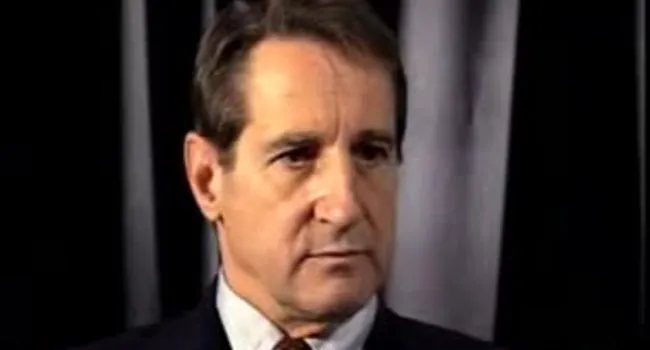
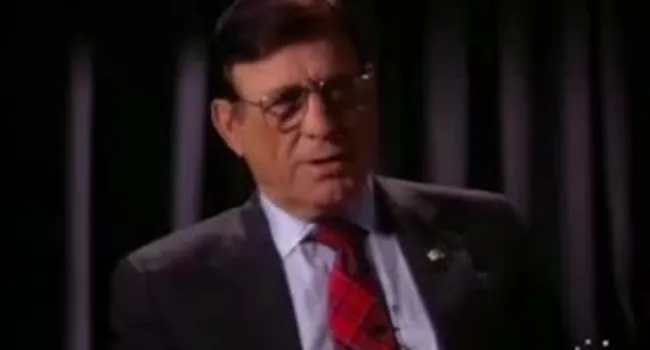
Remind students that all of the South Carolinians they have read about so far were either survivors of the Holocaust or American soldiers who saw the horrors of the concentration camps at liberation. Peter Becker, the South Carolinian they will read about in this lesson, is different. Like many thousands of non-Jewish Germans who lived during this period, he was not just a passive bystander in the persecution of Jews and other minorities, but an active supporter of Hitler and the Nazi party. In his own words, he was, "150-percent Nazi.Becker tells the story of how he became a Nazi and of how his intense admiration for Hitler changed after the war ended.
Lesson Partners: ETV Education, Knowitall.org, South Carolina Council on the Holocaust
Grade(s):
- 7
- 10
Subject(s):
Recommended Technology:
None required, but a computer with internet access may help in completion of the lesson progression.
Other Instructional Materials or Notes:
Handout 11A: 150-Percent Nazi; Handout 11B: Nazi Education; Handout 11C: News from Germany: 1992
Lesson Progression
Motivate: Remind students that all of the South Carolinians they have read about so far were either survivors of the Holocaust or American soldiers who saw the horrors of the concentration camps at liberation. Peter Becker, the South Carolinian they will read about in this lesson, is different. Like many thousands of non-Jewish Germans who lived during this period, he was not just a passive bystander in the persecution of Jews and other minorities, but an active supporter of Hitler and the Nazi party. In his own words, he was, "150-percent Nazi." Handout 11A offers some insight into how young Germans like Peter Becker were educated or indoctrinated in the prewar period and the war years to develop loyalty to Nazism and Hitler. In Handout 11B Becker tells the story of how he became a Nazi and of how his intense admiration for Hitler changed after the war ended.
Explain to the class that in any society, individuals learn the normal, or accepted, political beliefs and behavior of their society from their family, friends, schools, churches or synagogues, and other community organizations. Learning the accepted political beliefs and behavior of one's society is called political socialization.
Begin the lesson by asking students to name some of the political values and beliefs they have learned as Americans. Write their responses on the board. You may want to give them a few examples to begin with. Voting is an important right and responsibility of citizens. All people are created equal; all people should be treated equally under the law. The U.S. is a democracy whose leaders govern with the consent of the people. When the list is completed, have students discuss where they have learned these beliefs and behaviors of American democracy. (school, textbooks, home, church or synagogue, television and other media) Then explain that in this lesson, students will read about a young man who was socialized in a very different political culture, Nazi Germany in the late 1930s and early 1940s.
Develop: Distribute Handout 11A. Ask each student to write down eight political beliefs, values, or ideas that a German boy might have learned in the course of his schooling, judging by the statements of the Nazi Minister of Education and the examples from the arithmetic book and geography lesson. Have students share their lists with the class. Among the values or beliefs students might mention are the following: the state is more important than the individual; a good German should be willing to sacrifice or face death for the Nazis and for Hitler; the purpose of schooling is to teach obedience to authority; the most important responsibility of a girl is to bear children; girls do not need to be well educated to fulfill their responsibilities to the Nazi state; Jews are aliens; Germany is powerful because of its racial purity; the U.S. is weak because of its racial impurity; democracy is an inferior and inefficient form of government.
Distribute Handout 11B. Have students read the handout and work in groups to write answers to four questions.
1. How was Peter socialized or educated to become a Hitler Youth?
2. Name at least three values or political beliefs and ideas Peter held as a Hitler Youth.
3. Who did Peter blame for Germany's current economic problems? How did he form this opinion?
4. Why do you think Peter so willingly accepted and did not question what he learned in the special Nazi school, in public school, and in the Hitler Youth?
Have various students share their responses with the class for questions 1 and 3. To better involve the entire class, ask one student for a value or belief found in question 2, next ask for hands of all those who agree with that response. Now question those who did not raise their hands. Ask why they did not agree with that answer. Ask one or two students why they do not think that the given response was a belief or value Peter held. Continue with this method until you have covered all possible answers.
Finally, focus discussion on question 4. Make sure students understand that Peter's family, his peers, his teachers, respected authority figures like the Nazi leaders who visited his school and shared and reinforced the beliefs and values he was learning in his school, his after-school activities, and his youth group. Moreover, his textbooks taught and reinforced his distorted view of German history. In addition, his access to information, particularly accurate information, was carefully controlled in the special Nazi school. In his later teen years, although his life was less structured or controlled, information was still carefully screened and censored by the totalitarian government under which he lived.
Next have students describe the events which led Peter to question his understanding of German history and the Nazi government. List responses on the board. (viewing traveling exhibit in Bremen, listening to Nuremberg Trials, talking with the American teacher, studying German history) Ask students how each of these events affected his view of the Nazis, the war, and his own participation in the Hitler Youth.
Conclude by exploring with the class the final paragraph of Handout 11B entitled "A Warning." Write the following statement on the board: "Eternal Vigilance Is the Price of Liberty." Briefly review with the class Overviews II and III. Now have a volunteer paraphrase the statement and explain how it applies to events in Nazi Germany. What safeguards exist in a democracy to make the rise of a Hitler or a catastrophe like the Holocaust less likely? Why does Becker consider a free press so important to the defense of liberty? How would Becker's education have been different if Nazi Germany had allowed a free press at that time? Why didn't Hitler allow a free press? Why do you think Becker says people need to become "politically active" to protect their freedoms? What does he mean by "politically active"? Examples of politically active citizens include people who are informed about events in their community, state, and nation; knowledgeable about the candidates who run for office; registering and voting; willing to speak out against actions by other citizens or government leaders that affect or take away the rights of citizens and minorities.
Teacher Notes
Extend: As a final activity, use Handout 11C, which comes from a 1992 newspaper article. Explain to the class that Nazi Hunter Simon Wiesentahl has identified six conditions that he believes made it possible for the Holocaust to take place. These conditions are:
1. The existence of a feeling of overpowering hatred by the people of a nation.
2. A charismatic leader able to identify the feelings of anger and alienation that existed within the nation and able to convert these feelings into hatred of a target group.
3. A government bureaucracy that could be taken over and used to organize a policy of repression and extermination.
4. A highly developed state of technology that makes possible methods of mass extermination.
5. War or economic hard times.
6. A target group against whom this hatred could be directed.
Write these six conditions on the board. Then distribute Handout 11C. Have students decide or summarize for students whether any of these conditions existed in Germany in 1992 at the time this article was written and how many if any, exist in Germany or any other country today. Discuss what students might do or encourage others to do to make sure that the situations such as those they read about in this newspaper article do not escalate further. Sould the government play a role in ending outbreaks of violence such as these? What responsibility do individuals or private citizens have for defusing such situations? Have students report to the class on how the German government and private citizens responded to the rise in hate crimes in their country. (banning neo-Nazi parties, limiting immigration from Eastern Europe, marching to protest Nazism)
HANDOUT 11A—150 PERCENT NAZI
Today Peter Becker is the chairperson of the History Department at the University of South Carolina, but in the 1930s he was growing up in Germany, his native country. Becker was born in Munich, Germany in 1929. He was the oldest of four boys. When he was five years old, his father died. His widowed mother had no way to support her young children and she decided to place Peter in one of Hitler's special schools for Hitler Youth, the future leaders of the Nazi Party.
View ResourceHANDOUT 11B—NAZI EDUCATION
The following selections from Facing History and Ourselves, Holocaust and Human Behavior by Margot Strom and William Parsons offer insight into the curriculum of German schools during the years of Hitler's rule in Germany.
View ResourceHANDOUT 11C: NEWS FROM GERMANY 1992
MARZAHN, Germany. Mention Hitler to 19-year-old skinhead Andre Hanisch and he says, "good man." "We never had these foreigner problems under Hitler," says Hanisch, one of the hundreds of neo-Nazi skinheads who have recently attacked compounds housing people seeking asylum. Race-related violence and anti-Semitism have swept Germany this year and the worst, officials fear, is yet to come.
Lessons from the Holocaust Resource Guide
Teaching about the Holocaust is often limited by teachers' familiarity with the subject and the amount of time available for this topic. The materials in this guide were designed with these concerns in mind.
View ResourceIntroduction - The ETV Holocaust Forum
Thanks to a grant from the South Carolina Council on the Holocaust, ETV created a forum on the Holocaust to provide teachers access to a variety of resources when teaching their students about this tragic chapter from human history.
Seared Souls Glossary
Glossary to aid in the understanding of the series, "Seared Souls".
View ResourceStandards
- 7-4 The student will demonstrate an understanding of the causes and effects of world conflicts in the first half of the twentieth century.
- The influence of both world wars and the worldwide Great Depression are still evident. To understand the effects these events had on the modern world, the student will utilize the knowledge and skills set forth in the following indicators:
- 7-4.4 Compare the ideologies of socialism, communism, fascism, and Nazism and their influence on the rise of totalitarian governments after World War I in Italy, Germany, Japan, and the Soviet Union as a response to the worldwide depression.
- 7-4.6 Analyze the Holocaust and its impact on European society and Jewish culture, including Nazi policies to eliminate the Jews and other minorities, the Nuremberg trials, the Universal Declaration of Human Rights, the rise of nationalism in Southwest...
- The influence of both world wars and the worldwide Great Depression are still evident. To understand the effects these events had on the modern world, the student will utilize the knowledge and skills set forth in the following indicators:
- WG-4 The student will demonstrate an understanding of the characteristics of culture, the patterns of culture, and cultural change.