South Carolina Voices: Lessons from the Holocaust - Teaching Lesson Eight
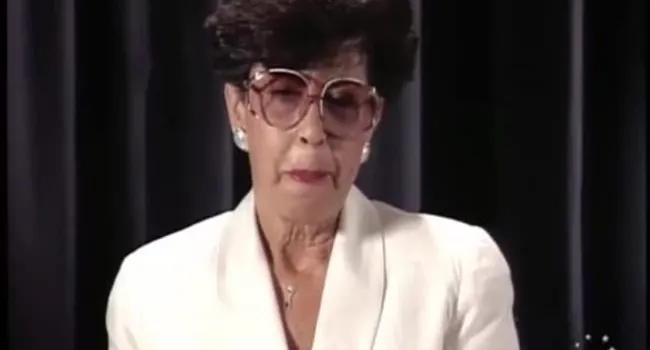
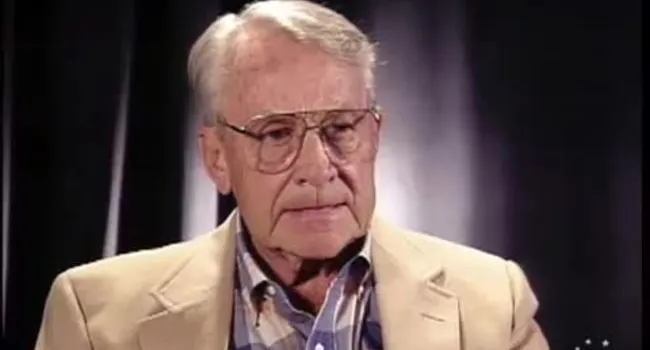
The Holocaust lessons were created to help students learn about the Holocaust from the testimonies of Holocaust survivors. Holocaust survivors discuss the determination that was required to survive under the horrid conditions. They discuss the gas chambers, the starvation, and illness, and waking up with a corpse next to them. Some people would go to the wire (the fence), intentionally to be shot. The story of sisters being reunited, only briefly, is told.The goal of this lesson is to focus on the Holocaust experiences of South Carolinians to personalize the experience for students.
Lesson Partners: ETV Education, Knowitall.org, South Carolina Council on the Holocaust
Grade(s):
- 7
- 10
- 11
Subject(s):
Recommended Technology:
None need, but computers with internet access and presentation software will aid students in completion of the lesson progression.
Other Instructional Materials or Notes:
Handout 8A: Rescuers; Handout 8B: Leo Finds a Safe Haven; Handout 8C: Francine In Hiding
Lesson Progression
Motivate: Read Overview VI and summarize for students or have a student do it. Then tell the class that although many ignored the persecution of Jews and other minorities, a small number of brave men and women did not. These men and women, most of whom were Christians, have been given a special title and place of honor in Israel. In 1953, the Israeli Parliament passed a law giving the Holocaust Remembrance Authority the power to recognize and honor those who "risked their lives for the rescue of Jews." A commission headed by an Israeli Supreme Court Justice was set up to hear testimony concerning the heroic actions of each nominee. Since then, more than 2500 people have been officially honored. The country with the largest number honored is Poland. The country with the highest proportion per population is Holland.
A person accorded this honor is given a medal and a certificate of honor along with the right to plant a tree on the Avenue of the Righteous in Jerusalem. Each tree on this avenue bears a plaque which gives the name of the person honored and a brief description of his or her actions. Among the groups honored are the Danish underground and groups in Poland and Holland.
Develop: Handout 8A provides brief sketches of some of the people honored as Righteous among the Nations or Righteous Gentiles. Before distributing Handout 8A, emphasize the great risks those who helped the Jews were taking.
Quite often people caught aiding Jews were shot or hanged on the spot by the Germans. Other family members might be killed or severely punished as well. In many places the Gestapo offered a reward to anyone turning in Jews. A typical reward paid by the Gestapo to an informer was one quart of brandy, four pounds of sugar, a carton of cigarettes, and a small amount of money. A Dutch police investigation in 1948 indicated that an unnamed informant had been paid 7 1/2 gulden or about $1.40 per person for turning in Anne Frank and her family.
Even without a reward, a neighbor or relative might decide to inform on a family hiding fugitives to settle a grudge or quarrel. In addition to fearing the Germans, those who helped had to be careful of local anti-Semites. After the war ended, it was not unusual in some Eastern European countries for those who had helped to ask their Jewish friends not to tell anyone for fear of reprisals by their neighbors.
Even those willing to help had to have a place where fugitives could be hidden. An amazing variety of spaces served as hiding places, from attics, annexes, and cellars to stoves, garbage bins, and cemeteries. In rural areas, pigsties, barns, stables, and haystacks harbored those hunted by the Nazis.
Divide the class into groups. Give the members of all groups copies of Handout 8A . Tell the class that each of the people described in this handout has been awarded the title "Righteous Gentile." Have each group answer the questions at the bottom of the handout. Discuss student answers to the questions on the handout.
In answering question 3, students might point out that the Ukrainian farmer had known the man whose family he helped as a friend before the war began. This did not make the risks to him and his family any less great, but it may explain why he had no prejudices to overcome. Joop Westerweel, on the other hand, had shown evidence earlier in his life of being willing to take a stand against injustice while in the East Indies.
Students might also suggest that all of these people acted out of a conviction that Hitler's persecution of Jews and other minorities was wrong.
Tell the class that they will read more about the experiences of Leo and Francine, the two survivors whose luck and resourcefulness helped them while they were in hiding. Both accounts provide insights into the nature of prejudice. As students read Handouts 8B and 8C, have them examine these questions:
1. What did the people who helped Leo and Francine think about Jews before they met them? From where do you think the French farmer Hertaux's ideas about Jews came? (The people of the isolated Italian village had no preconceived notions of what Jews were like because they had never met any nor had they been exposed to any anti-Semitic propaganda. Hertaux had never met any Jews either, but he had a strong stereotype of what a Jew was like derived most likely from conversations with others who were equally ignorant and/or from anti-Semitic writings, books, or radio broadcasts.)
2. Why do you think Hertaux decided to help Francine and her family? Why do you think the people of the Italian village helped Leo and his brothers? (Through discussion, students should recognize that in both cases the rescuers got to know the people they aided first as individuals, before finding out and labeling them as "Jews." The friendship Hertaux had formed with Francine and her family enabled him to overcome his negative stereotype of Jews. Because Francine and her family did not fit this stereotype, he was able to set aside his bigotry to see them as people. He knew and liked them, so he saw them as people who were like him, not as outsiders. The Italian villagers had no prior prejudices to overcome, but willingly took on a risk as great as the French farmer had.)
Focus discussion on the question of what makes a person a hero. Today the term hero is used to describe a wide variety of people in public life from music, film, and sports personalities and Olympic gold medal winners to civil rights leaders such as Martin Luther King. In what sense are the actions of the people students have read about in the handouts for this lesson heroic? What qualities or characteristics make the people in these stories heroes?
As a follow-up writing activity, have students debate whether Leo or Francine's rescuers should be honored as Righteous Gentiles. Those in the class who think one or both should be can write letters of nomination giving reasons for their opinions. Those who disagree can write letters giving reasons for their opposition.
Teacher Notes
Extend: Encourage students to share with the class or write about experiences which have made them question stereotypes or misconceptions that they have had about groups of people. If students claim they have no stereotypes or are reluctant initially to address ethnic or racial stereotypes, they might begin by looking at attitudes or stereotypes commonly held about the opposite sex, or about Northerners, or Southerners. For example, the belief that girls are poor drivers or all Northerners speak quickly may change after driving with or listening to people who don't fit these stereotypes. Students might think of how their attitudes have changed after meeting and getting to know people from other parts of the state or country, from a different neighborhood, people who dress very differently from the way they do or are from a social group within the school that is different than their own.
Students can compare and contrast the rescuers of slaves during the pre-Civil War period in American history, and the rescuers of Holocaust victims. What risks did those Southerners and Northerners take who provided way-stations on the Underground Railroad? How might they have been treated by their neighbors if discovered? What motivated participants in the Underground Railroad to help the slaves escape to freedom?
Students might also be assigned to report on other Holocaust rescuers. Among the best known is Raoul Wallenberg, Swedish diplomat who helped saved thousands of Hungarian Jews. His story is told in "With Raoul Wallenberg in Budapest" by Per Anger. Students can also consult the Reader's Guide to Periodical Literature for recent articles on Wallenberg. Rescue by Milton Meltzer gives the stories of many others who helped save Holocaust victims. Information on both books can be found in the bibliography.
Since 1901, the Swedish government has awarded the Nobel Peace Prize to individuals and groups who have shown the courage to care about others, sometimes at great personal risk to themselves. Students might report to the class on the reasons why this prize was awarded to Elie Wiesel, a Holocaust survivor, or to such people as Bishop Desmond Tutu of South Africa, Daw Aung San Suu Kyi of Myanmar (Burma), and Andrei Sakharov of the former Soviet Union.
HANDOUT 8A: RESCUERS
In the winter of 1944, many girls from the Lodz ghetto in Poland were sent to work on a rabbit farm. The workers used the rabbit skins to make coats, caps, and gloves for German troops on the Russian front. Nineteen-year-old Wladislaw Misiuna was one of three Polish foremen on this farm. He allowed the girls to take vegetables from the rabbits' supply. When the girls told him his actions might mean a firing squad, he said, "You are hungry human beings and therefore must eat."
HANDOUT 8B: LEO FINDS A SAFE HAVEN
During the war, Leo's family spent many months in a large Italian prison, but in the winter of 1941, they were sent to a small town in northern Italy as part of a less strict form of imprisonment known as free internment. In this selection, Leo describes his experiences with some Italian villagers.
View ResourceHANDOUT 8C: FRANCINE IN HIDING
After a dangerous crossing into Free France in the fall of 1942, Francine was reunited with her mother and her sister. The three of them lived for about a year in a small town called Graulhet in Free France. Then in 1943, the Germans began deporting Jewish families from the town where Francine and her family were staying.
View ResourcePart 8: Survival | Seared Souls: S.C. Voices of the Holocaust
Holocaust survivors discuss the determination that was required to survive under the horrid conditions. They discuss the gas chambers, the starvation, and illness, and waking up with a corpse next to them. Some people would go to the wire (the fence), intentionally to be shot. The story of sisters being reunited, only briefly, is told.
View ResourceHolocaust Resource Guide
Teaching about the Holocaust is often limited by teachers' familiarity with the subject and the amount of time available for this topic. The materials in this guide were designed with these concerns in mind.
View ResourceIntroduction - The ETV Holocaust Forum
Thanks to a grant from the South Carolina Council on the Holocaust, ETV created a forum on the Holocaust to provide teachers access to a variety of resources when teaching their students about this tragic chapter from human history.
Seared Souls Glossary
Glossary to aid in the understanding of the series, "Seared Souls".
View ResourceStandards
- 7-4 The student will demonstrate an understanding of the causes and effects of world conflicts in the first half of the twentieth century.
- WG-4 The student will demonstrate an understanding of the characteristics of culture, the patterns of culture, and cultural change.
- USHC-7 The student will demonstrate an understanding of the impact of World War II on the United States and the nation’s subsequent role in the world.