Slide, Slide to the Finish Line
Students will investigate friction by
a) using inquiry to make observations about particular surfaces, receiving direct instruction related to the inquiry activity, and then by conducting an investigation, collecting data, and drawing conclusion about different surfaces – how those surfaces affect motion, and how friction plays a role.
b) They will compare how different surfaces affect motion by comparing the distance an object travels on various surfaces.
c) Students will draw conclusions based on the information they collect.
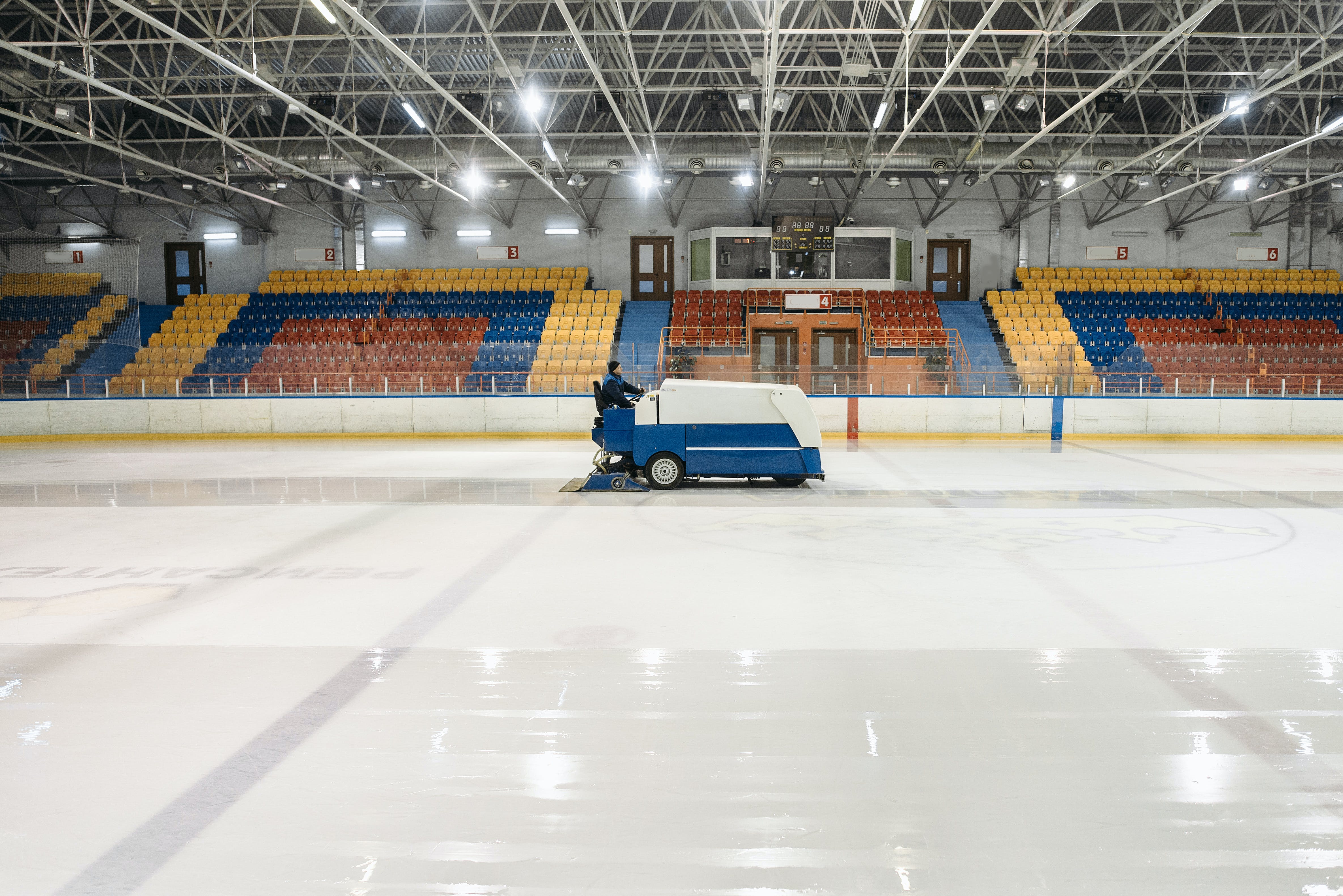
d) Students will learn how a Zamboni machine reduces friction on ice as part of this video on Knowitall.
Lesson Partners: S2TEM Centers SC, Knowitall.org
Essential Question
How does friction affect movement?
Grade(s):
- 2
Recommended Technology:
- Either a computer with internet connected to a smartboard for teacher guided
- or a Chromebook/laptop/tablet for 1:1;
- Optional for investigation follow up:
- A device that records videos such as a flip cam, phone, iPod, iPad, Chromebook, etc.
- a computer/laptop on which to download short videos and a place to share them.
Other Instructional Materials or Notes:
- 1 piece of aluminum foil (smooth) per group- 3 feet long
- 1 piece of aluminum foil (crinkled) per group (to use after the initial investigation) 3 feet long
- Sandpaper (per group) 3 feet of fine grit (you can choose different a different grit to meet your needs)
- 3 feet of felt per group
- 1 ramp per group (you can make one out of books- The ramp ensures equal force of the car each time it enters a new surface
- Carpet (can be the classroom carpet) or carpet squares (if available)
- 1 toy car (similar to a Matchbox ™ car per group
- Paper or notebook, pencil- per child
- Yard stick or 12 inch ruler (at least 1 per group)
- 1 ice cube per group
- 1 flat pink eraser per group
- Paper towels for clean up
- Activity sheet for students
- Disciplinary Literacy instructor sheets
- Two or Three Before Me;
- MTV (Making Thinking Visible),
- Tweet to Me
Streetwise web site needs flash software to work.
Lesson Progression
- Divide students into groups not more than 4 to a team.
- (Activator- 5 minutes) Give each group one ice cube and one flat pink eraser. Ask them to practice sliding each object around on the desk. (2 minutes) After they have investigated with both objects, have them take turns describing what they observed using the disciplinary literacy strategy 2 or 3 before me (1 minute). In this strategy one student in the group will share one observation. (For example, the eraser did not slide easily). Before she or he can share again, 2 or 3 others in the group need to share an observation. (Example, the ice kept going even when I wanted it to stop). (The strategy sheet for teacher review of purpose and procedure is included in this lesson as a document). Next, instruct students to clean up the ice by putting in the sink or trash can. Erasers will be collected. Paper towels will be used to wipe up water from melted ice.
Ask the class, how did the ice move differently from the eraser? Why?
- So sometimes, some friction is good. We need it to walk without slipping.When can too much friction cause a problem? (moving/sliding something across the floor if there is carpet, when two parts rub together so a machine doesn’t work correctly, etc.)
You are going to investigate how different surfaces cause different amounts of friction and how those surfaces and friction affect the movement of a toy car.You will start the car at the starting line of the foil, smooth sandpaper and rough sandpaper. You will predict how far the car will travel on each surface and support your prediction with reasoning.You will need rulers to measure the distance your car travels on each surface and you will need an activity sheet.
Student Investigation/Guided Practice minutes (35 minutes total) - During the investigation, students will use the same car on each surface. They will do three trials for each surface. Students will add all three trials from the same surface up for a total distance. Students will then find the difference between the foil and smooth sandpaper, foil and rough sandpaper, and the smooth and rough sandpaper (2.MDA.1 Select and use appropriate tools (e.g., rulers, yardsticks, meter sticks, measuring tapes) to measure the length of an object; 2.MDA.4 Measure to determine how much longer one object is than another, using standard length units)
Students will determine which surface caused the most friction and why.Whey caused the least friction and why.There is also a place on the activity sheet for students to analyze why they did three trials (In science, we cannot accept the first result and doing at least three trials gives us a clearer idea of what is happening) and they will analyze and discuss why it was important that they only use one car for the trials. (Using one car provides consistency for the experiment.Different cars may react a little differently.)
(15 minutes to run the cars and measure each three times, 10 minutes to find the difference between each total distance, 10 minutes to collaborate to discuss in-depth questions.Teacher will serve as the facilitator allowing students to guide the investigation. Teacher will ask guiding questions during activity. (35 minutes total for this portion of the activity)
Note: There is a technology option to answering the three questions for the activity sheet.
Students will use a video recording device (phone/iPod, Chromebook, etc.) and create a news clip about what they learned, along with their analysis, using the questions as a guide. Completing this technology piece may add up to 25 minutes more of activity time. The graph activity below may be included in this video. These activities include integration of the following English/Language Arts standards: 3.2 Select the most important information, revise ideas, and record and communicate findings and Standard 4: Synthesize integrated information to share learning and/or take action. 4.1 Interpret relationships and patterns discovered during the inquiry process. 4.2 Use appropriate tools to communicate findings and/or take informed action. 4.3 Reflect on findings and pose new questions for further inquiry.
(2.MDA.9 Collect, organize, and represent data with up to four categories using picture graphs and bar graphs with a single-unit scale) Once the students have completed the activity, they will create a chart or graph that shows the type of surface compared to the final distance traveled.In order to best explain what happened, students will use illustrations and other visuals to best explain their graph/charts through the use of the Making Thinking Visible, disciplinary literacy strategy.This strategy enable students to communicate most accurately but creating their own visuals, pictures that make sense to them, to convey information. (See MTV sheet for instructors)(20 minutes).They will use this to share their observations, thoughts and conclusions with the group. (Sharing 10 minutes)
Teacher Follow Up: (video plus Tweet activity and discussion 25 minutes) At an ice skating rink, skaters use metal skates to glide across the ice. Is there much friction when this happens? (no) After skaters jump and hockey players slide, the ice gets dinged up. After that happens, will the skaters go faster or slower on the ice? Turn to a partner and explain. (Skaters will go slower because the dings and dents will slow down the skates against the ice due to friction, the force pushing against the skates). (Think about how you glide on a smooth floor with socks but can’t slide on carpet with your socks). Bumpy ice causes a problem. Question to ponder during video: How does the Zamboni change the friction on the ice?
We are going to watch a video that shows how those who work at ice skating rinks keep the ice smooth to reduce friction.) (It is recommended to start at 2:30 on the video) This video shows how a Zamboni machine puts a thin layer of water down on the ice to fill in the holes and freezes back up creating another smooth layer of ice. Knowitall.org Zamboni: Eye Wonder (If started at 2:30, video is approximately 6 minutes). After students watch the video ask them to “Tweet” how that video connects to something they have learned in this unit. For “Tweet to Me” students use a template representing 140 characters that “Twitter” would use. Students paper Tweet their idea on the template. Next, students will go around the room and respond to two of the paper tweets, also on a template. The teacher will have a couple of students share out based on time and class structure. (Alternate: If you have a class Twitter or messaging system, students could electronically complete this activity.) The purpose of this activity is to encourage students to write briefly while reflecting on an activity, in this case, a video related to what they are learning about. The teacher should guide discussion as students share tweets and responses.
Independent Practice (can do as a class which would be guided, but it is recommended to do as 1:1- independent): http://www.3m.co.uk/intl/uk/3Mstreetwise/pupils-streetwise-game.htm(needs flash software on device)
In a simple way this page explains how road surfaces become bumpy over time.The teacher can read this first page or students may read it independently.There is not a read aloud feature. Next, students click play.The scenario states that the smoother the surface, the more difficult to stop.Students have to choose the surface that offers the right amount of friction for the activity shown. (animated) After students view all four of the surface scenarios (bumpy, smooth, wet, icy) on a sheet of paper, students will illustrate what surface they would choose to skate on and support their choice with an explanation. (15 minutes)
Closure: Activity: Downpour- (5 minutes) On a piece of paper students write down one important fact or observation about force or friction that they learned from this lesson.Students will crumple up their response on a piece of paper and toss it to a designated area (per teacher).Students will then pick up a piece that does not belong to them.The teacher will prompt students to read out the answers.This will give the teacher a formative idea of student take-aways. Prior to students leaving teacher will give a sneak peek about what the next lesson (per teacher) will be.
Teacher Notes
Differentiation: Circulate during the investigations. Assist students in measuring as necessary.
Extension: Further the investigation: What if the foil was used a lot and became bumpy? (Instructor will hand each students a crinkled piece of foil). It is still foil but does the car respond the same? Why or why not?
Next ask the students to smooth out the foil to the best of their ability. How does the car respond now? Discuss why with the students.(5 minutes)
- Lesson resources
- File type: PDFs are included, websites listed within lesson
- Files description – The files are disciplinary literacy strategies with the exception of “Top Secret Racing…” which is a student sheet.
- Web links- title, description and URL (will not work if flash software on device)
- http://www.3m.co.uk/intl/uk/3mstreetwise/pupils-friction-roads.htm - In a simple way this page explains how road surfaces become bumpy over time.The teacher can read this first page or students may read it independently.There is not a read aloud feature.Next, students click play.The scenario states that the smoother the surface, the more difficult to stop.Students have to choose the surface that offers the right amount of friction for the activity shown. (animated)
Zamboni | Eye Wonder
The Eye Wonder team learns how an ice skating rink is kept in good condition. D.V. learns how the Zamboni is used to keep the ice smooth and in perfect shape for skaters and hockey players.
View AssetTwo or Three before Me
Two or Three before Me is a management strategy that students can use to monitor their own behavior to provide the opportunity for more students to share their ideas during class.
View ResourceTweet to Me
Tweet to Me is a quick writing strategies that challenges students to explain a concept, vocabulary word, or idea, quickly.
View ResourceStandards
- Physical Science: Exploring Pushes and Pulls
- 2.P.4 The student will demonstrate an understanding of the effects of pushes, pulls, and friction on the motion of objects.
- 2.MGSR Measurement, Geometry, and Spatial Reasoning
Assessments
- The evaluation process, any rubrics, questions, etc. – Formative assessments are listed throughout the lesson, especially in the form of disciplinary literacy strategies as explained.