Prosperity for South Carolina
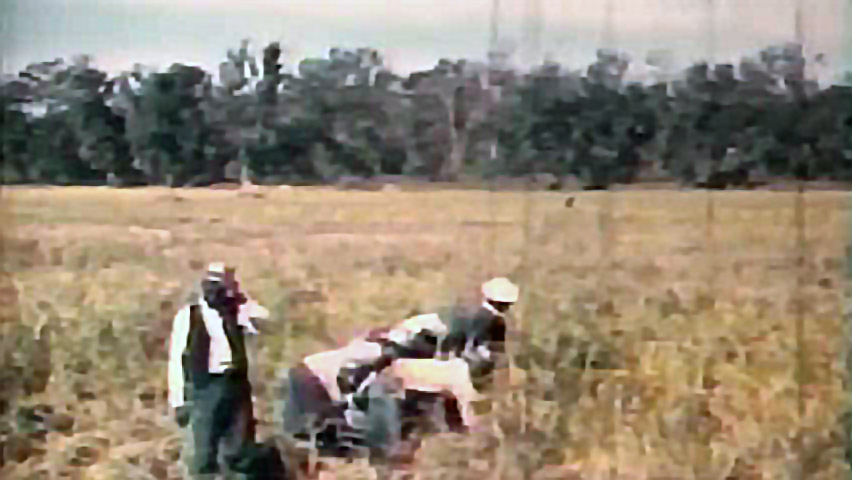
In this series of learning experiences, students will gather information from primary source documents and media in order to develop an understanding of how early South Carolinians used their natural, human and political resources to gain economic prosperity. Students will explore and gather evidence in order to explain how the cultivation of rice and indigo, and the connections with the people of Barbados and West Africa produced economic success for South Carolina.
Lesson Created By: Cherlyn Anderson
Lesson Partners: ETV Education, Knowitall.org, S2TEM Centers SC
Essential Question
In what ways did the cultivation of rice and indigo and the connections to Barbados and West Africa create a prosperous economy for South Carolina?
Grade(s):
- 8
Subject(s):
Recommended Technology:
Access to Internet through iPads, tablets, computer, or other devices
Headphones for devices (if videos are watched on devices)
Presentation/infographic apps (suggestions: PowerPoint, Prezi, Moovly, Adobe Voice, Shadow Puppet, Venngage, Easel.ly)
NOTE: In a 1:1 technology supported classroom, all of the following instructional materials can be accessed on personal devices if stored in one shared folder, such as Google Drive or One Drive.
Other Instructional Materials or Notes:
- Sentence strips or adding machine paper
- Chart paper
- Chart markers
- Highlighters
Lesson Progression
Explain to students that over the next several class periods they will be exploring a variety of resources to build their background knowledge of how early South Carolinians used natural resources to build a prosperous economy. If the research project is to be included, students will need additional class time to research and develop a product in order to share their learning during class presentations.
Day One
- Rice Kingdom Map Jigsaw (20 minutes)
- Students will work in small groups to explore maps of the historic locations of rice plantations in order to develop the idea that these plantations were located along the intracoastal waterway. As the lessons progress over the next several days, students will make the following connections:
- Slaves were brought to South Carolina to work in the rice fields.
- Plantation owners found that slaves from West Africa had expertise in planting and harvesting rice.
- Slaves used the tides along the intracoastal waterway to irrigate the rice fields.
- Rice plantation slaves faced adversity and high mortality rates due to malaria and cholera.
Maps
- Divide students into Jigsaw groups of at least three students – one for each of the three SC RK maps. Groups may have more than three students if necessary, but should have no more than six members.
- Give each student in each Jigsaw group one of the three SC RK maps.
- Give each group a copy of the SC Rice Kingdom map without the plantations marked.
- Have students form expert groups by having each member of the Jigsaw group join with at least two other students who have the same map.
- In their expert groups, students discuss and take notes about the following prompts:
- What part of South Carolina does your map contain? How familiar are you with this area?
- What do you notice about the locations of the rice plantations?
- What hunches do you have about why they are located where they are?
- Students return to their Jigsaw groups and share the information gathered from the discussions in their expert groups.
- Whole group debrief
- Project the SC Rice Kingdom map during the debrief.
- After students have shared with their Jigsaw groups, lead a whole class discussion about the prompts. Record key points on chart paper so that the ideas collected can be revisited and refined over the course of the next several lessons.
- To access them from the website, use the Google Chrome browser and sign in with a gmail.com account for best results.
With the SC Rice Kingdom (with plantations) map still projected, share this 1836 quote: (You may want to project this quote as a visual.)
- "During the summer months, Rice crops waved over fields of thousands of acres in extent, and upon a surface so level and unbroken, that in casting one's eye up and down the river, there was not for miles, an intervening object to obstruct the sight.¹ " (G.S.S., "Sketches of the Santee River," The American Monthly Magazine, October 1836.)
- Share this background information: While the maps showed all of the South Carolina plantations, the rice fields in Georgetown County, South Carolina were some of the most prosperous. They lie abandoned now, covered over with wild grasses that provide feasts for thousands of birds and, near the shoreline, a haven for a few remaining river alligators. The rice fields were carved out of tidal swamps along coastal rivers by slaves brought to South Carolina from the West Indies and West Africa. With primitive tools, the slaves cleared the low-lying land of huge cypress and gum trees, and built canals, dikes, and trunks (small floodgates) that allowed the flooding and draining of fields with the high and low tides. From the 18th century to the Civil War, slaves planted, tended, and harvested the crops that made plantation owners wealthy and Georgetown County, South Carolina, the second largest rice producer in the world. (National Park Service Teaching with Historical Places, When Rice Was King)
- (Several photos of rice fields can be located at the Lowcountry Digital History Initiative and can be shown. http://ldhi.library.cofc.edu/exhibits/show/forgotten_fields/introduction...
- What was the connection between plantation owners in Barbados in the West Indies and the people of West Africa? (20 minutes) Now, students in groups of 4 (can be the same Map jigsaw groups or can be mixed again), will read several different passages. Each student will have a different passage to read. After students have read the passages, they will work together to create a Flow Map (See Strategy Sheet.) A Flow Map is similar to a Concept Map in that it is a visual learning tool. The student will use post it notes or index cards to write key words, concepts or phrases while they read their passage. Then, students will organize the notes or cards into a concept map format. Students then write a sentence on each line, describing how the concepts that line joins are connected.
Videos (15 minutes)
- (The videos can be shown to the whole class, or each individual student can observe them on their personal devices, with headphones, in a 1:1 classroom)
Distribute the 3-2-1 Graphic Organizer to each student. As they watch the two short videos, they will write for each video:
- 3 key points
- 2 connections to something from the Jigsaw or the other video (when they watch the second clip)
- 1 question they have about what they watched
Watch “R is for Rice” Knowitall.org https://www.knowitall.org/video/r-rice-south-carolina-z
- Watch the first 8:30 minutes (to the section on Pawleys Island) of “When Rice was King” - http://www.knowitall.org/video/when-rice-was-king-excerpt-pee-dee-explorer
- Complete the 3-2-1 graphic organizer as they watch the videos (See Strategy sheet. The 3-2-1 comments and question can be used as research questions)
- Groups should return to their Flow Maps and add any new learning. Flow Maps will become anchor charts for students as they begin the research process.
Closure: Exit Slip (5 minutes)
- Circle, Triangle, Square (See Strategy Sheet)
Day Two
On Day Two, students, in groups of 4 or 5, will rotate to 5 learning stations (10 minutes at each station) gathering evidence to build background knowledge of Eliza Lucas Pinckney, historical and economic interest surrounding indigo cultivation in South Carolina, and the indigo cultivation and harvesting process. Students will use the Indigo Stations Graphic Organizer to record thoughts and questions. Multiple sets of each station may be needed depending on number of students.
Engage (5 minutes)
- Paired Verbal Fluency-Reconnecting to prior learning (see strategy handout for directions)
- Round 1 Prompt: In what ways did the cultivation of rice lead to economic success for South Carolina?
- Round 2 Prompt: What connections can be made with Barbados and West Africa to South Carolina?
- Round 3 Prompt : What questions would you want to ask a rice planter or a slave on a rice plantation?
- Give Me Five Whole group shareout (take 5 responses from the class with no one student responding multiple times)
- Stations: (50 minutes)
- Assign each group to one of the 5 stations. Distribute Station Graphic Organizer to each student. They will respond to the questions or prompts at each station they visit. Allow no more than 10 minutes at each station. Students will rotate to the next numerical Station. (Example: Station 1 will rotate to Station 2, etc. Station 5 will rotate to Station 1.)
Station 1
- Video: Eliza Lucas Pinckney/Legacy of Leadership Profile. (5:52) - https://www.knowitall.org/video/eliza-lucas-pinckney-legacy-leadership-profile
- Question: What personal characteristics did Eliza Lucas Pinckney have that helped to make her a prosperous plantation owner?
Station 2
- Reading passage: Eliza Lucas Pinckney/Legacy of Leadership Profile
- Expand on your answers from Station 1.
Station 3
- Historical Insights: Growing Indigo in South Carolina http://www.ancestry.com/historicalinsights/indigo-south-carolina
- Question: After reading the information on this site, create a T-Chart with positive and negative impacts of cultivating indigo.
Station 4
- Traditional Indigo Cultivation, Harvest, Extraction. (India) https://youtu.be/UEMcjmyjoOY (Start at 1:53) This video can be downloaded prior to lesson using free software such as You Tube Downloader)
- Question: Thinking of Eliza Pinckney in the 1740's as she successfully cultivated, harvested, and extracted the precious indigo dye, what challenges did she face?
Station 5
- Exports from the port of Charleston 1786-87
- Observe/Question/Reflect
- What observations can be made from this document?
- What questions do you have about this document?
- What reflections can be made from this document?
- Closure: Exit Slip (5 minutes)
- If you were able to have dinner with Eliza Lucas Pinckney and/or any of her family members...what two questions would you ask and who would the questions be directed to?
Day Three
- On Day Three, students will first explore mathematical thinking through "Tailless Problems". Afterward, they will begin to brainstorm topics for research. By the end of class, they will have chosen a topic for research, a focus question for their research, and guiding questions for their research. Utilizing the Group Research Template is optional. Other teacher created research tools/templates that students are familiar with may be used.
Engage (5 minutes)
- Mix-Freeze-Pair-Share- Reconnecting to prior learning (see strategy handout for directions)
- On cue, students will mix, then freeze, then find a partner, then share one of their questions from the previous day's exit slips and why they would want to know the answer to the question. Repeat the process three times. Allow time for several students to share out an interesting question they heard from another student.
- Tailless problems...leading into research (35 minutes)
- Tailless problems are word problems that do not have a specific question attached to them. The idea is for students to use critical thinking to explore the problem and generate their own questions.
- To support the context of this series of lessons, each problem describes historical facts and figures about a specific rice plantation. Students should be encouraged to generate math related questions; questions that are connected to the history of the plantations and families that owned them; and questions or issues they want to know more about.
- The Tailless Problems handouts are labeled A and B. Each handout has historical facts and figures for two plantations. Run them front and back so that students have room to record their thinking.
- Pair students so they can talk about their thinking as they work. Make sure roughly half of the class has sheet A and the other half has sheet B.
- Give pairs a set amount of time to create questions for their two tailless problems.
- Move around the room, listening carefully to student dialogue. Be prepared to ask probing questions if students seem stuck or off task.
- Call time and direct pairs to square up with another pair that has the same two problems they have. (A’s with A’s and B’s with B’s)
- Give quads time to share their work and make any additions to their own work based on discussion with their peers. During this time, students should work out the answers to the math related problems they created.
- Give each quad two sentence strips or two lengths of adding machine paper. The quad decides on a math related question and a question related to the history of the plantation, recording one question on each sentence strip.
- Have students post their strips and give them time to walk around and read the strips posted by their classmates.
- If time allows, give the quads the other Tailless Problems handout to practice reading and sifting for information. The second sheet may also be a take home assignment.
- Wrap up with a 2 minute quick write (See Strategy Sheet) using one or both of the following prompts:
- What else would you like to know based on the problems you read?
- What connections can you make to other topics we’ve studied so far?
Research (20 Minutes)
- Have students brainstorm one topic they want to explore further. They may do this individually or with a group of no more than 4 students. The Group Research Template is an option to guide students. Share presentation rubric prior to beginning research.
- Students will choose one topic to explore in greater detail. Research ideas may come from questions they have generated during the last three class periods. Explain that this will be a quick research. Students will need to also create a product to show what they have learned from their research. This can be a presentation using an application such as PowerPoint, Prezi, Adobe Voice, Shadow Puppet, Haiku Deck, an infographic, or a video.
Days Four-Six
Sample research guidelines and citation handouts are available. Research and presentation preparation. Share the presentation rubric prior to having students research.
Day Seven
- Presentations
How will students share their work?
- Students, individually or in teams, will share their research by using presentation software Such as powerpoint, Prezi, Moovly, Adobe Voice (free download on APP store for iPad), Shadow Puppet Edu-free download for iPad), infographic software http://www.creativebloq.com/infographic/tools-2131971 (Venngage is a free and easy to use choice), or through a video recording.
- Evaluations/Assessments
- Read, Write, Think.org Presentation Rubric
- Exit Slips
- Graphic Organizers (use to provide feedback and questions for students)
- Flow Map
- Quick Writes
Teacher Notes
Extensions/Differentiation:
- The research and presentation component can be used at a later date, giving students more topics to choose from for their research.
- NPR Radio Broadcast "From Crape Myrtles to Long Houses, Charleston is a Big Barbados" July 21, 2015. National Public Radio Broadcast, "From Crape Myrtles to Long Houses, Charleston is a "Big Barbados" http://www.npr.org/2015/07/21/423186974/from-crape-myrtles-to-long-house... and the Barbados and Carolinas Legacy Foundation https://www.barbadoscarolinas.org offer more information about the Barbados and Carolina connection.
- Forgotten Fields: Inland Rice Plantations in the South Carolina Lowcountry. Lowcountry Digital History Initiative. http://ldhi.library.cofc.edu/exhibits/show/forgotten_fields/introduction...
- As a Project Based Learning extension on what students learned about the incidents of malaria in the coastal areas of South Carolina, have students research how medicine and geography relate in today's events? (the field of medical geography, landfills, crop pest control, use of fertilizers, West Nile virus, zika virus, etc.)
Circle Triangle Reflection Strategy
View ResourceStudent Handouts Day 1 - Reading passages for West Indies/West Africa connections
Google Docs
View ResourceKnowitall.org - Eliza Lucas Pinckney | Legacy of Leadership
Eliza Lucas, who was born in 1722 in Antigua, was 16 when she took charge of her father's plantation near Charles Town and successfully managed it.
View ResourceKnowitall.org - "R" Is for Rice | South Carolina from A to Z
Glenn Roberts of Anson Mills talks about the history of rice in South Carolina.
View ResourceKnowitall.org- When Rice Was King - Excerpt | Pee Dee Explorer
Discusses the significance of rice to Georgetown, South Carolina
View ResourceStandards
- 8.1.CE Analyze the factors that contributed to the development of South Carolina’s economic system and the subsequent impacts on different populations within the colony.
- This indicator was designed to encourage inquiry into the geographic and human factors that contributed to the development of South Carolina’s economic system. This indicator was also written to encourage inquiry into South Carolina’s distinct social and economic system as influenced by British Barbados.
- RI.P.4 Read with sufficient accuracy and fluency to support comprehension.
- 2 Reason both contextually and abstractly.
- 1 Make sense of problems and persevere in solving them.
- RI.MC.5 Determine meaning and develop logical interpretations by making predictions, inferring, drawing conclusions, analyzing, synthesizing, providing evidence, and investigating multiple interpretations.
- RI.MC.6 Summarize key details and ideas to support analysis of central ideas.
- I Inquiry-Based Literacy Standards
- I.3 Construct knowledge, applying disciplinary concepts and tools, to build deeper understanding of the world through exploration, collaboration, and analysis.
- I.3.2 Examine historical, social, cultural, or political context to broaden inquiry.
- I.3.3 Gather information from a variety of primary and secondary sources and evaluate sources for perspective, validity, and bias.
- I.3.4 Organize and categorize important information, revise ideas, and report relevant findings.
- I.3 Construct knowledge, applying disciplinary concepts and tools, to build deeper understanding of the world through exploration, collaboration, and analysis.
- W.MCC Meaning, Context, and Craft
- C Communication
- C.MC Meaning and Context
- C.MC.1 Interact with others to explore ideas and concepts, communicate meaning, and develop logical interpretations through collaborative conversations; build upon the ideas of others to clearly express one’s own views while respecting diverse pe...
- C.MC.1.1 Prepare for and engage in conversations to explore complex ideas, concepts, and texts; build coherent lines of thinking.
- C.MC.1.4 Engage in a range of collaborative discussions about grade appropriate topics; acknowledge new information expressed by others and when necessary modify personal ideas.
- C.MC.2 Articulate ideas, claims, and perspectives in a logical sequence using information, findings, and credible evidence from sources.
- C.MC.1 Interact with others to explore ideas and concepts, communicate meaning, and develop logical interpretations through collaborative conversations; build upon the ideas of others to clearly express one’s own views while respecting diverse pe...
- C.MC Meaning and Context
Assessments
Presentation Rubric:
https://docs.google.com/document/d/1RkQeRdcYPDEMUajwCCiOVa1XZLnMF92RKlut...