Producers, Consumers, and Decomposers
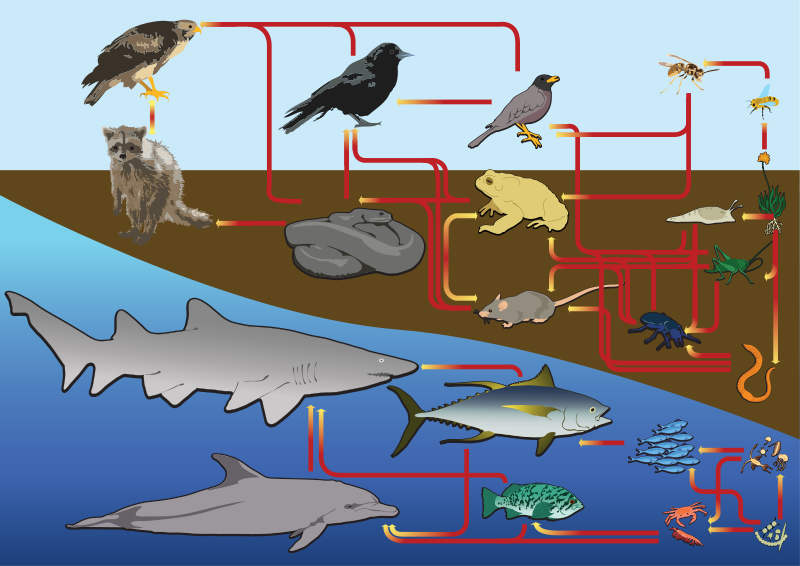
The students will demonstrate an understanding of how the characteristics and changes of environments and habitats affect the diversity of organisms. They will be able to develop and use a food chain model to classify organisms as producers, consumers, and decomposers.
Essential Question
What is the first link in all food chains? Why do you think that is?
What is an example of a food chain that you have witnessed in your day to day life?
Grade(s):
- 3
Subject(s):
Recommended Technology:
-Laptop
-Smart board
Other Instructional Materials or Notes:
- ‘Who Eats What’ by: Patricia Lauber
- Video: https://www.youtube.com/watch?v=MPZI2M1fDi8
- Picture cards
- White Paper
- Lined Paper
- Pencil
- Markers/Colored Pencils
Lesson Progression
- The teacher will begin the lesson by reading the story ‘Who Eats What’ by Patricia Lauber
- After reading the story ask students the following questions:
- What are some examples of food chains that were discussed in the story?
- What is the first link in all food chains? Why do you think that is?
- What does the “top of the food chain” mean? Give an example.
- Can you give me an example of a food chain that you have witnessed in your own day to day life?
- The teacher will then go over what a producer, consumer, and decomposer are in greater detail.
- Students will watch producer, consumer, and decomposer video (see resource section).
- After the video, students will separate into small groups and explore possible arrangements of organisms in food chains using picture cards given. Allow 12-15 minutes.
- Students will share the food chains they come up with.
- The teacher will then ask the students to go back to their seats. Students will choose one environment that was shown in the read aloud, and then illustrate a food chain that would be seen in that environment. Allow students 15-20 minutes.
- Students will share their food chain illustrations.
- The teacher will go back to the question asked at the beginning of the lesson asking “Can you give me an example of a food chain that you have witnessed in your own day to day life?” The teacher will take a few of the students’ responses to that question and place them on the board, but only certain parts. The students will then discuss what could be missing from the blanks. For example, The teacher may give the consumer, but leave out the producer. The students must give examples of producers that would fit with the consumer that was given.
- Students will then go back to the environment that they chose with the illustration of the food chain earlier in the lesson, and create a writing story that shows their deeper understanding of the material. They should be as creative as possible and include illustrations in their story. They must include all parts of the food chain with examples in the story they create.
Producer Consumer and Decomposer Video
View ResourceWho Eats What?: Food Chains and Food Webs
What do you and a tuna have in common? You are both part of a food chain that begins with green things and ends with you! Can you get energy from sunlight? Why is every link in a food chain important? Read and find out more about food chains!
View ResourceWho eats what? Food Chains and Food Webs - Read-aloud
If you do not have access to this book a read-aloud version can be found here.
View ResourceStandards
- Life Science: Environments and Habitats
- 3.L.5 The student will demonstrate an understanding of how the characteristics and changes in environments and habitats affect the diversity of organisms.
Assessments
Students will be assessed on the story they create at the end of the lesson. The stories they create must be detailed and show that they fully understand what makes up and food chain ,and how it works.