Moments of Truth
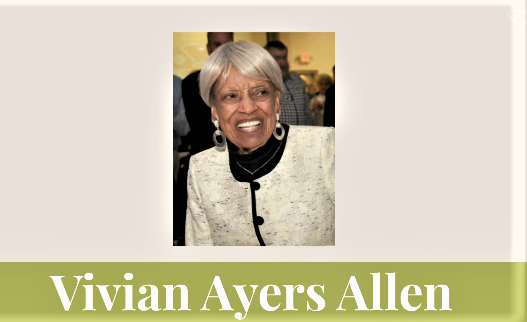
This lesson serves as an introduction to the rich legacy of South Carolina poet and cultural activist Dr. Vivian Ayers Allen. The lesson also provides students with an opportunity to apply Dr. Vivian Ayers’s approach to their own poetry, writing, and educational pursuits.
Lesson Created By: JarvaisJackson
Lesson Partners: Center for the Education & Equity of African American Students (CEEAAS)
Essential Question
What is Poetry? What is the Self?
Grade(s):
- 9
Subject(s):
Recommended Technology:
|
|
Other Instructional Materials or Notes:
Lesson Progression
- Start off with an Essential Question for the Whole Class Discussion. There is also an option to have students write a reflection paragraph on this question the day before class.
Ask class a series of question:
1.) What is Poetry?
- What type of question does science ask or seek to answer?
- What type of question does poetry explore or seek to answer?
Continue with follow-up questions until the class has agreed up definition or answer to these questions.
2.) What is the Self? What does it mean to be human?
- Is a human just a collection of DNA packaged in cells expressing themselves collectively to maintain homeostasis – or something more beyond the summation of our parts?
- Dr. Vivian Ayers Allen
- Ask students to research her and record 5 critical facts about her life that define her as a person and poet. There are several online videos about her work also.
- Watch Short Film that Features her Poem “The Marriage Ceremony”
- WATCH: https://youtu.be/lrMNUbceEd8
- Filmed in Chester, South Carolina at the school where she graduated from. Brainerd Institute Heritage
- Discuss film when completed for themes of elevation of consciousness.
- Read “Moment of Truth” as Class
- Discuss its meaning and how it relates back to the original class discussion about what is poetry and what is the Self ( Click here to read)
- Write a class poem together
- Use an online document that students can access at the same time. Click here for example:
- If don’t have access to technology, then students can each find a place on a dry erase, chalk, or poster board to write the class poetry. If no class board, then students can simply write their portion of the poem on notebook paper – and then everyone’s can be joined together on poster board later.
When finished go around the school for a spontaneous “Poetry Parade.” This is where students find a word or verse they want to read in other classrooms. I always get permission from other teachers first, but we just knock on the door and then go straight in with different students sharing random experts of their poem with no explanation -then leaving. After every student has shared their work – we go back to class.
Teacher Notes
STANDARDS:
These standards are for English I – but their equivalent can be found in each grade’s standards.
Communication
1.4 Engage in dialogue with peers and adults to explore meaning and interaction of ideas, concepts, and elements of text, reflecting, constructing, and articulating new understandings.
3.2 Create engaging visual and/or multimedia presentations, using a variety of media forms to enhance understanding of findings, reasoning, and evidence for diverse audiences.
Reading Literary Text
7.1 Trace the development of a common theme in two different artistic mediums.
Inquiry Based Learning
1.1 Use a recursive process to develop, evaluate, and refine, questions to broaden thinking on a specific idea that directs inquiry for new learning and deeper understanding.
|
|
|
Dr. Ayers is a strong advocate for each student trusting her or his own skills and reasoning to discover answers. Likewise, the best teaching method for her and her work is to allow students the freedom to explore the meaning of her work and trust their answers. A quote from her poem “Hawk” reflects this sentiment, “Be True Be Beautiful Be Free.” An underlying theme of her work is that each person can rise in consciousness to overcome any limitation. Here are some detailed notes on the poem, her work, this lesson plan.
Standards
- C Communication
- RL.MC Meaning and Context
- I Inquiry-Based Literacy Standards