Math is Natural: Hair Braiding & Patterns
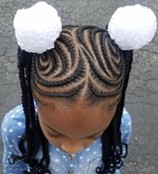
The students will discover how the art of hair braiding can be used to teach and learn mathematics.
Lesson Created By: Janice Baines
Lesson Partners: Center for the Education & Equity of African American Students (CEEAAS)
Essential Question
How can hair-braiding be used to teach the concepts of shapes, patterns, addition/subtraction word problems?
Grade(s):
- 2
Subject(s):
Recommended Technology:
Whiteboard/Laptops
Other Instructional Materials or Notes:
Pictures of children with braided hair
Lesson Progression
Day 1
- Teacher will review Dr. Gilmore and Ethnomathematics
- Teacher will show the quote, “Nobody ever tells you math is natural.” -Dr. Gloria Gilmer
- Ask students, what do they think this means?
- Show slides about Dr. Gilmore teaching patterns and shapes
- Show students different pictures of braids. Ask them if they see any patterns or shapes.
- Introduce tessellations/ patterns
- Show another picture of a pattern, ask the students to predict the next pattern. Show example of the writing with the picture.
- Students will record the types of shapes they see in the braids (3-4 pictures).
- Ask students, how the use of braids helped them with the information?
Day 2
- Review previous lesson.
- Show the slide of the little girl with purple and black beads. Ask students what different math equations can you teach using beads?
- Using this picture have students to create a addition fact and a subtraction fact.
- Model for students a word problem the picture with the purple and black beads. “Alayah has 7 braids. Each braid has 3 beads does she have in all? Give students the opportunity to solve. Review the parts of the word problem that the students must have.
- Teacher will show 1 more slide and ask students to create a word problem.
Teacher Notes
Use the slides provided to guide the students in the lessons.
Differentiation: Pull small groups as necessary for remediation. If struggling with patterns, go back to shape identification. Create patterns with known shapes or symbols before progressing to identifying those provided.
Extension: Give students an expression. Have them illustrate or describe a scenario/hair style to match.
Assessments
In journal form, students will respond to the question: How is math natural? Students must give one example to support their answer.