It's Getting Hot in Here

Lesson Partners: The South Carolina Energy Office
Essential Question
I can design a window covering that minimizes thermal energy transfer.
I can describe how materials used in my window covering are used to minimize thermal energy transfer.
I can test my window covering to determine its ability to minimize the flow of thermal energy using the rate of temperature change as a measure of success.
Grade(s):
- 6
Subject(s):
Recommended Technology:
Other Instructional Materials or Notes:
- 3 bowls
- hot water (not too hot for a student to safely place their hand in)
- ice water and room temperature water
- towel
- paper and pencil
- 3 thermometers (optional)
- bag, tray or other container
- penny, nail, or other metal object
- plastic spoon
- wooden craft stick
- cotton ball or piece of soft fabric
- aluminum foil
- a piece of leather
- a piece of vinyl
- Paper and pencil
Lesson Progression
Activity #1
Materials
- 3 bowls
- hot water (not too hot for a student to safely place their hand in)
- ice water and room temperature water
- towel
- paper and pencil
- 3 thermometers (optional)
Introduce the topic of heat transfer with a simple demonstration. Prepare 3 bowls, one with hot water, one with room temperature water and the last with very cold water. Place them in order on a desk in front of the class but do not label the bowls. Ask two students to volunteer and instruct them to be silent during the demonstration. Have one student silently place a hand in the cold bowl and the other hand in the room temperature bowl. The other student should put one hand in the hot bowl and the other also in the room temperature bowl. After a few seconds ask the students to dry their hands and write on a paper whether the middle bowl was warm or cool. The students will each give different answers. Let the class know that the other bowls contained hot and cold water and even measure their temperatures if you want. Proceed to the activity and let the students know they will discuss the demonstration and activity together afterwards.
-adapted from Heat Transfer 5e Lesson Plan SCETV PBS Learning Media
Activity #2
Materials (per group)
- bag, tray or other container
- penny, nail, or other metal object
- plastic spoon
- wooden craft stick
- cotton ball or piece of soft fabric
- aluminum foil
- a piece of leather
- a piece of vinyl
- Paper and pencil
Divide the class into pairs or small groups. Give each group the collection of objects listed above. Instruct them to hold each object in their hands for a couple of seconds and, as a group, rank them from coldest to warmest. Have the groups record their rankings on paper and share them with the class either by posting them on a wall or letting each group share their list.
Discussion:
Use the following questions to guide a class discussion.
- Which objects felt coolest?
- Which objects felt warmest?
- What do the cool objects have in common?
- What do the warm objects have in common?
- Are the objects different temperatures or do they just feel that way?
- What about the demonstration – why did one student say the middle bowl was cool and the other said it was warm?
- What do the words cool and warm or hot and cold mean?
- What is heat?
The students should reach the conclusion that hot and cold are relative terms. For example, 60 degrees Fahrenheit in the winter might be warm but in the summer it is cool. When holding an object, hot and cold denote which way the heat energy is moving. Objects that feel cold are absorbing heat energy from your hand and objects that feel warm are giving heat energy to your hand.
-adapted from Heat Transfer 5e Lesson Plan SCETV PBS Learning Media
Challenge students to design a shade for a classroom window or other area of your school with window.
- Before they begin sketching their design, have students work in groups to monitor the temperature of the window and immediate area outside for several days to collect data and determine an average temperature for the area. Depending on time of year, students may determine that it is helpful to record temperatures for both morning and afternoons as they vary greatly in some locations.
- Students should design their shades for the window with the purpose of minimizing the heat transfer through the glass thus lowering the energy consumption within the school.
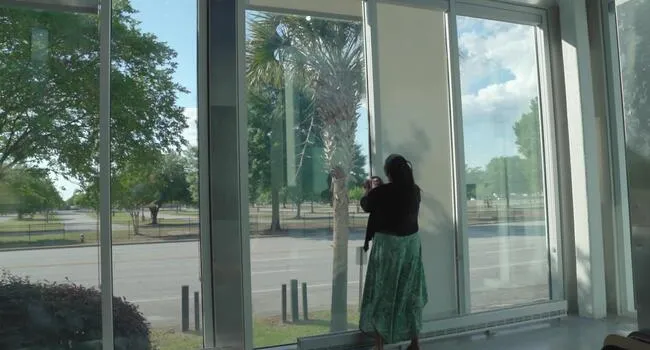
- Show students how SCETV has implemented shades in their Idea Lab thanks to funding by the US Department of Energy and the South Carolina Energy Office. Information and video clips of this energy saving project can be found on knowitall.org
- Students should apply the knowledge learned during the exploration phase of the lesson to determine what materials would best minimize heat transfer and conduct their own research by testing various materials on windows and measure temperatures during the day.
- Have students collect data and record journal entries like real scientists as they conduct their research.
- Students will know the material they have selected is successful by comparing the rate of temperature change with the material they selected covering the window versus without any “shade” covering the window.
- Materials to test can be supplied by teacher, collected from community partners/members, or brought in by students.
You will know students are successful if they can:
- design a window covering that minimizes thermal energy transfer.
- describe how materials used in their window covering minimize thermal energy transfer.
- test their window covering to determine its ability to minimize the flow of thermal energy using the rate of temperature change as a measure of success.
Learn How Shades are Silent Heroes
Learn how a window covering can help minimizes thermal energy transfer. South Carolina ETV teamed up with the South Carolina Energy Office to make our workplace more efficient-- energy efficient. By...
View AssetMore Than Just Style
Learn how shades reduce energy consumption. South Carolina ETV teamed up with the South Carolina Energy Office to make our workplace more efficient-- energy efficient. By installing shades in our Idea...
View AssetAn Essential Resource for Those Hot Summer Days
Learn how the installation of shades help regulate indoor temperatures, minimizing the need for artificial lighting and HVAC systems. South Carolina ETV collaborated with the South Carolina Energy...
View Asset