The "Buffalo Soldiers": Contributions of the first African-American soldiers in the U.S. Army
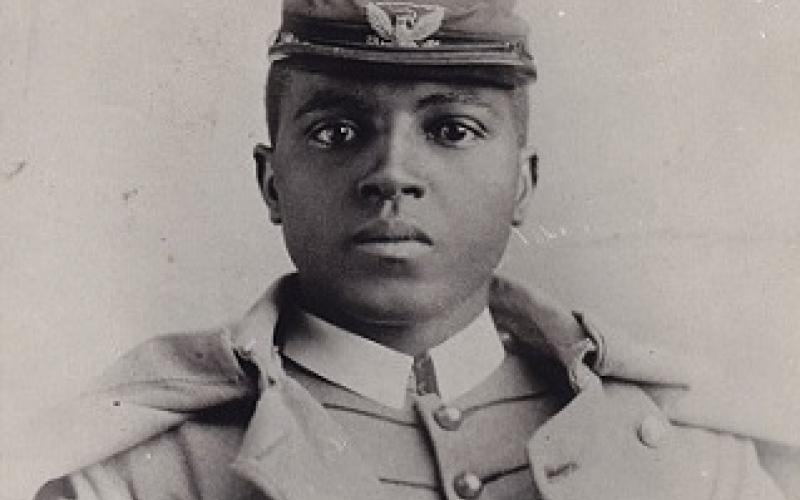
In this lesson, students will learn the history of this group of patriotic, but little-known African American soldiers that were organized in the mid-1800s, right after the Civil War. Two different divisions, the 9thand 10th Regiments of the U.S. Calvary [Calvary=Army soldiers who ride horses] came to be known by the nickname "BUFFALO SOLDIERS," and were given this name by Indians for TWO different reasons. Fascinating interviews, photos, and videos will illuminate the "picture" of this historical group which is finally receiving more recognition, honor, and credit for their heroic service to our country.
Essential Question
Who were the " BUFFALO SOLDIERS "? Students will learn why this group of soldiers had the nickname "Buffalo Soldiers", how they contributed service to the United States, and how they dealt with the difficulties of racial discrimination during their service with the U.S. Army.
Grade(s):
- 7
- 8
- 9
- 10
- 11
- 12
Subject(s):
Recommended Technology:
student chromebook
teacher smartboard
brown paper bags, or 3' sheets of brown "bulletin board paper" from teacher supply room
charcoal, chalk, tempera paint,
glue sticks
scissors
small sheets [9x12" ] cardboard or poster board [to become "picture frames"]
Other Instructional Materials or Notes:
Lesson Progression
DAY 1
1. DISCUSSION WITH TEACHER: How many of you have heard the term BUFFALO SOLDIERS. before? [discuss].
We're going to have a brief unit on this important part of history...watch videos, learn, discuss......make a project......interview / inform any family, and family friends about the Buffalo Soldiers. This can be a small, but important "community education project.
2. TEACHER'S CHOICE: Students 1:1 or CLASS TOGETHER watch Videos 1 & 2 Discuss, & students make notes.
DISCUSS QUICKLY AFTER WATCHING: ??WHO REMEMBERS FROM THE VIDEO... 2 reasons why the BUFFALO SOLDIERS were given their "nickname" by the Native Americans out west?
3. Students, write in your notebook: RESEARCH these TERMS, & WRITE DEFINITIONS: ( When referring to specific wars, ask students to research the DATES & the PRESIDENTS OF THE U.S. during each war.
*soldier *calvary *infantry *campaign [referring to wartime, not elections] *commendation *valor *segregation *integration *Civil War *Indian Wars *Spanish American War * World War I * World War II,
*monument *"irony" (not as a war term, but used in a video about the situation of former slaves rounding up Native Americans & forcing them off their lands)
4. TEACHER: Look at the LESSON WEBLINK from Idaho....include any activities you think are worthwhile for your class
DAY 2:
5. TEACHER'S CHOICE: View the next 4 videos, either 1:1 or CLASS TOGETHER.
6, CLASS DISCUSSION with TEACHER @ video info:
*What are issues that were happening at the time?["taming the west," forcing Native Americans onto 'reservations', segregation of troops, white-only officers leading black troops, etc] & what are your thoughts and feelings about it?
7.CLASS DISCUSSION @ Buffalo Soldiers' service in these Wars...Indian Wars, Spanish-American, World War I, World War II. What did PRESIDENT HARRY TRUMAN DO THAT WAS UNPRECENTED after WWII? [declared NO MORE SEGREGATION within the Armed Forces, INTEGRATION from that time forward!]
8. TOGETHER AS A CLASS: Watch the last 2 videos: Buffalo Soldiers Motorcycle Club, and Bob Marley's song "BUFFALO SOLDIERS" (sing along 2nd time, make a "reggae beat" with pencils, desk, teacher car keys?? :)
DISCUSSION:
* What do you think of the modern-day Buffalo Soldiers/motorcycles/ charity work CLUB-idea?
* Discuss what positive experiences "clubs" bring into people's lives? Think about retired people who no longer go to work...what is the BIG BUY-IN for them?
*Is the CHARITY ASPECT a good idea? Or should they just ride & eat dinner, etc.?
Teacher Notes
When discussing "awareness-heightening" topics, please ask students to make "observational " remarks, instead of " emotionally charged" remarks that might result in heated classroom exchanges.
OBSERVATIONAL: " I noticed that the commanders of the 9th and 10th Regiments were both white soldiers,instead of black soldiers, and today that wouldn't necessarily be the case...the choice might be based on experience and who was a better leader."
EMOTIONAL: " I can't believe the white commanders were appointed over the black troops, well that's pretty racist, and could tell them to do WHATEVER, and the black soldiers didn't even get a chance to lead! "....etc.
BUFFALO SOLDIER Bulletin Board or Student Project
Any variation of this idea would be great for a project or bulletin board; however FACTS are needed to give this art project ACADEMIC RIGOR. See attached visuals to provide guidance on how to construct.
View Resource1. HOW TO: Buffalo Art Project Details
*1 large brown paper bag from grocery.
*Slit down the side with scissors; cut off the bottom of bag
*Carefully "crumple" brown paper with hands...work it until it has lots of wrinkles, but don't tear
* Use BLACK CHALK to draw a "sideways tear drop" without the point, starting the buffalo body.
2, [continued ]Buffalo Soldier Art Project
* Fill in the buffalo body with black chalk, held sideways. Smear with tissue.
* CUT OUT buffalo .
*Glue onto poster board/bulletin board....black looks especially good.
* Add facts, and possibly photos from South Carolina State Museum site.
Buffalo Soldiers in New Mexico
An excellent video about the 9th and 10th Calvary of the U.S. Army, beginning in 1866. The nickname "Buffalo Soldiers" was bestowed upon the African American soldiers by Native Americans, as is told in this video.
View ResourceBuffalo Soldiers Fight Fires and Stereotypes
This video tells an interesting story about how the Buffalo Soldiers earned respect among white townspeople for extinguishing a horrific fire that was just hours away from destroying a town. It is a wonderful testament about people learning to see beyond prejudice and racism, and appreciating people for who they are.
View ResourceIDAHO/Activity 10:2- How did African American Soldiers Face Challenges in Idaho [setllement days]
The 2 videos above, plus a good lesson plan, are included in this site. Notice helpful vocabulary and activiies.
View ResourceThis is US! Buffalo Soldiers 8:00 approx.
EXCELLENT FILM! Documents the history of the Buffalo Soldiers in an interesting and thorough way.
View ResourceBuffalo Soldiers: Service on the Frontier 4:19
Great details about the Buffalo Soldiers and their service, their challenges.
View ResourceBuffalo Soldiers: Texas State Parks Presents.... THE UNKNOWN ARMY 8:36
Great film laying out the history, challenges, and strengths of the Buffalo Soldiers
View ResourceThe U..S. Army's Legendary Buffalo Soldiers 3:00
This Smithsonian film shows AMAZING FOOTAGE of the western lands that Buffalo Soldiers would have been seeing for the first time. What reactions do you think they would have had? [no cities, wide spaces, wild animals, cactus, rock formations, etc!]
IMMERSE YOURSELF IN THE INCREDIBLE SCENERY!
Buffalo Soldiers Motorcycle Club: Riding, Remembering and Helping 11:35 -Oakland,CA chapter
There is a motorcycle club in the U.S. that is comprised MOSTLY of African American bike riders who have had some military service, etc....and who want to ride their bikes, bring AWARENESS to the general public about BUFFALO SOLDIERS, and also do meaningful charity work. Watch this MOVING video about an amazing club, and a great group of citizens!
View ResourceBob Marley: "BUFFALO SOLDIERS" - with lyrics
The Jamaican Reggae singer/recording artist BOB MARLEY wrote this tribute to America's BUFFALO SOLDIERS. The lyrics scroll across the screen and give the listener an idea about why MARLEY is honoring these black soldiers, even though they lived in an entirely different time period from the singer.
View ResourceSouth Carolina State Museum
Still photos of Buffalo Soldiers for student reference/ uniform, hair, the general look of photography of the time period
View ResourceStandards
- USHC-3 The student will demonstrate an understanding of how regional and ideological differences led to the Civil War and an understanding of the impact of the Civil War and Reconstruction on democracy in America.
- Democracy is based on the balance between majority rule and the protection of minority rights. To understand the impact of conflicting interests on the rights of minority groups, the student will utilize the knowledge and skills set forth in the follo...
- USHC-3.5 Evaluate the varied responses of African Americans to the restrictions imposed on them in the post-Reconstruction period, including the leadership and strategies of Booker T. Washington, W. E. B. DuBois, and Ida B. Wells-Barnett.
- USHC-3.1 Evaluate the relative importance of political events and issues that divided the nation and led to civil war, including the compromises reached to maintain the balance of free and slave states, the abolitionist movement, the Dred Scott case, c...
- USHC-3.3 Analyze the effects of Reconstruction on the southern states and on the role of the federal government, including the impact of the thirteenth, fourteenth, and fifteenth amendments on opportunities for African Americans.
- USHC-3.4 Summarize the end of Reconstruction, including the role of anti–African American factions and competing national interests in undermining support for Reconstruction; the impact of the removal of federal protection for freedmen; and the i...
- USHC-3.2 Summarize the course of the Civil War and its impact on democracy, including the major turning points; the impact of the Emancipation Proclamation; the unequal treatment afforded to African American military units; the geographic, economic, an...
- Democracy is based on the balance between majority rule and the protection of minority rights. To understand the impact of conflicting interests on the rights of minority groups, the student will utilize the knowledge and skills set forth in the follo...
- 1 Literacy Skills for Social Studies
- 1.11 Explain how political, social, and economic institutions have influenced the state and nation throughout history.
- 1.1 Establish the chronological order in reconstructing a historical narrative.
- 1.7 Create maps, mental maps, and geographic models to represent spatial relationships.
- 1.8 Identify the locations of places, the conditions at places, and the connections between places.
- 1 Literacy Skills for Social Studies
- 1.1 Explain change and continuity over time and across cultures.
- 1.13 Apply economic decision making to understand how limited resources necessitate choices.
- 1.4 Evaluate multiple points of view or biases and attribute the perspectives to the influences of individual experiences, societal values, and cultural traditions.
Assessments
TEACHERS MAY OFFER SEVERAL TYPES OF ASSESSMENTS:
1. 1 page Essay - Deliver this in front of class [monologue] as a eulogy for a deceased BUFFALO SOLDIER who had been decorated for valor in the line of duty [needs to include location of service, time period, imaginary " situation" in which he showed bravery, etc.] INCLUDE FACTS YOU'VE LEARNED ABOUT BUFFALO SOLDIERS!!
2. Produce a version of the BUFFALO art project attached in RESOURCES.
3. Write a song about BUFFALO SOLDIERS, using a familiar folk tune such as THIS LAND IS YOUR LAND, or AMERICA THE BEAUTIFUL...and use what you know to "paint a song picture" about who they were, what they did. FIRST: You make a VOCABULARY LIST from terms learned from this lesson; i.e. "calvary, infantry, Indian Wars, etc. Sing it for your teacher, and hopefully the class.
4. Create 3 documents on pretend "parchment" , describing IN SPECIFIC TERMS the bravery of 3 different Buffalo Soldiers, and signed by President Andrew Johnson,[ for Indian Wars bravery, or for protecting workers laying telegraph lines, and railroad tracks], or by Teddy Roosevelt [Commander, Spanish-American Wars], President Franklin D. Roosevelt [ for extraordinary dedication in building State Parks, working with CCC camps]