Medicine: The Renaissance (1400 - 1600s) | Kids Work!

Andreas Vesalius (1514-1564) was the most well-know anatomist of his time (pictured above).

The Renaissance marked a new period of interest in art and science throughout Europe. People were curious about how the human body worked so they dissected dead bodies. This new study of the human anatomy contradicted earlier theories and brought about a more scientific approach to medicine. For hundreds of years, people thought that the heart made blood from food and drink, and the body absorbed it. An English doctor named William Harvey (1578-1657) showed that the heart recycles blood and acts as a pump to circulate it throughout the body.

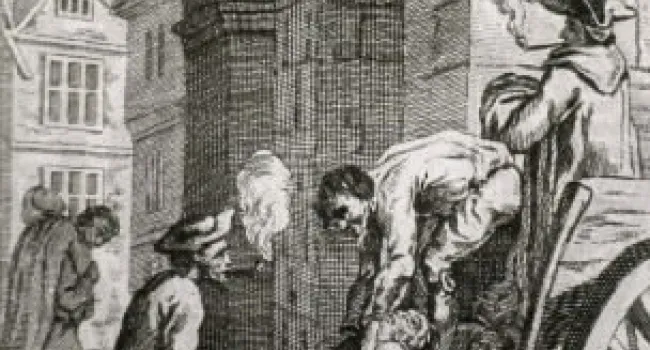
Despite new medical discoveries, many doctors still practiced old ways. Most sick people could not afford to see a trained physician. Instead, they consulted midwives who assisted with childbirths and made herbal remedies to treat illnesses. Minor surgeries were not done in the hospital but at the local barbershop. Barber-surgeons used the same sharp instruments to cut hair as they did to lance boils, remove warts, extract teeth, and blood-let. Blood-letting is the ancient practice of draining blood out of a person to rid the body of poisons.
More in this Series

Kids Work! / Hospital / History of Hospital

History of Medicine | Kids Work!

Document

Grades

  • 3
  • 4
  • 5
History of Medicine | Kids Work!
Episode 1
A hospital is a place where sick and injured people go for medical and surgical treatment. Highly skilled health care professionals use the latest technology to make hospital visits as short and...
Medicine: Ancient Times (800-500 B.C.) | Kids Work!

Document

Grades

  • 3
  • 4
  • 5
Medicine: Ancient Times (800-500 B.C.) | Kids Work!
Episode 2
Many cultures in ancient times treated illnesses with magic and herbal remedies. People believed that the supernatural powers of a shaman (sha-man), also known as a medicine man or witch doctor...
Medicine: 18th-19th Century | Kids Work!

Document

Grades

  • 3
  • 4
  • 5
Medicine: 18th-19th Century | Kids Work!
Episode 5
Medical research and training improved in the 18th century but there were still no cures for diseases like smallpox, a disease that killed millions of people over thousands of years. Middle Eastern...
Modern Medicine | Kids Work!

Document

Grades

  • 3
  • 4
  • 5
Modern Medicine | Kids Work!
Episode 6
In 1895, the discovery of X-rays allowed doctors to see into the body without cutting it open. In less than a century, an entire medical specialty developed based on this discovery called radiology...