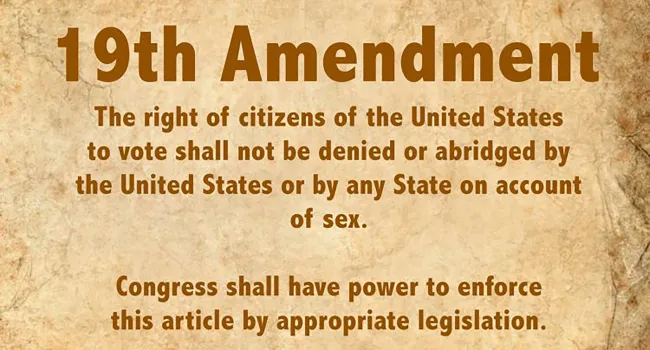
The question of women's suffrage in the U.S. had been debated long before the movement's humble beginnings at the Seneca Falls convention of 1848. Part 1 of this edition on the Women's Suffrage Movement outlines the movement's early years, with the first generation of suffragists getting their start in the abolition movement. After the Civil War, suffrage groups would become divided due to opposing ideas on strategies, resulting in the formation of two rival groups: the American Woman Suffrage Association, and the National Woman Suffrage Association. Although progress in the western states would influence states in the east to pursue women's suffrage, results in the early years were mixed.
The question of women's suffrage in the U.S. had been debated long before the movement's humble beginnings at the Seneca Falls convention of 1848. Part 1 of this edition on the Women's Suffrage Movement outlines the movement's early years, with the first generation of suffragists getting their start in the abolition movement. After the Civil War, suffrage groups would become divided due to opposing ideas on strategies, resulting in the formation of two rival groups: the American Woman Suffrage Association, and the National Woman Suffrage Association. Although progress in the western states would influence states in the east to pursue women's suffrage, results in the early years were mixed.
Standards
- 4.4.CC Identify and evaluate the economic, political, and social changes experienced throughout the Civil War.
- 4.4.P Explain how emancipation was achieved as a result of civic participation.
- 4.5.P Summarize Reconstruction as a turning point in American history.
- This indicator was developed to encourage inquiry into founding principles as viewed through this period of federal government involvement, the development and realignment of a new labor system not based on a system of slavery, and the significant political realignment of the South.
- 4.5.CC Identify and evaluate the impact of economic, political, and social events on the African American experience throughout Reconstruction.
- This indicator was developed to encourage inquiry into how Reconstruction resulted in the foundation for the struggle for civil rights. This indicator was also developed to foster inquiry into Reconstruction Era policies such as Constitutional amendments, black codes, and Jim Crow Laws.
- 4.5.E Analyze multiple perspectives of the economic, political, and social effects of Reconstruction on different populations in the South and in other regions of the U.S.
- 8.3.CC Analyze debates and efforts to recognize the natural rights of marginalized groups during the period of expansion and sectionalism.
- This indicator was designed to encourage inquiry into the continuities and changes of the experiences of marginalized groups such as African Americans, Native Americans and women, as the U.S. expanded westward and grappled with the development of new states.
- 8.4.CO Compare perspectives toward reform that engaged during the Progressive Era.
- This indicator was designed to encourage inquiry into how new state and federal Progressive legislation affected individuals and businesses in South Carolina and the US. The indicator was designed to promote inquiry into the new perspectives that emerged regarding social and political change.
- USHC.2.P Summarize the impact of technological changes and social developments on the U.S., including the Civil War, during the period 1815–1865.
- This indicator was developed to encourage inquiry into how technology fostered the growth of the cotton industry, the factory system, and urban centers. In addition, this indicator facilitates inquiry into how the Abolitionist Movement and Women's Rights Movements encouraged reforms.
- USHC.2.CE Evaluate the causes and consequences of economic and geographic expansion through significant turning points from 1803–1865.
- This indicator was developed to encourage inquiry into the causes of American expansion, such as a growing and diversifying population and the expansion of the plantation economy. This indicator promotes inquiry into the relationship between sectionalism and political compromise, culminating in the Civil War.
- USHC.3.CE Assess the causes and effects of significant turning points in the Populist and Progressive era from 1877–1924.
Resources
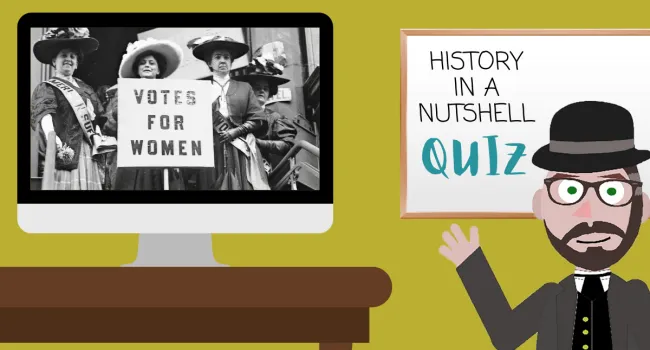
Women's Suffrage Movement, Part 2 | History In A Nutshell
The second generation of suffragists came to prominence alongside the "New Woman" movement in the early 1900's. The American Woman Suffrage Association and the National Woman Suffrage Association...
View AssetWomen's Suffrage Movement Photo Gallery | History In A Nutshell
This photo gallery includes the following: The 19th Amendment In the beginning, the Abolition and Women's Suffrage Movements were intertwined Frederick Douglass - A famous proponent of Women's...
View AssetWomen's Suffrage Movement Works Cited Page And Bibliography
“7 Suffragist Men and the Importance of Allies - Turning Point Suffragist Memorial.” Turning Point Suffragist Memorial -, 30 July 2015, suffragistmemorial.org/7-suffragist-men-and-the-importance-of...
View AssetWomen's Suffrage Movement Trivia Quiz | History in a Nutshell
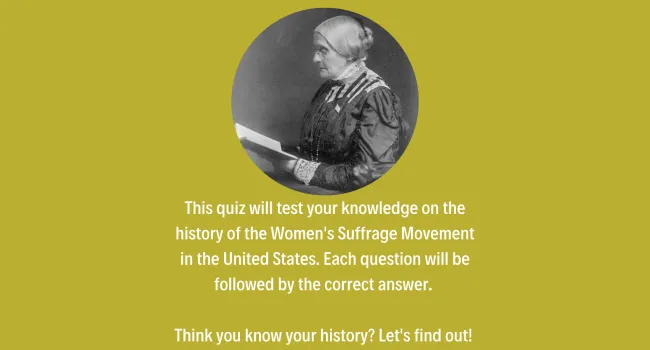
This quiz will test your knowledge on the history of Women’s Suffrage in the U.S.! How much do you know about the history behind women gaining the right to vote in the U.S.? Find out via the quiz...
View AssetWomen's Suffrage Movement Trivia Quiz - Teacher Resource | History in a Nutshell
This quiz will test your knowledge on the history of Women’s Suffrage in the U.S.! How much do you know about the history behind women gaining the right to vote in the U.S.? Find out via the quiz...
View Asset