Honoring Native American Code Talkers | History In A Nutshell Shorts

Kaltura

Native American “Code Talkers” played a crucial role in the allied victory in World War II. Coined by the U.S. Marine Corps, a “Code Talker” is the term given to American Indians who used their tribal languages to send secret coded communications on the battlefield. Although the tactic of using native languages to transmit secret messages was first tested in World War I, it wasn’t until World War II that the US military developed a specific policy to recruit and train Native American speakers as battlefield communicators.

While the U.S. Marine Navajo Code Talkers in the Pacific Theater are arguably the most well-known, members from at least 14 other Native nations served as Code Talkers during WWII. Being a Code Talker was an especially dangerous job in the Pacific Theater since Japanese forces were ordered to specifically target officers, medics, and radiomen.

Despite the heroic contributions of these Code Talkers during the war, recognition was slow even after the Code Talkers program was declassified in 1968. There was some recognition throughout the 1970's and 1980's - President Ronald Reagan recognized Navajo Code Talkers by naming August 14, 1982 as Navajo Code Talkers Day. On December 21, 2000, President Bill Clinton signed Public Law 106–554, 114 Statute 2763, which awarded the Congressional Gold Medal to the original 29 World War II Navajo code talkers and Silver Medals to each person who qualified as a Navajo code talker (approximately 300). The Code Talkers Recognition Act of 2008 further expanded recognition by honoring Code Talkers from both world wars. It was signed into law by Pres. George W. Bush on November 15, 2008.

The Navajo Code remains the only military code in modern history to never be broken by an enemy.
More in this Series

History In A Nutshell / History In A Nutshell Shorts

 "Remember the Alamo!" | History In A Nutshell Shorts

Video

Grades

  • 3
  • 4
  • 5
  • 6
  • 7
  • 8
  • 9
  • 10
  • 11
  • 12
"Remember the Alamo!" | History In A Nutshell Shorts
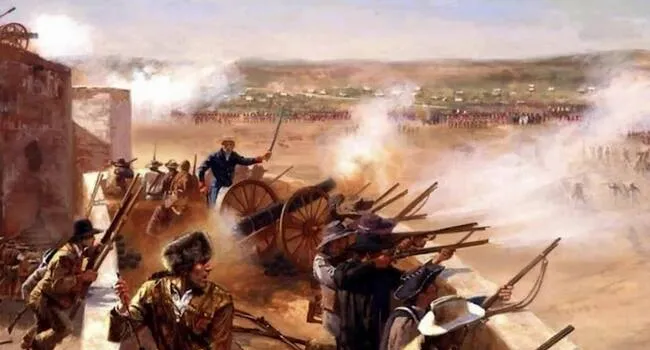
During the Texas Revolution, Fort Alamo, located in present-day San Antonio, fell to President Antonio Lopez de Santa Anna’s Mexican troops on March 6, 1836. This siege between Mexican forces and...
The Day Mount St. Helens Blew Its Top | History In A Nutshell Shorts Absolum Williams

Video

Grades

  • 3
  • 4
  • 5
  • 6
  • 7
  • 8
  • 9
  • 10
  • 11
  • 12
Absolum Williams
Did you know that a Black sailor once served on the ill-fated Confederate submarine H.L. Hunley? Shortly after the Hunley's arrival in Charleston, South Carolina, Lieutenant John Payne of the...
The Day Mount St. Helens Blew Its Top | History In A Nutshell Shorts John Dillinger

Video

Grades

  • 5
  • 6
  • 7
  • 8
  • 9
  • 10
  • 11
  • 12
John Dillinger
John Herbert Dillinger is remembered as arguably the most infamous bank robber in American history. Dillinger’s crime spree across the Midwest lasted from June 1933 to July 1934. The FBI’s J. Edgar...
 The U.S. Army's Birthday | History In A Nutshell Shorts

Video

Grades

  • 3
  • 4
  • 5
  • 6
  • 7
  • 8
  • 9
  • 10
  • 11
  • 12
The U.S. Army's Birthday | History In A Nutshell Shorts
The date of June 14th is the birthday of the United States Army! Founded on this day in 1775, the US Army’s origins are traced back to the old Continental Army, which was formed to fight against the...

KnowItAll Factoids / November

November Factoids

Document

November Factoids
November 1-30 Visit the Knowitall blog for helpful information on using Knowitall all through the month! View our Thanksgiving Day Collection and our Winter Holidays Collection! November Observances...