Painting No. 4 (A Black Horse) | Artopia

Marsden Hartley

A Closer Look

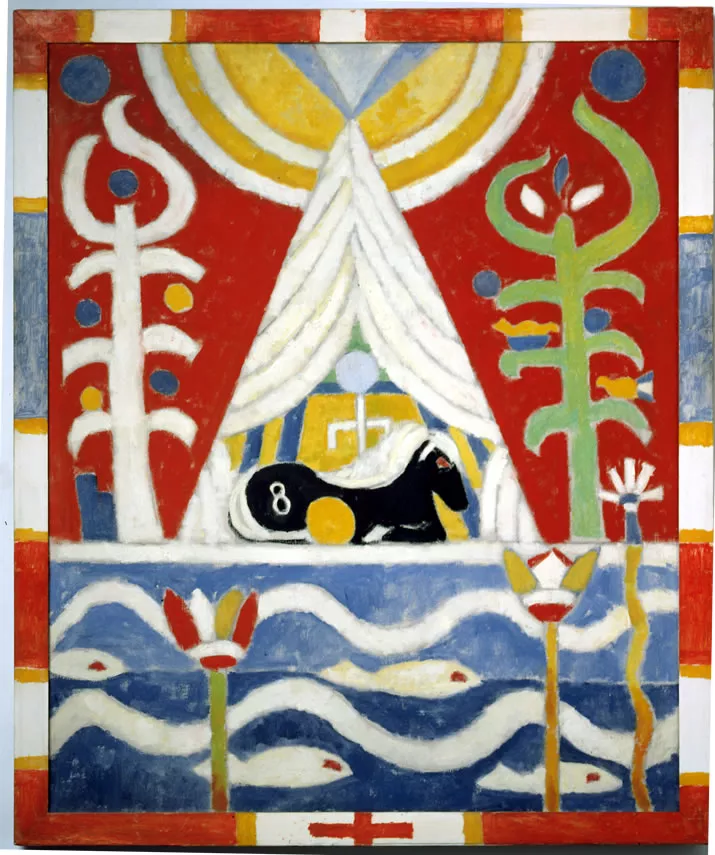
Marsden Hartley paints with contrasting colors in Painting No. 4 (A Black Horse), using warm colors (reds, yellows and oranges) and cool colors (blues, violets and greens). He creates emphasis by placing cool colors on a warm colored background and vice versa. The point of interest is where your eye goes first in a painting. Here, it is the teepee that leads your eye to the black horse. Can you describe how Hartley uses other elements and principles of design in his painting?

About the Painting

Marsden Hartley made Painting No. 4 (A Black Horse) in Germany in 1915, after meeting Franz Marc. The horse in the middle of the painting shows the respect that Hartley had for Marc’s paintings of horses and other animals. Hartley also admired Native American art. Painting No. 4 is part of a series of paintings he did in 1914 and 1915 using Native American images and symbols.

About the Artist

Marsden Hartley was born into a poor family in Maine and never finished school because he had to go to work in a shoe factory. When he was sixteen he moved to New York City. Hartley had his first art show at Alfred Steiglitz's Gallery 291 in New York. Steiglitz, a well-known photographer and promoter of artists, introduced Hartley to the painters Georgia O'Keefe and Arthur Dove. They are all considered early American Modernists.


Glossary

Modernism: a period of experimental developments in art, music, and literature, from around the 1860s to the 1970s . 


Write About It

  • Make a list of what you see.
  • How did the artist use the elements and principles of design?
  • What do you think the painting means? How does it make you feel?
  • Select two paintings to compare & contrast.
More in this Series

Artopia / Artopia's Painting Lobby / Be a Painting Critic

A Man and a Horse by a Stream | Artopia

Photo

Grades

  • 6
  • 7
  • 8
A Man and a Horse by a Stream | Artopia
Hua Yan A Closer Look Hua Yan uses lines to create the shapes of the man, horse and trees in this painting. He then uses more lines to show details within these figures. Line is the most basic element...
Arion on a Sea Horse | Artopia

Photo

Grades

  • 6
  • 7
  • 8
Arion on a Sea Horse | Artopia
William Bouguereau A Closer Look What do you notice first in Arion on a Sea Horse? Is it the lyre, the small harp that Arion is holding? William Bouguereau draws our attention to the lyre by making it...
The Large Blue Horses | Artopia Compare and Contrast Two Paintings | Artopia

Video

Grades

  • 6
  • 7
  • 8
  • 9
  • 10
  • 11
  • 12
Compare and Contrast Two Paintings | Artopia
These are examples of narrative artworks that depict historical figures and events. No. 11 - John Brown Takes to Guerilla Warfare, is one of a series of twenty-two gouache paintings illustrating the...
Painting - Write About It Worksheet for Google Docs Elements of Design: The Piebald Horse | Artopia

Video

Grades

  • 6
  • 7
  • 8
  • 9
  • 10
  • 11
  • 12
Elements of Design: The Piebald Horse | Artopia
Line: Artists often start out working with line. Look at the outline of the spotted horse. This is called a skeletal shape. The long hairs in the horse’s mane and tail are lines. Several horizontal...
For the Light | Artopia

Photo

Grades

  • 6
  • 7
  • 8
For the Light | Artopia
Susan Rothenberg A Closer Look What do you think the artist Susan Rothenberg is trying to express? Does the title For the Light help you understand this painting? Notice how simple Rothenberg's horse...
Fuji from Kogane-Ga-Hara, Shimosa | Artopia

Photo

Grades

  • 6
  • 7
  • 8
Fuji from Kogane-Ga-Hara, Shimosa | Artopia
Ando Hiroshige A Closer Look In Fuji from Kogane-Go-Hara, Shimosa Hiroshige wants the viewer to notice Mt. Fuji on the horizon. He uses an Asian art technique called the split fountain, a gradual...
Horse Stable | Artopia

Photo

Grades

  • 6
  • 7
  • 8
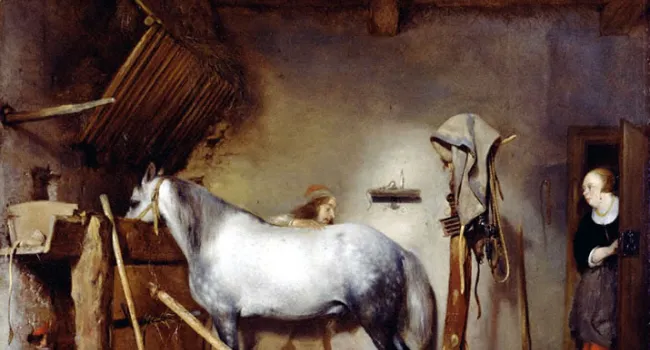
Horse Stable | Artopia
Gerard ter Borch A Closer Look Genre in art represents what life is like in a particular place and time. If an artist came to your art class and painted you and your classmates working on your artwork...
Horse, Pipe, and Red Flower | Artopia

Photo

Grades

  • 6
  • 7
  • 8
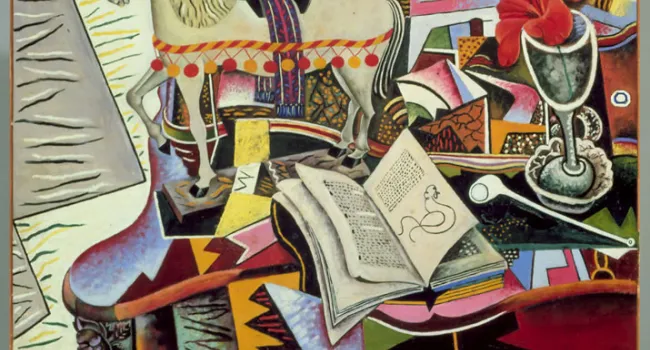
Horse, Pipe, and Red Flower | Artopia
Joan Miro A Closer Look Joan Miro presents a collection of various objects in his painting Horse , Pipe and Red Flower. Take some time to identify the objects that are somewhat hidden in this picture...
Horses Actors | Artopia

Photo

Grades

  • 6
  • 7
  • 8
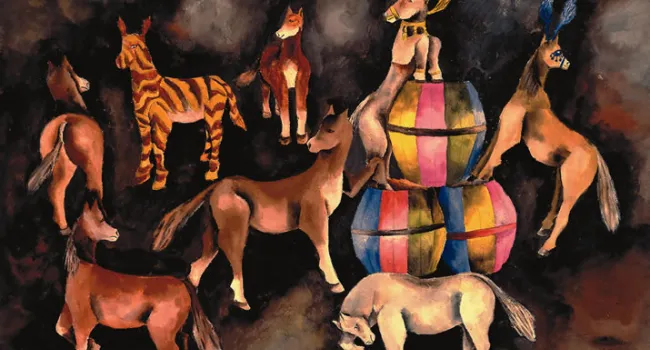
Horses Actors | Artopia
Maria Izquierdo A Closer Look Horses Actors is a good example of asymmetrical balance. If you draw an imaginary line down the middle of the painting you can see that the two halves are very different...
Lascaux Cave Painting | Artopia

Photo

Grades

  • 6
  • 7
  • 8
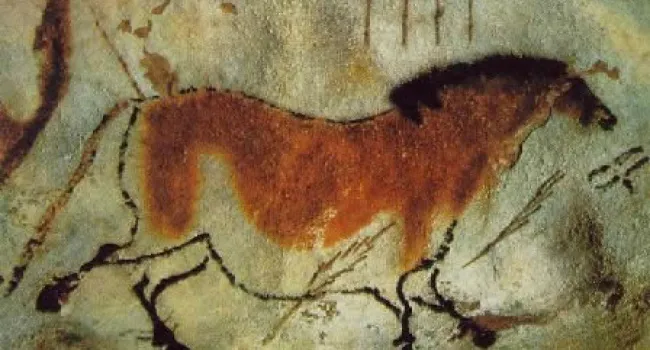
Lascaux Cave Painting | Artopia
Anonymous A Closer Look The Caves of Lascaux, France are filled with prehistoric paintings including this horse. It is one of the oldest paintings in the world, created during the Paleolithic...
Madonna and Child Enthroned | Artopia

Photo

Grades

  • 6
  • 7
  • 8
Madonna and Child Enthroned | Artopia
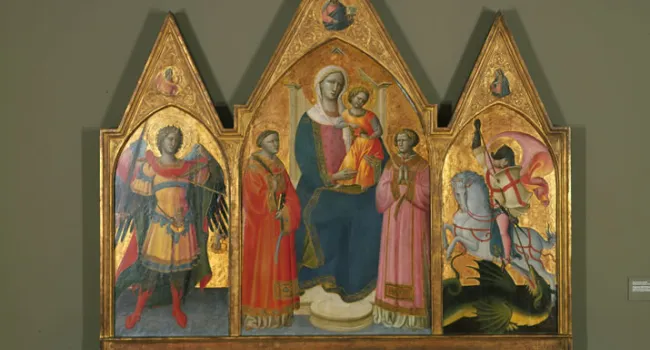
Giovanni dal Ponte A Closer Look Giovanni dal Ponte's triptych has a strong sense of balance. The center panel shows Mary and Jesus Christ with Saint Lawrence and Saint Stephen on either side. Notice...
Painting - Write About It Worksheet for Google Docs

Interactive

Grades

  • 6
  • 7
  • 8
  • 9
  • 10
  • 11
  • 12
Painting - Write About It Worksheet for Google Docs
INSTRUCTIONS: Click on the link above to access the Google Docs document. You can go under File and select " Make a Copy" to add to your own Google Drive or " Print." In Be a Painting Critic, select a...
Painting Word Bank | Artopia

Document

Grades

  • 6
  • 7
  • 8
  • 9
  • 10
  • 11
  • 12
Painting Word Bank | Artopia
WORD BANK: Elements and Principles of Design line – a long thin continuous mark or stroke color – hues, tints, and shades as created by light and pigments value – the relative lightness or darkness of...
Race Horses at Longchamp | Artopia

Photo

Grades

  • 6
  • 7
  • 8
Race Horses at Longchamp | Artopia
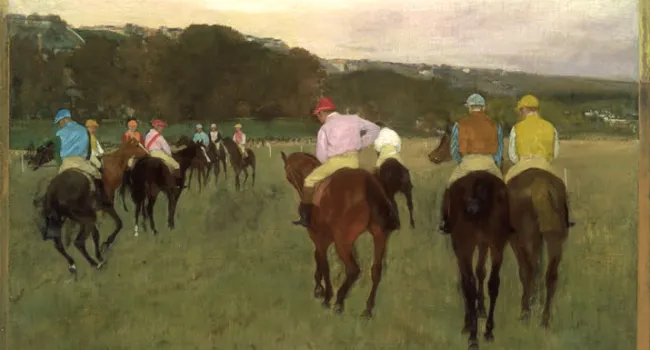
Edgar Degas A Closer Look As an Impressionist, Edgar Degas painted impressions of what he saw. He didn't paint as many details as artists did in the Renaissance, for example. Many Impressionists made...
The Horse Fair | Artopia

Photo

Grades

  • 6
  • 7
  • 8
The Horse Fair | Artopia
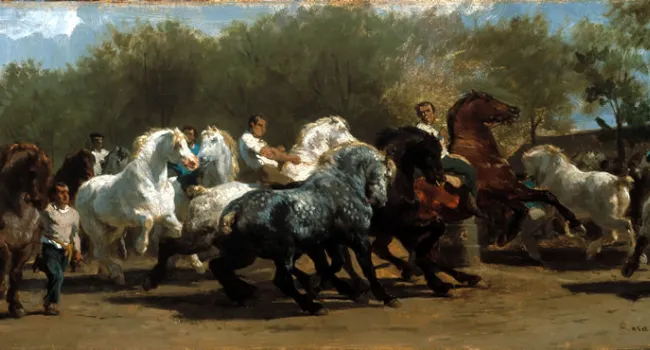
Rosa Bonheur A Closer Look Rosa Bonheur uses gradient value to create the illusion of three-dimensional form in The Horse Fair. Gradient value is a gradual change in the lightness or darkness of a...
The Large Blue Horses | Artopia

Photo

Grades

  • 6
  • 7
  • 8
The Large Blue Horses | Artopia
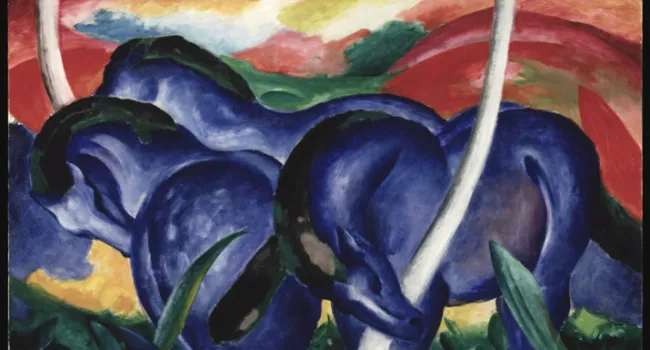
Franz Marc A Closer Look In The Large Blue Horses, Franz Marc uses rich, bright colors and curvy lines. The curves of the horses are repeated in the hills in the background. Notice how the horses take...
The Life of John Brown, No. 11 | Artopia

Photo

Grades

  • 6
  • 7
  • 8
The Life of John Brown, No. 11 | Artopia
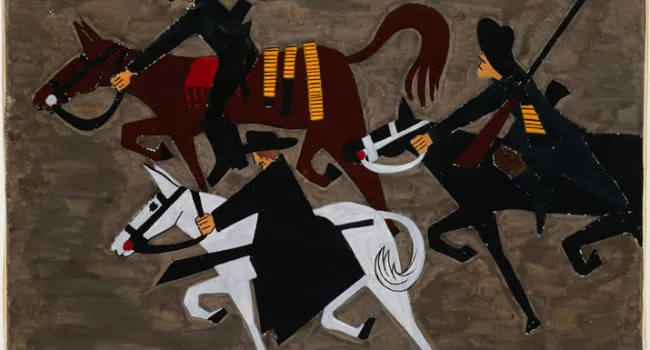
Jacob Lawrence A Closer Look Sometimes artists tell stories without words, as Jacob Lawrence has done in The Life of John Brown, No. 11 – John Brown Took to Guerrilla Warfare. This painting is part of...
The Piebald Horse | Artopia

Photo

Grades

  • 6
  • 7
  • 8
The Piebald Horse | Artopia
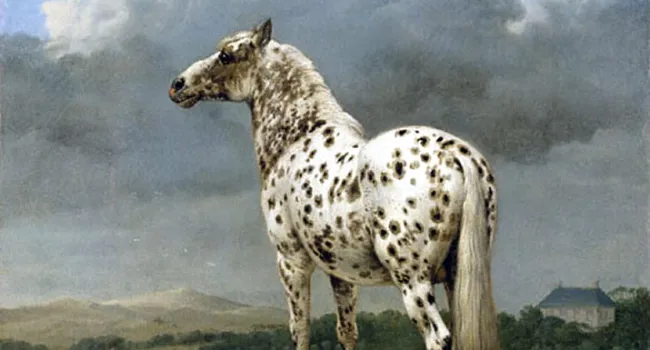
Paulus Potter A Closer Look Paulus Potter has chosen a handsome spotted horse as central to this painting. What visual devices does he use to bring attention to the horse? Look at the various textures...
Wild West | Artopia

Photo

Grades

  • 6
  • 7
  • 8
Wild West | Artopia
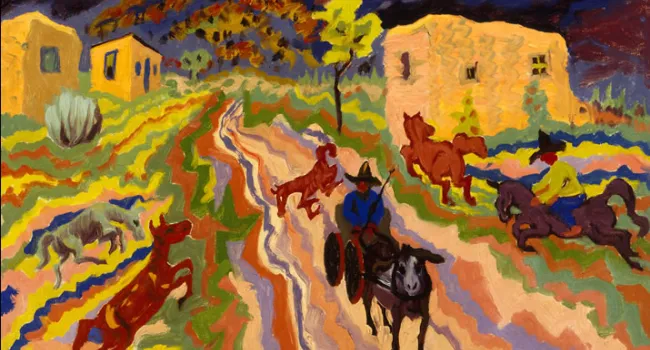
Emil Armin A Closer Look Emil Armin produces a sense of depth in Wild West by changing the values of his colors. One way to change the value of a color is to mix in its complement, its opposite on the...
Winter Horse Raiding Episode | Artopia

Photo

Grades

  • 6
  • 7
  • 8
Winter Horse Raiding Episode | Artopia
Moses Old Bull A Closer Look A shape is a two-dimensional representation of an object showing its width and length. The outline of a figure is called a skeletal shape. Geometric shapes use straight...