What Makes Up a Grimké Sister?
Prior Knowledge Needed:
Students should be able to comfortably make inferences about characters in stories they are reading (character traits, intentions, predictions, etc.)
Students should be able to understand the background of laws allowing only men voters for political leaders.
Students will watch videos depicting the story of two strong women fighting for abolition and women's suffrage and what traits these women contained.
Lesson Created By: Raney Stogner
Essential Question
How does a strong belief and perseverance lead to change?
Grade(s):
- 8
Subject(s):
Recommended Technology:
Other Instructional Materials or Notes:
Magazines, posters, or any materials containing images and words.
Lesson Progression
Day 1:
1. Review knowledge of pre-Civil War and men leadership roles amongst the people.
2. Ask students to predict or explain what change the country needed in order to begin to make a step in the right direction. What would you do as an individual living during this time period?
3. Explain there were two sisters who knew from an early age the change they wanted to make.
4. Watch Episode 1 of the Grimke Sisters series. Have students brainstorm in groups what they believe the first step the Grimke Sisters took for reform in America.
5. Groups share aloud and compare/discuss thoughts.
Day 2:
1. Review video from Day 1. What was the seed that sparked thee Grimke "movement"? What did they wish to see in life?
2. Complete the Girls Bill of Rights worksheet in groups.
3. Watch Episode 2. Begin making inferences about the sisters. (What can we say about them so far? What evidence do we have to back it up? Would you be that brave or strong? Why do you think there was so much backlash?)
Day 3:
1. Watch Episode 3. (What similarities do we see in today's world with activists and times when the Grimke Sisters stood up for their beliefs? Would you have reacted the same way?)
2. Have students sit in a circle and "speak into the silence." Talk about respectful responses and listening ears before beginning discussion. Does history repeat itself? What kind of reform do we need today?
3. Have students journal independently about something that resonated with them after the group discussion. What did you take away? What change can you make in the world? What change do you wish to see? Does it take a village?
Day 4:
1. Watch Episode 4. What path did the Sisters pave for women's rights? What was their impact?
2. Complete the "What Makes Up a Grimke Sister" project in groups or independently.
Day 5:
1. Finish project.
2. Have students share their creations.
The Grimké Sisters Through The Civil War
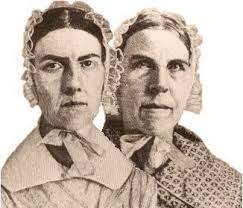
Sarah and Angelina Grimké worked tirelessly for both abolition, and women’s suffrage. The Grimké sisters were the first to say, in print, that women deserved to live alongside men with an equal...
View AssetThe Grimké Sisters Through The Civil War
The Grimké sisters ran afoul of the Quakers as they embraced abolition and engaged in anti-slavery activities without permission. Angelina Grimké wrote a letter to abolitionist William Lloyd Garrison...
View AssetThe Grimké Sisters Through The Civil War
Sarah and Angelina Grimké worked tirelessly for both abolition, and women’s suffrage. The Grimké sisters were the first to say, in print, that women deserved to live alongside men with an equal...
View AssetThe Grimké Sisters Through The Civil War
After the burning of Pennsylvania Hall, in Philadelphia, the Welds, along with Sarah Grimké, retreated to a farm in Belleville, New Jersey, where in 1839, the three produced a compendium on American...
View AssetWhat Makes A Grimké Sister? - Handout
With this handout students can use magazines, poster board, and any other creative things they can find to fill the silhouette with all the things that describe the Grimké Sisters.
View AssetStandards
- 8.3.CO Compare the debates between South Carolina and the federal government regarding slavery, federalism, and the Constitution.
- This indicator was developed to encourage inquiry into the debates, heightened by Westward Expansion, over federal and state power concerning slavery, and the government's role in protecting and securing natural rights.
- 8.3.CC Analyze debates and efforts to recognize the natural rights of marginalized groups during the period of expansion and sectionalism.
- This indicator was designed to encourage inquiry into the continuities and changes of the experiences of marginalized groups such as African Americans, Native Americans and women, as the U.S. expanded westward and grappled with the development of new states.
- 8.4.CO Compare perspectives toward reform that engaged during the Progressive Era.
- This indicator was designed to encourage inquiry into how new state and federal Progressive legislation affected individuals and businesses in South Carolina and the US. The indicator was designed to promote inquiry into the new perspectives that emerged regarding social and political change.
- 8.4.CX Evaluate South Carolinians’ struggle to create an understanding of their post-Civil War position within the state, the country, and the world.
- This indicator was developed to encourage inquiry into how the former planter class, African Americans, women, and others adjusted to, gained, lost, and/or regained position and status during Reconstruction. This indicator was also written to foster inquiry into how South Carolina worked with a stronger federal government and expanding international markets.


