Types of Bees
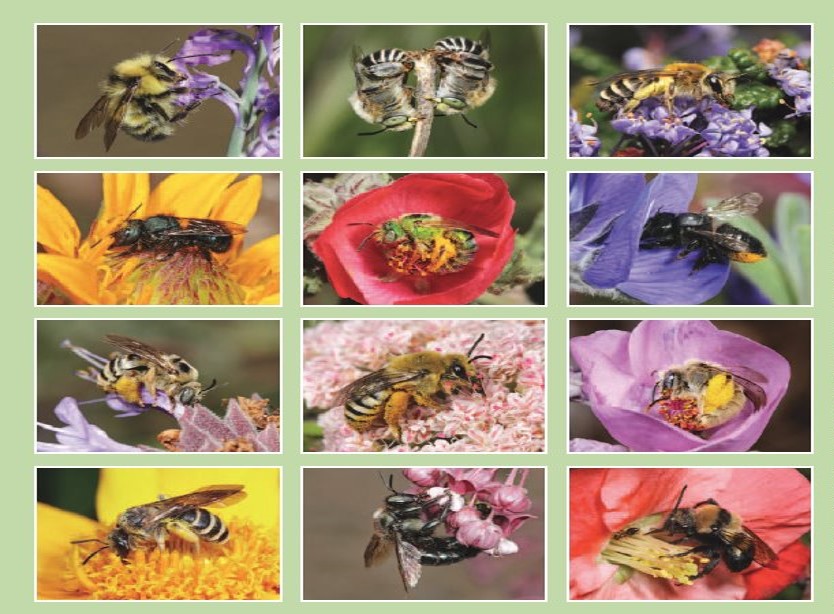
Students will learn there are many different types of bees that provide us with different products through pollination. They will also learn about the parts of bees and their life cycle.
Lesson Created By: Savannah River Ecology Lab
Essential Question
What types of plants to bees pollinate? What does the bee life cycle look like?
Grade(s):
- 1
Subject(s):
Recommended Technology:
Other Instructional Materials or Notes:
- Writing utensils
- Types of Bees Worksheet
Lesson Progression
Activity
- Pass out the Types of Bees Worksheet.
- Have students tell you if they know of different types of bees. See how many they can name.
- Talk to students about the different types of bees that help pollinate plants for us. There are six main ones: leafcutter, honey, bumble, mason, miner and carpenter bees. Have them follow along with their worksheet to record information about the different types of bees. Have them write the name of the bee as well as a few notes about that bee. Notes should include information about where they live if they are social or not, if they sting, and what types of plants they pollinate.
- Explain the different parts of the bees including the three main body segments (head, thorax, abdomen) and other features that stand out (3 pairs of legs, 2 antennae, and 2 pairs of wings). The worksheet will have them label the different parts of the bee.
- Go over the main parts of the bee life cycle. Walk them through each part. And have them label the figure in the worksheet accordingly.
Teacher Notes
There are six types of pollinator bees. Each bee has its own unique habitat and different plants they like to pollinate.
Bumblebees- social bees that are larger and hairy. They like more temperate climates. They live in large colonies, most of which consist of worker bees. They are great pollinators with long tongues. They are the main pollinator of alfalfa and red clover.
Carpenter Bees- these bees are more solitary in nature, with less hair on their bodies. They have powerful jaws that hemp them nest in dead wood. Males do not sting. They pollinate many flowers and vegetables.
Honey Bees- are very social, with thinner bodies. They live in hollow trees or dry caves. Colonies are the largest with up to 40,000 individuals. They are the main producers of honey, wax and royal jelly.
Leafcutter Bees are solitary creatures with darker colors. They live in little tunnels or thick stemmed plants. They are great pollinators due to the swimming motion they make when inside flowers. They help pollinate crops like alfalfa.
Mason Bees are solitary with metallic blue or greenish coloring. They nest in reeds, holes in wood, crack and even snail shells. They are rather gentle bees that rarely sting. These bees are great pollinators of cherries, apple, blueberries, and many other fruits.
Miner Bees are solitary and vary in color. They live in the ground making tunnels usually from soft clay. They do not sting, but will bite if provoked. They pollinate many colorful flowers types across the U.S.
Types of Bees Worksheet
Student worksheet to follow along with lesson. Guides students to record information about different bee types, including the types of plants they pollinate. Students will also label diagrams of the main body structure of bees as well as their life cycle.
View ResourceStandards
- Science and Engineering Practices
- 1.S.1 The student will use the science and engineering practices, including the processes and skills of scientific inquiry, to develop understandings of science content.